Article too long to read?
Independent filmmaking is more accessible today thanks to affordable technology and digital platforms. However, it demands careful planning, resource management, and the ability to take on multiple roles. Here’s what aspiring filmmakers need to know:
- Start with a strong idea: Focus on simple, impactful stories with small casts and limited locations to manage costs.
- Plan your budget wisely: Account for equipment, cast, crew, locations, and post-production. Always set aside a contingency fund.
- Explore funding options: Crowdfunding platforms like Kickstarter or Seed&Spark, personal savings, and grants are common ways to fund projects.
- Choose the right tools: Affordable cameras, sound equipment, lighting, and editing software can deliver professional results without overspending.
- Build a network: Relationships with other filmmakers, actors, and crew are key. Attend festivals, use online platforms, and engage in local events.
- Focus on distribution and promotion: Target film festivals, online platforms, and social media to get your film noticed. Plan your release strategy carefully.
Independent filmmaking is about balancing creativity, resources, and determination. Start small, learn from every project, and let each step guide your growth as a filmmaker.
How to Finance & Distribute Your Indie Film #indiefilmmaking
Developing Your Vision and Writing a Script
Your script is the backbone of your film, so it’s crucial to shape a vision that aligns with your budget. Before you even start writing, map out every story element.
Start with a Simple, Strong Idea
Independent films shine when they focus on a single, impactful idea rather than elaborate production. Prioritize strong characters and emotional depth over flashy visuals. For instance, a gripping conversation in a single room can be far more captivating than an expensive action scene.
Certain genres work especially well for smaller budgets:
- Horror thrives on atmosphere and suspense.
- Thrillers can deliver intensity with minimal sets.
- Science fiction can lean on smart dialogue instead of effects.
- Comedies often rely on character dynamics and clever writing.
Keep your cast small – ideally three to five main characters. This not only simplifies scheduling but also helps cut costs. Similarly, limit your locations to one or two that are easily accessible. This keeps production manageable and affordable.
Write Your Script to Match Your Budget
Every scene in your script should make sense financially. Avoid expensive effects, stunts, or elaborate setups unless they’re absolutely necessary. For example, instead of a high-budget car chase, create tension through character-driven moments or dialogue.
Sound quality is another key consideration. Choose locations where you can control ambient noise to ensure your dialogue comes through clearly.
Once your script is tailored to your budget, you’ll be ready to move on to budgeting and funding strategies.
Creating a Budget and Finding Funding
Once your script is ready, the next step is figuring out how much your film will cost and where the funding will come from. While the budgeting process might seem overwhelming, breaking it down into smaller steps can make it much easier to manage.
Building a Realistic Budget
Start by listing every possible expense for your film. For most productions, equipment rental is a major part of the budget. The cost of renting a basic camera package can vary widely depending on your location and the quality of the gear.
Paying your cast and crew is another key factor. The scale of your project often determines how much you’ll need to allocate. Some filmmakers opt for deferred payments, meaning the team gets paid only after the film generates revenue. If you’re planning to pay upfront, research standard rates for essential roles like a director of photography or sound recordist to ensure you’re budgeting appropriately.
Location costs can also add up quickly. Even if you secure a "free" location, you might still need to cover expenses like permits, insurance, or cleanup fees. Urban settings, in particular, can come with higher costs compared to rural areas.
Don’t forget post-production expenses. Things like color correction, sound mixing, and music licensing can significantly impact your budget. Identifying your post-production needs early on can help you find cost-effective solutions, such as collaborating with up-and-coming professionals or using royalty-free music.
Finally, set aside a contingency fund for unexpected costs – whether it’s equipment malfunctions or weather-related delays, having a financial cushion can save you a lot of stress later.
Once you’ve mapped out your budget, it’s time to explore funding options like crowdfunding.
Using Crowdfunding Platforms
Crowdfunding has become a popular way for filmmakers to finance their projects. Platforms like Kickstarter are especially appealing because of their all-or-nothing funding model, which can create urgency and motivate backers. Beyond raising money, crowdfunding can also help you build an audience for your film.
Another platform, Seed&Spark, offers flexible funding, meaning you can keep whatever money you raise. It also connects filmmakers with industry professionals, which can be a valuable resource.
A strong pitch video is crucial to a successful crowdfunding campaign. Keep your pitch short and engaging, and consider including behind-the-scenes footage or clips from your project. Be clear about how the funds will be used and offer creative rewards to backers, like producer credits or invitations to exclusive screenings – these little perks can go a long way in motivating supporters.
Preparation is key before launching your campaign. Build a list of potential supporters, including friends, family, and followers, to ensure an initial wave of contributions. Early momentum can make all the difference.
Once you’ve explored crowdfunding, it’s worth comparing it to other funding methods.
Comparing Funding Options
| Funding Method | Advantages | Disadvantages |
|---|---|---|
| Crowdfunding | No need to repay funds; helps build an audience; validates your project idea | Time-consuming; requires managing public expectations; potential platform fees |
| Personal Savings | Full creative control; no outside pressure; immediate access to funds | Can limit your budget; involves personal financial risk; doesn’t generate publicity |
| Grants | No repayment required; adds credibility to your film | Highly competitive; involves detailed applications and strict criteria |
Grant applications can be particularly rewarding but require careful preparation. Submitting a well-written, detailed proposal is essential to improve your chances of getting approved.
To reduce financial risk and maximize resources, consider combining multiple funding methods. For instance, you could use your personal savings for pre-production, run a crowdfunding campaign to cover equipment and crew costs, and apply for grants to handle post-production expenses.
Tools and Resources for Independent Filmmakers
Once you’ve planned your budget, making smart choices about equipment and software can significantly improve your film’s production quality without draining your wallet. Picking the right tools can help you achieve a polished, professional look, even on a tight budget.
Budget-Friendly Equipment Options
Affordable gear can still meet professional standards. For cameras, mirrorless options like the Panasonic G85 (priced at $598) deliver excellent video quality with interchangeable lenses. Other solid picks include the Canon EOS Rebel T7i and Sony Alpha a6000. Even modern smartphones can capture impressive footage, making them great for spontaneous shoots or tight spaces.
When it comes to audio, don’t skimp – poor sound can ruin even the most visually stunning film. As Tom Barrance from Learn About Film points out:
"Sound is as important as pictures, and you won’t get great audio with the microphone in your camera. Using a separate microphone will make a big difference."
Budget-friendly options like the Rode VideoMic GO or Audio-Technica ATR-3350xiS work well for dialogue-heavy scenes. For a step up, the RØDE NTG1 ($249) delivers professional-quality audio. And don’t forget a good pair of headphones to monitor sound while recording – they’re essential for catching issues early.
Lighting is another area that can transform your footage. Simple tools like a five-in-one reflector or basic work lamps can enhance natural light. For more control, the Neewer 2-Pack Dimmable Bi-color LED kit is a great choice, while the portable Aputure AL-M9 is perfect for on-the-go shoots.
To achieve smooth, cinematic shots, invest in stabilization tools. A sturdy tripod like the Manfrotto Compact Action Tripod offers reliability at a reasonable price, while the GEEKOTO Video Tripod ($99) provides excellent value. For handheld shots, the Zhiyun Smooth 4 gimbal works wonders with smartphones and small cameras, ensuring fluid motion in your footage.
Finally, effective editing software is crucial to bring your vision to life.
Recommended Editing Software
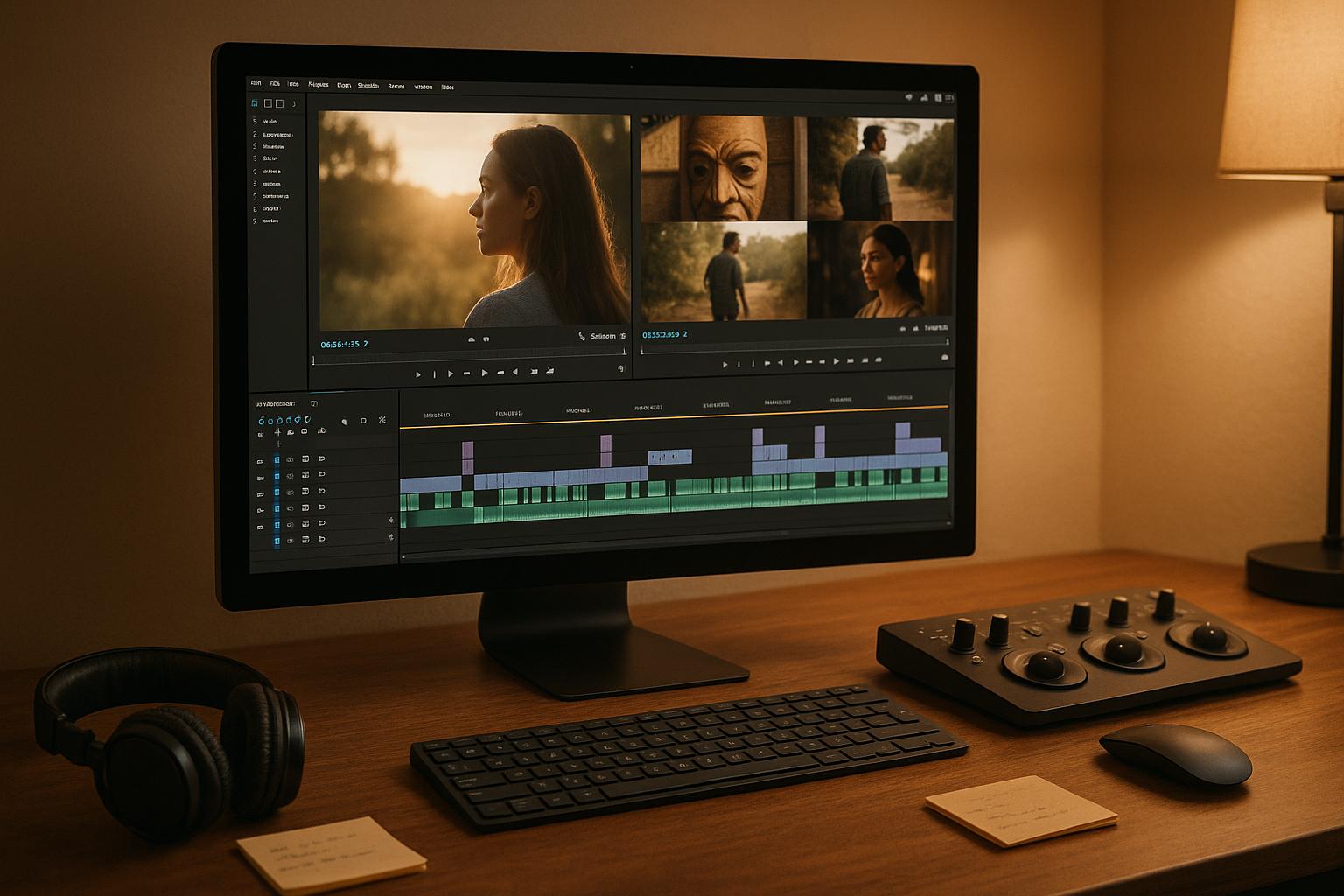
Choosing the right editing software can streamline your workflow and help you stay within budget. DaVinci Resolve is an excellent free option, offering professional-grade tools for color correction, audio editing, and visual effects. The free version covers most needs, but upgrading to the Studio version unlocks features like 4K and 10-bit footage support.
If you’re just starting out, iMovie is a beginner-friendly option that integrates seamlessly with Apple devices. While it lacks advanced features, it’s perfect for learning the basics of editing.
For on-the-go editing, VN Editor is a versatile mobile app available for both iOS and Android. If you prefer a desktop solution, Lightworks offers a free version with professional features, though it has a steeper learning curve.
When deciding between Mac and PC for editing, keep in mind that Macs are often favored in the industry for their video editing capabilities, while PCs typically offer more power for the price. If portability isn’t essential, desktops usually provide better value than laptops.
Using Online Tutorials and Resources
To sharpen your filmmaking skills, take advantage of online tutorials and educational resources. As LetsFAME notes:
"Filmmaking is no longer the unattainable fruit of big companies. Nowadays, with the advancements in technology and the invention of streaming platforms like Vimeo, YouTube, and more, those who aspire to enter the field can independently shoot and share their work with the world."
Platforms like Indie Shorts Mag offer comprehensive tutorials covering pre-production and post-production techniques, from script formatting to color grading. These resources are tailored for independent filmmakers and can help you develop your skills without the cost of formal film school.
Don’t overlook the importance of reliable storage. Options like the WD My Passport 2TB or free cloud solutions like Google Drive can safeguard your work. Always keep multiple backups – losing footage after a long shoot is a nightmare no filmmaker wants to face.
Filmmaking is a journey, and your tools should evolve with your skills. Start with the basics and upgrade as your projects demand more advanced equipment. The key is to understand your current needs and invest in tools that support your growth.
sbb-itb-376fc17
Building a Team and Growing Your Network
Independent filmmaking thrives on teamwork. Strong connections within the industry often determine whether a project flounders or flourishes. As Bri Castellini, Community Liaison at Stareable, aptly states:
"filmmaking is inherently collaborative".
The challenge lies in finding the right people and maintaining those relationships over time.
Finding Collaborators
The internet has transformed how filmmakers meet and work together. Platforms like FilmFreeway and WithoutABox aren’t just for submitting to festivals – they also host active communities where filmmakers exchange opportunities and seek collaborators. Stareable, for instance, is tailored to web series and short film creators, offering job boards and tools to connect with potential partners. But while online platforms are helpful, in-person connections remain equally important.
Networking Through Film Festivals and Platforms
Film festivals are hotspots for networking, bringing together distributors, representatives, and creators. They’re perfect for building the connections you need to advance your projects. That said, making the most of these events requires preparation.
Start by researching festivals. Major ones like Sundance offer global visibility, while mid-sized festivals provide better odds of acceptance and more approachable networking opportunities. Prepare a concise, natural 30-second pitch about your project and goals. During conversations, focus on listening actively, and follow up within 48 hours with a personalized message referencing your discussion.
Don’t limit yourself to screenings – panels, Q&As, and mixers are often where real conversations happen. Show genuine interest in others’ work by asking thoughtful questions; this kind of authenticity can lead to meaningful collaborations.
Social media is a powerful tool for boosting visibility. Films with a strong social media presence attract up to 2.5 times more industry attention. Share behind-the-scenes content, use festival hashtags, and tag key industry figures to stay on their radar during and after events.
Always have professional contact details ready, like business cards or a QR code linking to your portfolio. Filmmaker lounges and peer-focused events are also great places to connect in a more relaxed setting, often leading to valuable recommendations and collaborations.
It’s crucial to be selective about the events you attend. Overcommitting can lead to burnout, which undermines your ability to network effectively.
Beyond festivals, platforms like Indie Shorts Mag offer year-round opportunities to stay connected. Engaging with filmmaker communities through tutorials, reviews, and discussions ensures you remain part of the independent film world, even between projects.
Production and Post-Production Process
Once your team is in place and the funding is secured, it’s time to roll up your sleeves and bring your script to life. The production phase is where your vision starts to take shape, but success hinges on meticulous preparation and a clear understanding of the entire workflow, from pre-production to the final cut.
Pre-Production Basics
Pre-production is the foundation of a successful film. This phase often takes two to three times longer than the actual shoot, and for good reason. It’s all about careful planning – scheduling, managing resources, and preparing for the unexpected.
Start with a detailed shooting schedule that groups scenes by location, time of day, and cast availability. This approach minimizes setup and travel time. For example, if you’re working on a 10-minute short film, aim to wrap up shooting in 2–3 days to keep costs under control.
A comprehensive shot list is a must. Include details like camera angles, movements, and the equipment needed for each shot. This keeps the production moving smoothly and ensures you capture everything you need. It’s also smart to plan for alternative angles as backups – better safe than sorry!
Location scouting is both an art and a science. When you visit potential locations, go at the same time of day you plan to shoot. Pay attention to natural lighting, ambient noise, and access to power. Always secure written permission for every location, even if it’s owned by someone you know. Many filmmakers have learned the hard way how a last-minute location cancellation can derail an entire shoot.
Equipment preparation is another critical step. Create detailed packing lists, and don’t forget essentials like spare batteries, memory cards, cables, and repair kits. Test all your gear 24–48 hours before the shoot. If you’re renting equipment, most rental houses allow you to pick it up the day before, giving you time to familiarize yourself with it.
Rehearsals are non-negotiable, especially if you’re working with non-professional actors. Schedule table reads and blocking rehearsals to work through dialogue and movement. This helps smooth out any kinks in the script and ensures everyone is confident before production begins.
Once production wraps, the focus shifts to post-production, where raw footage is transformed into a polished film.
Post-Production Basics
Post-production kicks off as soon as shooting ends, and staying organized from the start is key. Proper file management is your first priority.
Back up all footage immediately – ideally to two separate drives – before leaving the set. Use a clear and consistent file naming system that includes details like the date, scene number, and take number. For example, "2025_09_29_Scene03_Take02.mov" makes it easy to locate files later during editing.
Editing happens in three stages: assembly, rough cut, and fine cut. Begin with the assembly edit, where you arrange all footage in the timeline according to the script. Don’t worry about pacing or transitions at this stage; the goal is to get a complete view of your material and identify any gaps.
The rough cut is where the real magic happens. This phase is all about refining pacing, cutting unnecessary footage, and finding the rhythm of your film. It’s a time-intensive process, but good pacing can elevate your work significantly.
Don’t skimp on sound design and audio mixing. Poor audio is a dead giveaway of amateur filmmaking. Start by cleaning up dialogue tracks, removing background noise, and ensuring consistent levels. Add ambient sounds to smooth transitions between cuts, and use music to enhance emotional beats – but be careful not to overpower dialogue.
Color correction and grading come after the picture is locked. First, fix technical issues like exposure and white balance. Then, move on to color grading to craft the visual tone and mood of your film.
Exporting your film requires careful attention. Create multiple versions for different purposes: a high-quality master file (e.g., ProRes 422 or DNxHD) for festival submissions, compressed files (H.264) for online platforms, and screening copies for local events.
Post-production can take three to four times longer than the shoot itself. For instance, a two-day shoot might need six to eight days for editing, sound work, and color grading – especially if you’re juggling other commitments, as many independent filmmakers do.
Keep your versions organized. Save project files with clear version numbers and dates, and regularly export work-in-progress cuts for feedback. Document any requested changes to avoid confusion during revisions. A little extra effort here can save you a lot of headaches later.
Distributing and Promoting Your Film
Once your film is complete – after careful planning, production, and editing – the next big step is getting it in front of an audience. This stage, focused on distribution and promotion, is where independent filmmakers can truly connect with viewers. With more options available than ever, finding the right approach is key to ensuring your hard work reaches the right audience.
Choosing Distribution Channels
Your distribution strategy should align with your film’s goals and target audience. If industry recognition and networking are priorities, film festivals are an excellent starting point. Look for festivals that cater to your film’s genre, length, and budget. Regional festivals, in particular, often have higher acceptance rates and can help build momentum for submissions to larger, more competitive events.
Online platforms also offer diverse opportunities. YouTube provides unparalleled reach, while Vimeo, FilmShortage, and Omeleto are ideal for filmmakers targeting niche audiences who appreciate high-quality short films. These platforms are particularly effective for narrative shorts, connecting your work with viewers who actively seek out this type of content.
For filmmakers focusing on short films, Indie Shorts Mag TV is another strong option. This platform specializes in short films, documentaries, and web series, ensuring your project reaches an engaged audience of short-form content enthusiasts.
Timing matters, too. Plan your release carefully, prioritizing festival premieres before making your film available online. Many major festivals require world or regional premieres, so submitting to festivals first can maximize your exposure. Once your festival run concludes, you can then transition to online platforms.
Consider your film’s market appeal when choosing distribution platforms. If your project has broad appeal and a strong marketing hook, platforms like Amazon Prime Video Direct or Filmhub can help generate revenue. These work best for films with polished production values and a clear audience.
Once your distribution plan is in place, shift your attention to promotion to ensure your film gets the viewership it deserves.
Promoting Your Work
Start building buzz early by sharing behind-the-scenes content, interviews, and updates on social media. Platforms like Instagram and TikTok are great for visual storytelling, while Twitter is perfect for connecting with fellow filmmakers and industry professionals.
Leverage Indie Shorts Mag’s review system to gain credible third-party validation for your film. Positive reviews can be a powerful promotional tool, especially when shared on social media or included in festival submissions. Their Hall of Fame recognition adds an extra layer of prestige, helping your film stand out within the independent film community.
Pitch your story to local media and blogs to secure press coverage. Hometown newspapers and blogs are often eager to feature local filmmakers, especially if your project highlights local themes or recognizable locations. A well-crafted press release that emphasizes unique aspects of your film – such as production challenges, personal inspiration, or social issues it addresses – can make your pitch more compelling.
Don’t underestimate email marketing. From the start of production, build a mailing list that includes cast, crew, friends, family, and anyone interested in your project. This list becomes your core audience when your film launches, providing an initial boost in views and shares on platforms like YouTube.
Real-world events can also amplify your reach. Attend local screenings and networking events to connect with potential collaborators, mentors, and audience members who can champion your work. Use the contacts you’ve made during production and at festivals to extend your promotional efforts.
Track your promotional efforts to understand what resonates with your audience. Most platforms offer analytics that reveal valuable insights like viewer demographics, engagement rates, and traffic sources. Use this data to refine your approach for future projects and identify which strategies yield the best results.
Finally, go beyond trailers when creating promotional content. Behind-the-scenes videos, director’s statements, and cast interviews can enhance your film’s online presence and provide engaging material for social media campaigns. These extras not only attract viewers but also demonstrate professionalism to festival programmers and potential collaborators.
Conclusion: Key Points for New Filmmakers
Breaking into independent filmmaking calls for creativity, persistence, and the courage to start small. Many of the best indie filmmakers have learned to turn limitations into strengths, using tight budgets as a springboard for imaginative storytelling.
Begin with what you have instead of waiting for ideal circumstances. Use the resources already at your disposal – whether it’s locations, friends willing to help, or affordable gear. Your local community can also be a treasure trove of filming spots and potential collaborators. The key is to take action and start creating with what’s available.
When it comes to finances, a well-thought-out budget and funding plan matter more than the total amount of money you have. Whether your budget is $500 or $5,000, focus on what truly impacts your film, like quality sound and strong performances, rather than splurging on high-end equipment. Crowdfunding can be a helpful tool, but it works best when you have a clear vision for your project and an engaged network of supporters.
Networking is essential for building connections that benefit everyone involved. Supporting other filmmakers’ projects can help you build your reputation while forming valuable relationships. Film festivals, online forums, and local meetups are excellent places to meet people who share your passion for storytelling.
Treat distribution and promotion with the same level of care as production. Start building an audience early by sharing updates and behind-the-scenes content on social media during pre-production. Look into distribution channels that align with your film’s goals – whether that’s gaining recognition at festivals, reaching a broad online audience, or making industry connections. Platforms like Indie Shorts Mag TV, for example, are tailored to short filmmakers looking to connect with viewers who appreciate independent films.
Persistence is what sets successful filmmakers apart. Each project you complete teaches you something new about storytelling and production, sharpening your skills for the future. Use these lessons to improve your next film while continuing to refine your unique voice. In the indie film world, consistency and active participation in the community often matter more than having the largest budget or the fanciest gear.
Your journey as a filmmaker begins with one story. Focus on telling that story well, and let each completed project guide your next creative steps.
FAQs
What are the best ways to network in the independent filmmaking community?
Networking in the independent filmmaking world is all about forming real, meaningful connections. A great starting point? Attend film festivals, workshops, and industry events. These gatherings are perfect for meeting people who share your passion, swapping ideas, and even showcasing your creative vision.
Don’t overlook the power of online platforms either. Social media is a fantastic tool for connecting with other filmmakers. Share your work, comment on others’ projects, and join filmmaking groups or forums. Platforms like Instagram and Twitter are especially useful for engaging with fellow creatives, while online communities can help you discover collaborators and essential resources.
And here’s a tip: always have a strong elevator pitch ready. Whether you’re introducing yourself or talking about your latest project, keep it brief, clear, and confident. When you meet someone new, make it a point to follow up quickly to keep the connection alive. Building a solid network doesn’t happen overnight, but with consistent effort, you’ll find doors opening in the independent film industry.
How can I achieve great sound quality in my film without spending too much on equipment?
Achieving great sound without overspending is absolutely doable if you have the right gear and know-how. Start by investing in a budget-friendly shotgun microphone like the Rode NTG4+ or Sennheiser MKH416. Pair it with a boom pole and have someone with sound experience handle it for the best results. Adding an off-camera recorder, such as the Zoom H5 or Tascam DR-40, can further improve your audio quality without stretching your budget.
Pay close attention to mic placement – position the microphone as close to the sound source as possible, and stick to the 3:1 rule to minimize interference. Prioritizing clean audio capture during production is key, as fixing poor sound later can be both expensive and time-consuming. By following these tips, you can achieve professional-quality sound while keeping costs in check.
What are the best ways to promote my independent film after it’s finished?
To get the word out about your independent film, start by building a dedicated website. This site should highlight your film with trailers, behind-the-scenes footage, cast information, and details about upcoming screenings. Make it visually appealing and ensure it’s optimized for search engines so more people can discover it.
Social media platforms like Instagram, TikTok, Facebook, and YouTube are powerful tools for creating buzz. Share teaser clips, posters, and updates to keep your audience engaged. Interact with followers to build a sense of community, and team up with influencers or film-focused accounts to extend your reach even further.
Don’t underestimate the value of traditional media. Local TV, radio stations, and podcasts can help you connect with wider audiences. Also, submitting your film to festivals can open doors for networking and create industry buzz that’s hard to achieve otherwise.
Related Blog Posts
About the Author

Related Posts
No comments yet.
Got Something to add to this article?
Your email address will not be published. Required fields are marked *