Article too long to read?
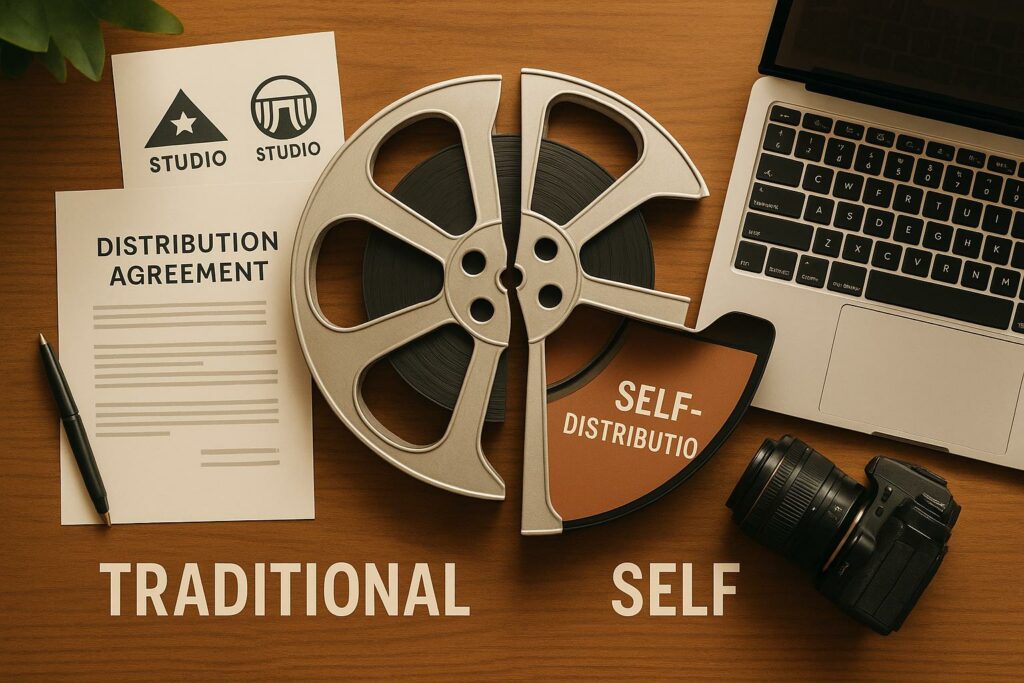
When it comes to distributing your film, you have two main options: self-distribution or working with a distributor. Each has its pros and cons, and the choice depends on your goals, budget, and audience.
- Self-distribution: You control every aspect, from pricing to marketing. Platforms like Vimeo On Demand, YouTube, and Filmhub let you directly reach viewers. It’s ideal for niche films or creators who want full control but requires effort in promotion and audience-building.
- Working with a distributor: Distributors handle logistics, marketing, and connections to major platforms like Netflix or theaters. This method offers broader reach and credibility but involves revenue sharing, slower timelines, and less creative control.
Quick Comparison
| Factor | Self-Distribution | Distributor |
|---|---|---|
| Control | Full control over release and marketing | Distributor manages decisions |
| Revenue | Larger share, minus platform fees | Shared, with distributor taking a cut |
| Reach | Limited to your network and platforms | Access to major platforms and markets |
| Timeline | Faster release | Slower due to festivals and contracts |
| Upfront Costs | Lower (marketing, platform fees) | Higher (festivals, promotional materials) |
| Recognition | Harder to build industry credibility | Greater exposure through established channels |
In short, self-distribution works for filmmakers looking to maintain control and connect directly with audiences, while distributors are better for films with broad appeal seeking professional representation. The best choice depends on your film’s goals and your resources.
Distribution Company vs. Self-Distribution: Which is Best?
Self-Distribution: Platforms, Process, and Benefits
Choosing self-distribution over traditional methods puts you in the driver’s seat, giving you full control over how your film reaches its audience. Instead of relying on a third party, you take charge of distribution, marketing, and sales. While this hands-on approach requires more effort, it offers freedom and the potential for greater financial rewards.
Top Platforms for Self-Distribution
The digital era has opened up a variety of platforms where independent filmmakers can share and sell their work directly. Each platform has its own features and appeals to different audiences.
Vimeo On Demand is a favorite among filmmakers who prioritize quality over quantity. It lets you set your own pricing, provides a sleek and professional look with no ads, and offers detailed audience analytics. With lower commission fees than many other platforms, it’s especially appealing for short films and independent projects with an artistic edge.
YouTube offers unmatched reach, with over 2 billion logged-in users every month. You can monetize your content through ads, direct sales, or memberships. While it’s free to upload your work, the sheer volume of competing videos means you’ll need engaging content and a solid promotional strategy to stand out.
Filmhub acts as a digital distributor, helping you get your film onto major streaming platforms like Tubi and Amazon Prime Video without requiring exclusive rights. Revenue is typically shared 50/50, and Filmhub handles the technical details for various platforms, saving you time and effort.
Gumroad is a simple e-commerce platform that allows you to sell digital downloads of your film. It’s ideal if you want to bundle your movie with extras like behind-the-scenes footage, scripts, or commentary. With low transaction fees, you have full control over pricing and presentation.
Once you’ve chosen the right platform, the next step is crafting a detailed self-distribution plan.
How to Self-Distribute Your Film: Step-by-Step Process
Successfully self-distributing your film requires careful preparation and execution.
- Prepare your assets: Create high-quality versions of your film in multiple formats to meet platform requirements. Don’t forget to include promotional materials like trailers, posters, and stills, as well as subtitles or closed captions to make your film accessible to a wider audience.
- Set your pricing strategy: Research similar films on your platform to determine competitive pricing. Consider offering options like rentals, purchases, or bundles with bonus content.
- Optimize your listings: Write compelling descriptions, use appropriate tags, and choose categories that improve your film’s discoverability.
- Launch your marketing campaign: Spread the word through social media, film forums, and local screenings. Connect with online communities where your target audience gathers, and use email marketing to drive early interest and sales.
With these steps, you’ll be well-positioned to maximize your film’s reach and revenue.
Benefits of Self-Distribution
Taking the self-distribution route comes with several advantages:
- Creative control: You decide how your film is marketed and presented. As Armen Dilanchian explains, "Self-distribution offers creative control and potentially higher revenue, allowing filmmakers to reach audiences directly". The L.A. Film School Team adds, "With DIY distribution, you’re in the driver’s seat – total creative control is yours".
- Higher revenue potential: By cutting out middlemen, you retain a larger share of the profits, particularly with Transactional Video on Demand (TVOD) models. This is especially beneficial for niche films.
- Direct audience engagement: Interacting directly with viewers helps build a loyal fan base that’s more likely to support your future projects.
- Flexible release schedules: You can adjust your release strategy based on performance, without being tied to rigid agreements.
- Global reach: Many self-distribution platforms automatically make your film available worldwide, giving you access to a diverse and expansive audience.
Though self-distribution requires effort and strategic marketing, it’s a rewarding way to maintain control over your work while building a direct connection with your audience.
Traditional Distribution: Process, Networks, and Benefits
Traditional distribution takes a well-trodden path, relying on industry gatekeepers to connect filmmakers with professional networks and established marketing channels. Unlike self-distribution, this approach involves collaborating with distributors, sales agents, and platforms that already have strong ties to theaters, streaming services, and international markets.
How Traditional Distribution Works
The journey usually starts with submitting your film to festivals. Major events like Sundance, Tribeca, SXSW, and Cannes act as key venues where distributors scout for standout projects. If your film gains attention at these festivals, the next step is pitching to distributors. These companies specialize in acquiring films and have built strong relationships with theaters, streaming platforms, and international buyers. They evaluate films based on factors like market potential, production quality, and audience appeal. To make your pitch compelling, you’ll need polished materials such as screening links, press kits, festival accolades, and audience data.
Once a distributor shows interest, the focus shifts to contract negotiations. These discussions cover rights, revenue splits, marketing responsibilities, and distribution territories. Many traditional deals include advance payments, with terms varying depending on the film’s commercial appeal and the distributor’s reach. From the first festival submission to a signed deal, the process can take time, but it offers distinct advantages and challenges.
Benefits of Traditional Distribution
Traditional distribution offers several perks that can be game-changers for filmmakers.
- Broad Reach: Distributors use their established connections with major platforms like Netflix, Hulu, and Amazon Prime Video, as well as international sales networks, to bring your film to larger audiences. This reach often surpasses what most self-distributed films can achieve.
- Marketing Expertise: Distributors come with dedicated publicity teams and established press relationships. They handle everything from creating posters to running social media campaigns, ensuring your film gets professional promotion.
- Industry Credibility: Partnering with a respected distributor can elevate your film’s reputation. Films released through traditional channels are often taken more seriously by critics, awards committees, and other industry professionals – an important factor if you’re looking to build a long-term career.
- Financial Advances: Many traditional deals include upfront payments that can help recover production costs. Distributors also manage additional revenue streams, such as international sales, licensing deals, and merchandising opportunities.
Drawbacks of Traditional Distribution
While the traditional route offers plenty of benefits, it’s not without its downsides.
- Loss of Creative Control: Distributors often have the final say on marketing materials, release schedules, and sometimes even the final cut of the film. This can mean compromising on your artistic vision to meet commercial expectations.
- Reduced Profits: Revenue-sharing agreements often leave filmmakers with a smaller slice of the pie. Distributors typically take a significant portion of net revenues after deducting marketing costs, fees, and other expenses.
- Delays in Release: The approval process can be slow. Distributors work on their own timelines and may prioritize bigger-budget films, leaving smaller indie projects waiting longer to hit the market.
- Gatekeeping Challenges: Distributors are highly selective, often prioritizing films with clear commercial potential over those with niche or experimental appeal. Even high-quality projects can struggle to secure traditional deals if they don’t fit the mold.
- Upfront Costs: Filmmakers usually bear the initial costs of festival submissions, travel, and creating professional materials like press kits and promotional screenings. These expenses can add up before a distribution deal is even on the table.
Traditional distribution is a time-tested approach that offers access to professional networks and marketing expertise, but it also demands patience, compromise, and upfront investment. It’s a path that requires careful consideration, especially for filmmakers balancing artistic goals with commercial realities.
sbb-itb-376fc17
Self-Distribution vs Traditional Distribution: Side-by-Side Comparison
When deciding between self-distribution and traditional distribution, filmmakers need to weigh factors like creative control, revenue potential, upfront costs, audience reach, and timing. Each approach comes with its own set of advantages and challenges, and the choice can significantly influence your film’s journey and financial outcomes. Here’s a closer look at how these two methods stack up against each other.
Comparison Chart: Key Factors
| Factor | Self-Distribution | Traditional Distribution |
|---|---|---|
| Creative Control | Full control over marketing, release schedule, and the final cut of your film | Distributors typically take charge of marketing and release decisions |
| Revenue Split | You keep a larger share of the revenue, minus platform fees | Revenue is shared, with a portion going to cover distributor costs |
| Upfront Costs | Lower initial expenses, mainly for marketing and platform fees | Higher costs for festivals and promotional campaigns |
| Audience Reach | Limited to your network and the visibility provided by platforms | Access to larger markets, including major streaming platforms and international audiences |
| Marketing Support | DIY approach, relying on personal networks and social media | Professional marketing teams with established media connections |
| Timeline to Release | Flexible and often faster, depending on your schedule and strategy | Longer timelines due to festivals and negotiations |
| Revenue Potential | Depends heavily on your promotional efforts and platform performance | Can yield higher returns, though revenue is shared with distributors |
| Industry Recognition | May struggle to gain industry credibility initially | Greater recognition through established channels, festivals, and awards |
One key difference is the time commitment. Self-distribution means taking on the full responsibility of marketing and managing your film’s release, which can be time-intensive. On the other hand, traditional distribution leans on experienced professionals for promotion but often involves a slower rollout due to festival circuits and negotiations.
Main Challenges of Each Method
While self-distribution offers filmmakers complete control and the chance to keep more of the revenue, it also demands significant effort in building an audience and promoting the film. Navigating social media algorithms, creating buzz, and standing out in a crowded digital space without a pre-existing network can be daunting – and often requires additional investment in marketing.
Traditional distribution, on the other hand, comes with its own hurdles. The selection process is highly competitive, and films that don’t align with commercial trends may struggle to secure deals. Additionally, revenue tracking can become complex, with various deductions and fees creating uncertainty about final earnings.
How to Choose the Right Distribution Method for Your Film
Picking the right distribution method for your film depends on your resources, goals, and the specific nature of your project. Below, we’ll break down the factors that can help you decide which route to take.
What to Consider When Choosing Your Distribution Method
Start by thinking about budget constraints. Self-distribution often requires upfront spending on marketing, platform fees, and promotional materials. On the other hand, traditional distribution can come with even higher initial costs, such as festival submission fees, promotional campaigns, and travel expenses.
Next, consider your target audience size. If your film is tailored to a niche audience or specific demographic, self-distribution might be the way to go. This method allows for direct engagement with your viewers. But if your film has broader, commercial appeal, traditional distribution channels can connect you to a larger and more diverse audience.
Your career objectives should also play a role. If you’re aiming for industry recognition or want to build relationships with festival programmers and critics, traditional distribution might be a better fit. However, if retaining creative control and connecting directly with your audience is more important to you, self-distribution could align better with your goals.
Timeline expectations are another key factor. Self-distribution usually gets your film in front of audiences faster, while traditional distribution often involves a longer process, including festival circuits and negotiations.
Lastly, think about your marketing capabilities. Self-distribution requires you to handle social media, audience-building, and promotional efforts – tasks that demand significant time and energy. If marketing isn’t your strong suit, traditional distributors can provide professional support, though this may come at the cost of some creative control.
By weighing these factors, you can determine which path best suits your film and your aspirations.
When to Use Self-Distribution vs Traditional Distribution
Self-distribution shines when it comes to niche projects with a dedicated audience. For instance, films like documentary shorts on local issues, experimental projects, or stories targeting specific interest groups often thrive with a direct-to-audience approach. This method works particularly well for filmmakers who already have a strong social media presence or an existing fan base to tap into. It’s also a great option if you want to release your film quickly and retain full ownership.
Traditional distribution, on the other hand, is ideal for films with broad appeal or commercial potential. If your project features high production values, well-known talent, or a compelling story that stands out, traditional distribution can provide the professional representation and festival exposure you need. This route is also great for filmmakers looking to build long-term careers in the industry, as it offers opportunities for credibility through festival selections, distributor partnerships, and professional reviews.
Films with universal themes or broad entertainment value often perform best through traditional channels. These distributors can secure placements on major streaming platforms and help you reach international audiences – something that’s harder to achieve on your own.
How Indie Shorts Mag Can Help Your Distribution Strategy
Indie Shorts Mag offers valuable tools and resources to support your distribution efforts. Through their extensive film festival coverage, they help you identify submission opportunities tailored to your film’s genre and target audience.
They also provide filmmaker interviews and industry insights, offering practical advice from creators who’ve successfully navigated both self-distribution and traditional routes. This real-world guidance goes beyond theory, giving you actionable tips for your own journey.
Submitting your film for review on Indie Shorts Mag can boost its visibility. A third-party review can enhance your marketing efforts if you’re pursuing self-distribution or strengthen your submission package for traditional channels. On top of that, their free film festival cover letter generator simplifies the submission process for filmmakers aiming for traditional distribution. And with tutorials on pre-production and post-production techniques, they help improve your film’s appeal across all distribution platforms.
Whether you’re going solo or working with a distributor, Indie Shorts Mag provides the tools to make your film stand out.
Conclusion: Finding the Right Path for Film Distribution
Choosing between self-distribution and traditional distribution depends entirely on your goals and the resources you have at hand. Each path offers its own set of benefits, tailored to different filmmaking ambitions. Let’s break it down.
Self-distribution gives you the reins. You maintain full creative control, launch your film faster, and connect directly with your audience – all while keeping the revenue. Plus, you can quickly adapt your strategy based on audience feedback. However, this route requires you to take on the heavy lifting of marketing and technical management.
On the other hand, traditional distribution provides access to industry networks, a wider audience reach, and recognition through festivals or partnerships with established distributors. This approach can help land your film on major streaming platforms and even international markets that are tough to crack on your own. The trade-off? You’ll have less creative control, face longer timelines, and need to share revenue with distributors and festival organizers.
The key is aligning your choice with your current career stage and what you want to achieve with your film. For instance, if your priority is building a direct relationship with your audience while retaining full ownership, platforms like Vimeo On Demand or Filmhub are great options for self-distribution. But if your film has broad commercial appeal and you’re seeking industry recognition, traditional distribution through festivals and established distributors can offer the exposure and validation you’re looking for.
Some filmmakers even combine the two approaches. For example, they might start with the festival circuit to gain credibility, then transition to self-distribution to engage directly with their audience. Others might self-distribute first to prove their film’s market potential before pitching it to traditional distributors.
Ultimately, your distribution strategy should reflect your resources, career goals, and the unique needs of your project. Whether you go the self-distribution route or opt for a traditional approach, success lies in making a clear choice and following through with determination.
FAQs
What challenges do filmmakers face with self-distributing their films?
Filmmakers face a range of challenges when taking the self-distribution route for their films. One of the biggest obstacles is dealing with tight budgets. Without the financial support of a traditional distributor, marketing efforts often take a hit, limiting the ability to reach a broader audience. This means filmmakers are left juggling all aspects of promotion and outreach themselves – a process that demands both time and resources.
Another hurdle is breaking through in an overcrowded market. With countless films vying for attention, it’s tough to stand out, especially without access to established networks or platforms. To overcome this, filmmakers need to come up with inventive ways to connect with their audience, which often requires a mix of creativity, effort, and marketing savvy.
On top of that, self-distribution calls for a solid grasp of digital platforms and marketing tools. Platforms like Vimeo On Demand, YouTube, and Filmhub can be tricky to navigate, and balancing the creative side of filmmaking with the business demands of distribution can feel overwhelming. While self-distribution can be a fulfilling path, it takes careful planning, persistence, and a willingness to learn to make it work.
What are the differences in revenue potential between self-distribution and traditional distribution for independent films?
Filmmakers who choose self-distribution have the advantage of keeping a bigger slice of the revenue pie. This can lead to better profits – if the film connects well with its audience and has solid marketing behind it. But let’s not sugarcoat it: self-distribution comes with its own set of challenges, like higher upfront costs and the risk of lower earnings if the film struggles to gain traction or reach enough viewers.
On the flip side, traditional distribution means sharing revenue with distributors, which naturally reduces the filmmaker’s direct earnings. The trade-off? Access to broader audiences through established networks, which could result in a higher overall gross. This route tends to be more predictable but might not deliver as much per project, especially for filmmakers who are just starting out.
Choosing the right path really comes down to your film’s objectives, budget, and how prepared you are to handle the marketing and distribution side of things.
How should filmmakers decide between self-distribution and traditional distribution for their short films?
When deciding between self-distribution and traditional distribution, filmmakers need to weigh their goals, available resources, and the specific needs of their project. Factors like control, budget, marketing expertise, and audience reach play a huge role in this decision.
Self-distribution gives filmmakers complete control over their release strategy and allows them to keep a larger share of the profits. But it’s not without challenges – it demands a lot of effort and know-how in areas like marketing, engaging with audiences, and managing platforms. Tools like Vimeo On Demand or Filmhub can be useful, but your success largely depends on how well you can promote your film.
On the flip side, traditional distribution connects filmmakers to established networks and helps reach a wider audience. This route often involves film festivals or working with distribution partners. While it eases the workload, it does come with trade-offs like sharing profits and giving up some creative control.
Choosing the best option boils down to your film’s scale, your financial situation, and whether you value creative independence more than access to professional networks and resources.
Related Blog Posts

About the Author

Related Posts



No comments yet.
Got Something to add to this article?
Your email address will not be published. Required fields are marked *