
Article too long to read?
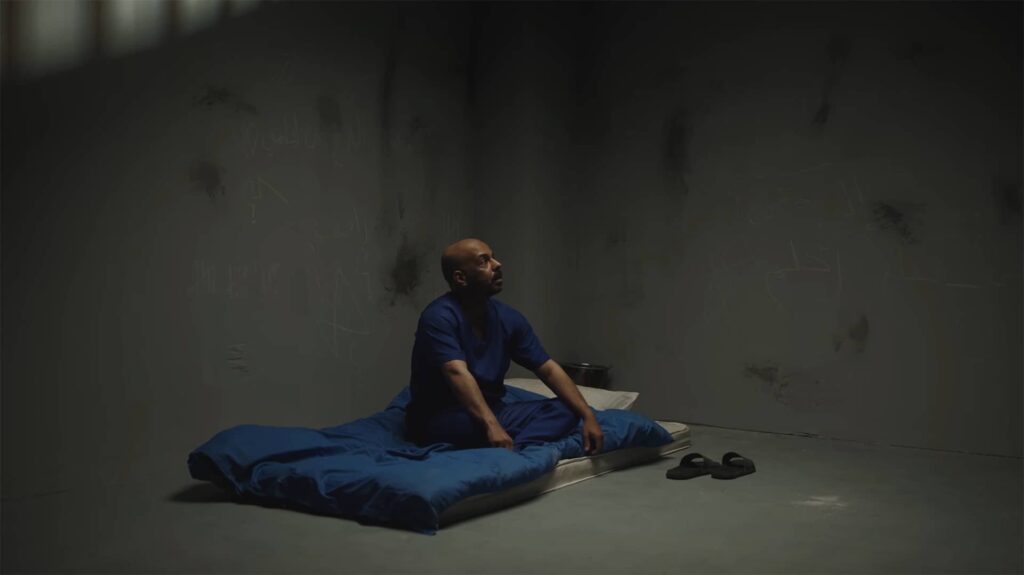
Director Raed Mohammed’s Huwan is a slow dramatisation of an individual’s solitary journey that compels him to face his inner turmoils, the agony he carries and the shame he buries. Psychological, profoundly impactful and a lesson in introspection and redemption, the film at 10:42-minute, manages to touch upon all the poignant themes, from trauma to recovery. The arc visible through the eyes of its lead Jaber (Naif Al-Fawaz), is a painstakingly slow tragedy that unfolds until there is no room left for mourning.
Co-writers Raed Mohammed and Noura Ali Al-Khaldi bring to screen a sensitive subject that is tightly held together with the tenets of unconditional love, acceptance and forgiveness. We witness Jaber being incarcerated and within minutes the bottle film explodes with an alter ego (Salem Al-Khuzayem) and fractured memories that hit like slivers across an already defeated man. Cinematographer Mohamed Taher Al-Khalfi gets a lot to experiment with. The minimalistic interior of the prison is juxtaposed against the past Jaber once inhabited. The contrast is not lost to the viewer. As the camera sways between the past and the present, Yasmine Mansour’s editing presents a seamless timeline that could have otherwise been very jarring to the viewer. Instead, thanks to Mansour and the background score we get a visual imagery that buoys between time and space–an unforgettable experience that lets you inhabit Jaber’s mind and the weight he carries.
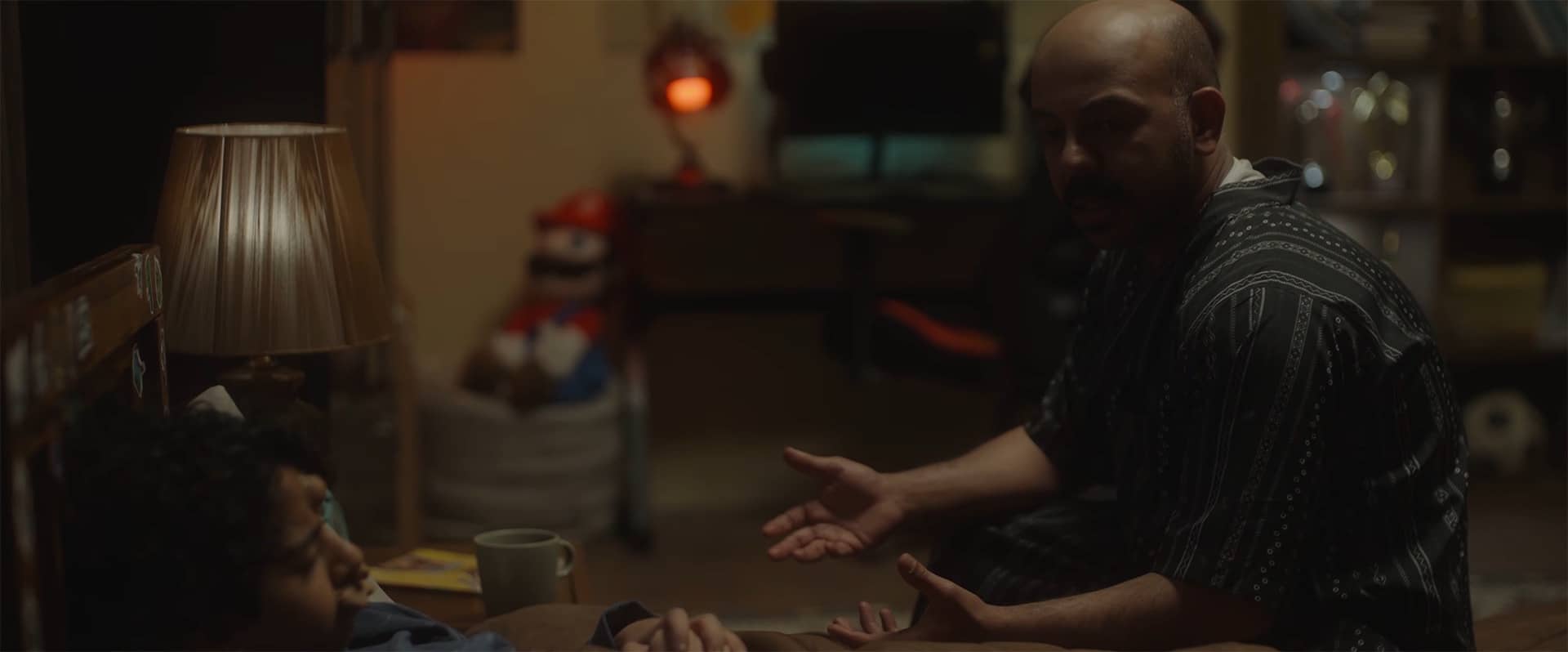
Makeup artist Hussam Ghazi’s craft deserves a special mention, for without it, neither the alter ego nor Fareeh (Raed Al-Asiri) would have been able to be that effective in a film with such a short timeline. When Jaber’s inability to accept his doting son spills over, the family dynamics come to display in a well written scene across the dinner table. Saraa Al-Otaibi, who plays Aryam becomes the scene stealer here. With very little screen time, she manages to create a powerful impact, her restrained performance which eventually leads to her character’s implosion is so very well enacted, that Jaber and Aryam’s relationship becomes the playground for Mohammed to puncture his audience with enough backstory. A smartly inserted scene, the dinner table conversation remains the pivotal point in the film that quickly escalates into a cornucopia of drama, tragedy and cataclysm. And, so the last thing Fareeh (moving performance by Al-Asiri) manages to tell to his father delivers the punch the audience reel from long after the credits roll. Add to that, the cyclical narrative and Huwan gets its much needed closure.
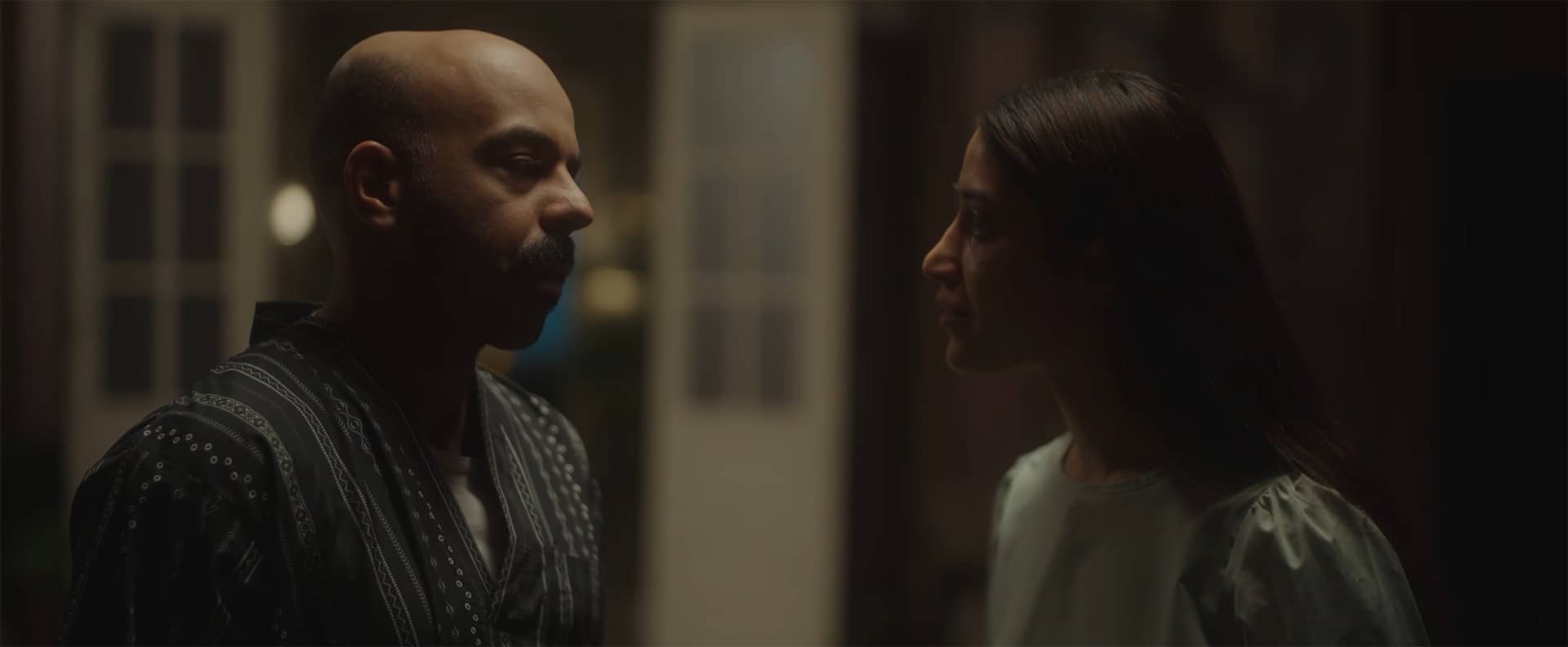
In the cinematic verse, there are few who would like to get into the nitty-gritty of very uncomfortable topics–grief being one of them. But, instead of remaining superficial, Mohammed’s Huwan pokes and prods until the visceral truth is left bare for all to see. Thought-provoking, wonderfully enacted in a short timeline, Huwan is a tense, emotional ride into the psychosis of a grieving individual’s mind. Perhaps painful for some, but a must-watch for all, the film offers valuable lessons in love, trauma and the painstaking journey of forgiving that we might all need.
No comments yet.
Got Something to add to this article?
Your email address will not be published. Required fields are marked *