
Article too long to read?
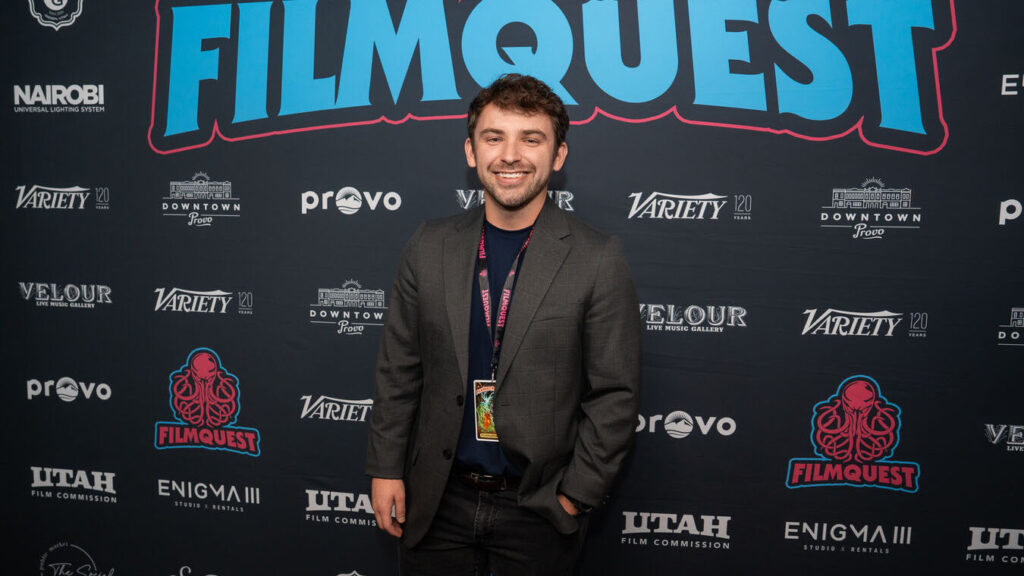
With Black Men in Uniform: The Untold Story, director Emunah La-Paz approaches Black military history as part of a much broader American story—one shaped not only by discrimination and sacrifice, but also by service, achievement, culture, family and resilience. Blending archival material, oral history, digital imagery and a contemporary visual rhythm, the documentary seeks to confront difficult history without allowing suffering to become the defining image of the people who lived through it. In this conversation with Indie Shorts Mag, La-Paz discusses the experiences that shaped that perspective, the responsibility involved in representing historical trauma, the discoveries that influenced the film’s structure, and her ambition to bring overlooked lives from history into increasingly cinematic forms of storytelling.
Indie Shorts Mag: Black Men in Uniform: The Untold Story examines Black history through service, resilience, achievement, and cultural change rather than allowing suffering to define the entire narrative. How did you arrive at that central perspective for the documentary?
Emunah La-Paz: A lot of that perspective came from my upbringing and from the way history was presented to me as a child. Whenever we studied painful subjects—the Holocaust, slavery, or Native American history—the emphasis seemed to be almost entirely on suffering. In my classroom, there was one Jewish student, one Native American student, and me, one Black girl. Whenever we turned the page and encountered particularly harsh photographs, I remember other children sometimes whispering or turning around to look at me.
That stayed with me.
When we studied Black history, the story often seemed to end with the Civil War: slavery ended, the enslaved were freed, and then we simply moved on. There was very little discussion about what came afterward—the generations of Black Americans who continued building, serving, creating, achieving, and contributing to this country. When history is taught without that fuller context, it can also reinforce harmful ideas that some children may already be learning elsewhere.
With Black Men in Uniform: The Untold Story, I wanted to approach difficult history differently. I don’t believe we have to erase suffering or soften the truth, but suffering should not become the entire identity of a people.
Serving our country has been a shared American journey. Black servicemen participated in that journey even during periods when America did not extend the same freedoms and opportunities to them that they were fighting to defend. Their service, resilience, achievements, and influence are part of American history, not separate from it. I wanted the documentary to reflect that fuller story.
Indie Shorts Mag: Historical documentaries dealing with racism and slavery have to confront painful realities without allowing those images to overwhelm everything else. How did you approach finding the right balance between historical honesty and preserving the dignity and humanity of the people represented?
Emunah La-Paz: For me, historical honesty and human dignity have to exist together. I never wanted to sanitize history or pretend that slavery, racism, violence, and discrimination were anything less than horrific. But I also didn’t want the people represented in the documentary to exist only as images of suffering.
That was something I remembered from my own childhood. Too often, when we learned about Black history, the images we were shown were degrading or painful, and those images could become the entire story. I wanted to be very conscious of not repeating that experience for another generation.
So when the documentary confronts painful history, I try to give the audience enough truth to understand what happened without lingering on suffering simply for emotional impact. Then I bring the focus back to the humanity of the people themselves—their courage, intelligence, families, service, accomplishments, humor, culture, and resilience.
There is a difference between showing what happened to someone and defining that person by what happened to them.
That distinction became very important to me while making Black Men in Uniform: The Untold Story. These men were not simply victims of racism who happened to wear uniforms. They were soldiers, fathers, sons, innovators, athletes, artists, and Americans who helped shape the country, even when the country did not always recognize their full humanity.
I wanted audiences to leave knowing the difficult history, but also knowing the people. Preserving their dignity doesn’t weaken the truth. I believe it makes the truth more complete.
Indie Shorts Mag: The film brings together archival material, oral history, digital imagery, and a contemporary, vignette-driven rhythm. How did you develop that storytelling language, and what did you want the combination of older material and modern techniques to achieve?
Emunah La-Paz: I wanted the film to feel like history was alive rather than something sitting behind glass in a museum. The archival material and oral histories give us the foundation because they connect the audience to real people, real events, and real memories. But I also wanted to use contemporary techniques to help audiences connect emotionally with a history that may have happened generations before they were born.
The vignette-driven structure developed partly from the enormous amount of history I was trying to cover. Rather than presenting it as one long chronological lesson, I wanted to create individual moments and stories that could stand on their own while still contributing to a larger journey. That allowed us to move between military history and cultural figures and show how these experiences were connected to the broader American story.
Digital imagery also gave me another way to approach historical moments where traditional visual material was limited or where I felt that repeatedly showing degrading or traumatic imagery would work against what I was trying to accomplish. I wanted viewers to understand the gravity of those experiences without reducing Black people to images of suffering.
It was also important to me that white viewers did not come away from the film with a sense of inherited guilt. That wasn’t what I wanted to create. Instead, I wanted to show that even during difficult periods in our history, there were white Americans who made a conscious choice to stand on the side of equality. Branch Rickey is one example. His role in helping Jackie Robinson break Major League Baseball’s color barrier demonstrates that people living within an unjust system could still make choices that challenged it.
That is an important part of the message for me. We cannot change what previous generations did, but we are responsible for the choices we make in our own time. I didn’t want the feeling to be one of guilt. I wanted it to be about integrity—about recognizing injustice and choosing to do the right thing when we encounter it.
Ultimately, the combination of old and new was about building bridges—between generations, between historical periods, and between people. History doesn’t change simply because we use modern tools to tell it. Sometimes those tools can help a new generation see that history more fully and recognize that the choices we make today become part of the history someone else will inherit.
Indie Shorts Mag: When photographs or footage do not exist, digital imagery can become an important part of visualizing history. What principles guided your decisions about when and how to use those images in Black Men in Uniform?
Emunah La-Paz: The guiding principle was always that digital imagery should serve the history, not rewrite it. There are stories in Black Men in Uniform for which photographs or film footage simply do not exist, particularly when you go further back in history. I didn’t want the absence of an image to mean that those people or experiences could not be represented visually.
Pata Seca is an important example. Historical accounts describe him as an enslaved man who was forced to father more than 200 children. There is no photographic record that allows us to look into the faces of those individual children, yet they were central to understanding the enormity and inhumanity of what was done to him and to the women involved. I did not want to substitute unrelated photographs and unintentionally suggest that those were the actual people. Digital imagery allowed me to create a visual interpretation of that history while being mindful that what the audience was seeing was a representation, not an archival photograph.
At the same time, I was very conscious of dignity. There are historical photographs depicting slavery and racism that are extremely disturbing and dehumanizing. Sometimes those images are necessary to understanding what occurred, but I don’t believe we have to repeatedly expose audiences to human suffering in order to prove that suffering existed.
Digital imagery gave me another choice. It allowed me to communicate the gravity of certain historical moments without turning another human being’s suffering into a spectacle. I wanted audiences to understand what happened to people like Pata Seca while also seeing them as human beings rather than simply as victims of brutality.
For me, the question was always: Does this image help us understand the person and the history while preserving their humanity? If it did, then it had a place in the film. Technology was simply the tool. The responsibility for how that tool was used remained with me as the filmmaker.
Indie Shorts Mag: The documentary extends beyond military history to include figures such as Jack Johnson and Jackie Robinson. What interested you about placing the experiences of Black servicemen alongside developments in sports, culture, and wider American society?
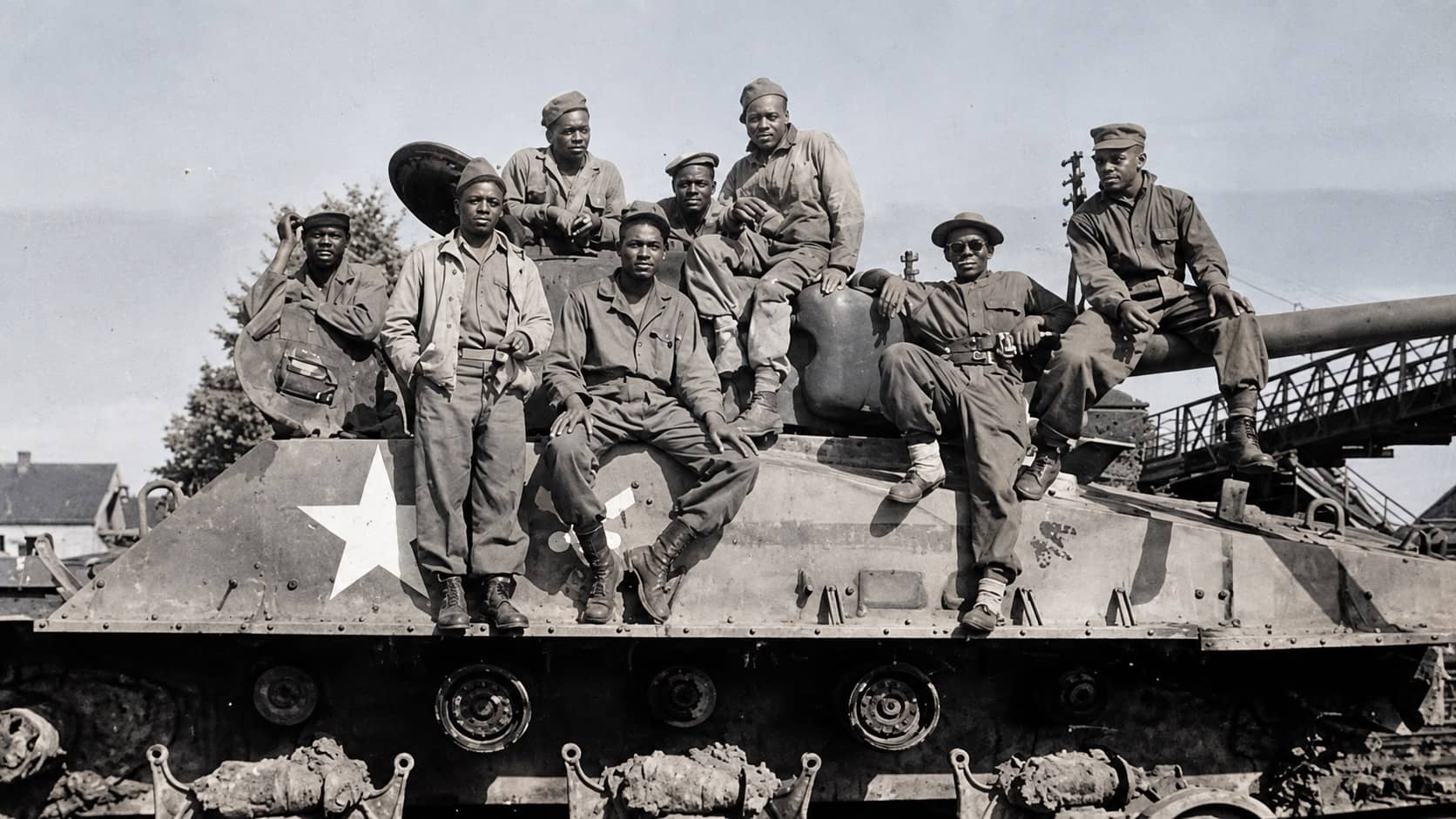
Emunah La-Paz: What interested me was discovering that these histories were not separate at all. The more I researched Black military service, the more connections I began finding to sports, entertainment, and American culture. I learned that African American servicemen also had connections to the Negro Leagues, and that fascinated me. These men could serve their country and then return home to a society where segregation still shaped their opportunities. Their military service was only one chapter of much larger American lives. I also became interested in the 761st Tank Battalion, the all-Black unit known as the “Black Panthers,” which fought during World War II. As I researched military history, I kept finding unexpected intersections between the military and American culture, including the influence of something as familiar as baseball on the way American soldiers were trained to throw certain grenades. That same interconnected history can be seen through figures such as Jack Johnson, Joe Louis and Jackie Robinson. Jack Johnson became the first Black world heavyweight champion and created a legacy that profoundly affected the environment in which Joe Louis later became champion. Louis then put his boxing career on hold to serve in the U.S. Army during World War II. Jackie Robinson also served in the Army before making history in Major League Baseball. Those connections helped me understand that I couldn’t tell the story of Black servicemen entirely within the boundaries of military history. These men did not stop being part of American culture when they took off their uniforms. They returned to communities, sports, families and careers, and some continued challenging barriers in civilian life. That is why Black Men in Uniform moves beyond the battlefield. The military story, the sports story and the cultural story are all part of the same American journey.
Indie Shorts Mag: The film explores difficult history while also raising larger questions about how later generations relate to the actions and experiences of those who came before them. How did you navigate that idea through the writing and directing of the documentary?
Emunah La-Paz: One of the ideas I kept returning to was that we inherit history, but we don’t inherit personal responsibility for every action of the people who came before us. What we do inherit is the opportunity to decide what we will do with that history.
That influenced both my writing and directing. I didn’t want to tell Black audiences that suffering was their inheritance, and I didn’t want to tell white audiences that guilt was theirs. Neither approach felt productive to me. I wanted people to understand what happened, recognize the courage of those who challenged injustice, and then consider the choices available to us in our own time.
That is one reason I was interested in showing people such as Branch Rickey alongside Jackie Robinson. Their story demonstrates that people living during the same historical period could experience the world very differently and still make choices about what they believed was right. Integrity is not limited to a particular race or generation.
I approached the servicemen in much the same way. Many fought for freedoms abroad that they themselves were not fully afforded at home. Later generations cannot change that contradiction, but we can acknowledge it, learn from it, and honor what those men contributed despite it.
Ultimately, I didn’t want Black Men in Uniform to leave audiences asking, “Who should I blame for the past?” I hoped it might encourage a different question: “Knowing what I know now, what kind of person do I choose to be today?”
For me, that is where history becomes meaningful. We cannot rewrite what previous generations did, but we are always writing what the next generation will remember about us.
Indie Shorts Mag: With the film moving across different periods, individuals, and forms of historical material, what were the greatest challenges in creating a coherent emotional journey rather than simply presenting a chronology of events?
Emunah La-Paz: The sheer amount of history was probably the greatest challenge. The film moves through different generations, wars, cultural changes, military experiences, sports, music, and individual lives. With that much material, it could easily have become a chronology of events rather than an emotional journey, and I never wanted the documentary to feel like a history lecture.
Instead, I tried to find the human threads connecting those different periods. The names, dates, and circumstances change, but ideas such as service, sacrifice, family, dignity, resilience, opportunity, and belonging continue from one generation to another.
The vignette structure allowed each story to have its own emotional character. There are painful moments, but there are also surprising, inspiring, and joyful ones. I think that balance matters. Black history should have room for achievement, humor, pride, and joy as well as an honest examination of injustice.
Pacing was another important consideration. If audiences are taken from one traumatic event directly into another, eventually there is a danger of becoming emotionally numb. A story involving sports or culture could provide a moment to breathe while still revealing something important about the larger American experience.
Perhaps the hardest part was accepting how much had to be left out. There were extraordinary people and stories I simply could not fully explore within one documentary. Interestingly, that limitation has also led to interest in expanding Black Men in Uniform into a series.
If that happens, I would like to approach it almost as a series of movies, with the cinematic quality and emotional intimacy of a feature film. 42, with Chadwick Boseman portraying Jackie Robinson, is a good example of what I mean. We don’t simply learn facts about Jackie Robinson; for a period of time, we travel with him and experience the world around him.
I would love to bring that kind of treatment to the servicemen represented in Black Men in Uniform. I want audiences to know these men personally—to enter their homes, meet their families, understand what they were leaving behind when they went to war, and experience what it meant for them to return home after serving their country.
Making the documentary ultimately showed me that there are far more stories here than one film can hold. A cinematic series would give those stories room to breathe and allow audiences not only to learn the history, but to travel through it alongside the people who lived it.
Indie Shorts Mag: During the research, production, or editing process, were there discoveries that significantly changed the way you understood the story or led you to rethink the film’s structure, emphasis, or visual approach?
Emunah La-Paz: One of the biggest discoveries actually came from understanding how differently a newer generation consumes visual stories. We are living in what I sometimes call the TikTok generation. Things move quickly, and a significant part of my own audience is on TikTok.
My interest in that form of storytelling grew when TikTok invited creators to participate in its 2023 Short Film Competition connected with the Festival de Cannes. That experience taught me a great deal, but particularly about how a younger generation responds to pacing, imagery, music, and the amount of time you have to capture someone’s attention.
What surprised me was realizing that faster storytelling does not necessarily mean less meaningful storytelling. You can move quickly and still make someone feel something. You can introduce a person, an image, or a piece of history in a relatively short period of time and create enough curiosity that the viewer wants to know more.
That realization influenced Black Men in Uniform. With such an enormous historical timeline, I began to see the film less as a traditional documentary that had to remain with every subject for an extended period and more as a series of connected discoveries. That helped shape the vignette-driven rhythm of the film and gave me greater freedom to move between military history, sports, culture, archival material, oral history, music, and digital imagery.
It also made me think about accessibility. If I wanted younger audiences to engage with this history, I couldn’t necessarily expect them to adapt completely to the traditional way historical documentaries have always been presented. As a filmmaker, I could also meet them halfway without compromising the substance or seriousness of the history.
At the same time, I never wanted speed to become more important than emotion. Some moments need to breathe. Some images need to remain on the screen long enough for us to understand what they mean. Learning when to move quickly and when to slow down became an important part of the editing process.
So one of my biggest discoveries wasn’t necessarily a single historical fact. It was discovering a different way of delivering history. The research gave me the story, but learning from a newer generation helped influence how I chose to tell it.
Indie Shorts Mag: How did you approach presenting painful Black history in a way that acknowledges the reality of suffering while still allowing younger Black viewers to encounter resilience, dignity, achievement, and possibility in the people who came before them?
Emunah La-Paz: I wanted age-appropriate younger Black viewers to understand the truth of what previous generations endured without believing that suffering was the entirety of their inheritance. The pain is part of the history, and I never wanted to minimize it, but so are courage, achievement, creativity, service, and joy.
My hope was that an age-appropriate young person of any color or background could watch the film and not only understand what happened, but also see the resilience, humanity, and accomplishments of those who came before them—and imagine what is possible for their own generation.
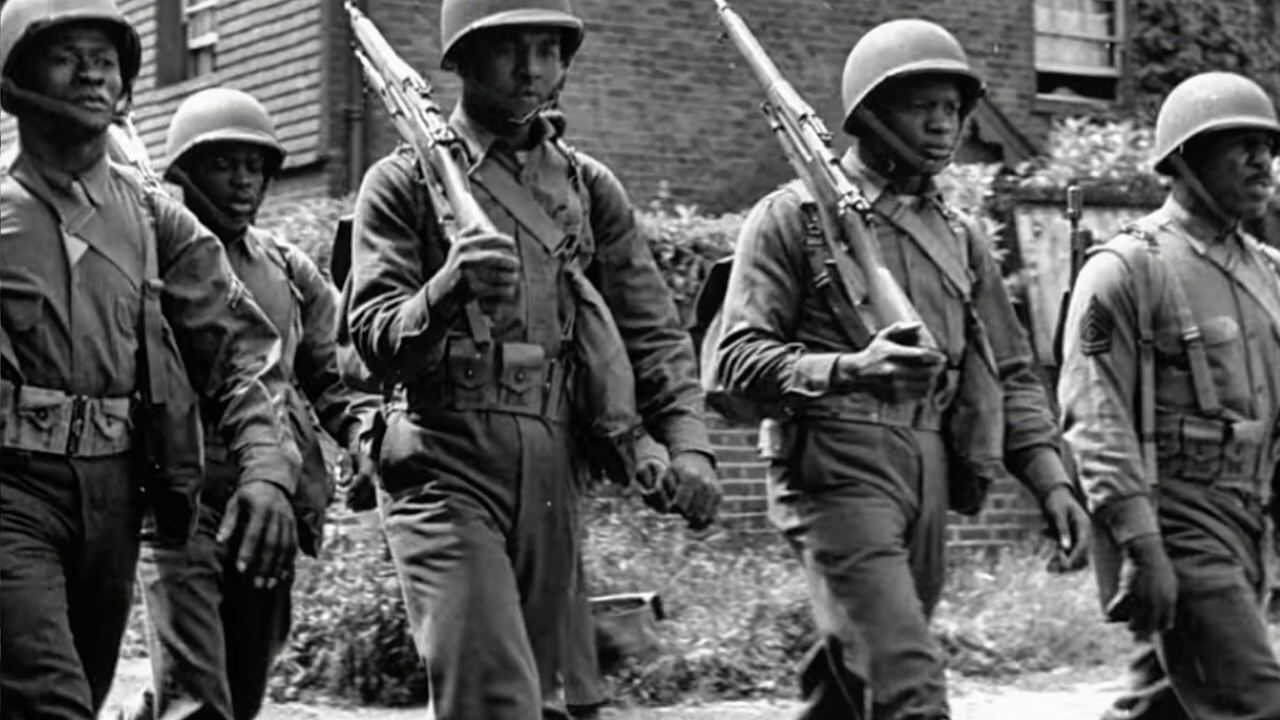
Indie Shorts Mag: Black Men in Uniform: The Untold Story is reaching audiences through streaming distribution and Biblio+, including library audiences and viewers in the United Kingdom. What do you hope happens as the documentary reaches audiences outside the United States, and where would you like your filmmaking to go next?
Emunah La-Paz: One of the things I hope happens as Black Men in Uniform reaches audiences outside the United States is that people recognize that these stories belong to a much larger human conversation. The circumstances are uniquely American, but ideas of service, sacrifice, discrimination, resilience, and the desire to belong are not limited to one country.
Having the documentary available through Biblio+ and reaching library audiences in the United Kingdom is particularly meaningful to me because libraries create an opportunity for a film to continue being discovered rather than simply having one moment of attention.
I’ve also been encouraged to see continued interest in overlooked stories of Black military service. A film such as J.M. Harper’s Soul Patrol, which focuses on the first Black special operations team of the Vietnam War, reinforces for me how much of this history is still being uncovered and how timely these stories remain.
As for what comes next, I want to keep expanding as a filmmaker. My next documentary project is Born Sexy Yesterday: Decoding the Enigma of Beauty, which takes me into a very different subject area involving women, beauty, resilience, worth, and some difficult social issues.
Beyond documentary filmmaking, however, I would eventually like to take what I have learned through historical research and move into cinematic films and series. There are people I encountered while making Black Men in Uniform whose lives deserve more than a few minutes in a documentary. I would love to create stories where audiences can actually travel with these individuals—know their families, understand their relationships, experience their fears and victories, and see history unfolding around them.
Documentaries have taught me how to uncover the history. My next evolution as a filmmaker is learning how to take some of that history and create cinematic worlds that allow audiences to experience it, while collaborating with filmmakers, writers, producers, and other creatives who already have experience bringing feature films and series to life. I think combining that cinematic expertise with the historical research and storytelling foundation I’ve developed through documentary filmmaking could create something very special.
As Black Men in Uniform: The Untold Story continues to find audiences, La-Paz’s ambitions are already extending beyond the boundaries of a single documentary. The process has revealed to her how many lives and histories remain too expansive for brief appearances on screen, and her interest in developing more cinematic films and series suggests a natural continuation of that work. Whether through documentary or narrative storytelling, the impulse remains consistent: to make history feel inhabited, to give overlooked individuals space to exist beyond the events that happened to them, and to invite audiences not merely to learn about the past, but to encounter the people who lived it.
No comments yet.
Got Something to add to this article?
Your email address will not be published. Required fields are marked *