Article too long to read?
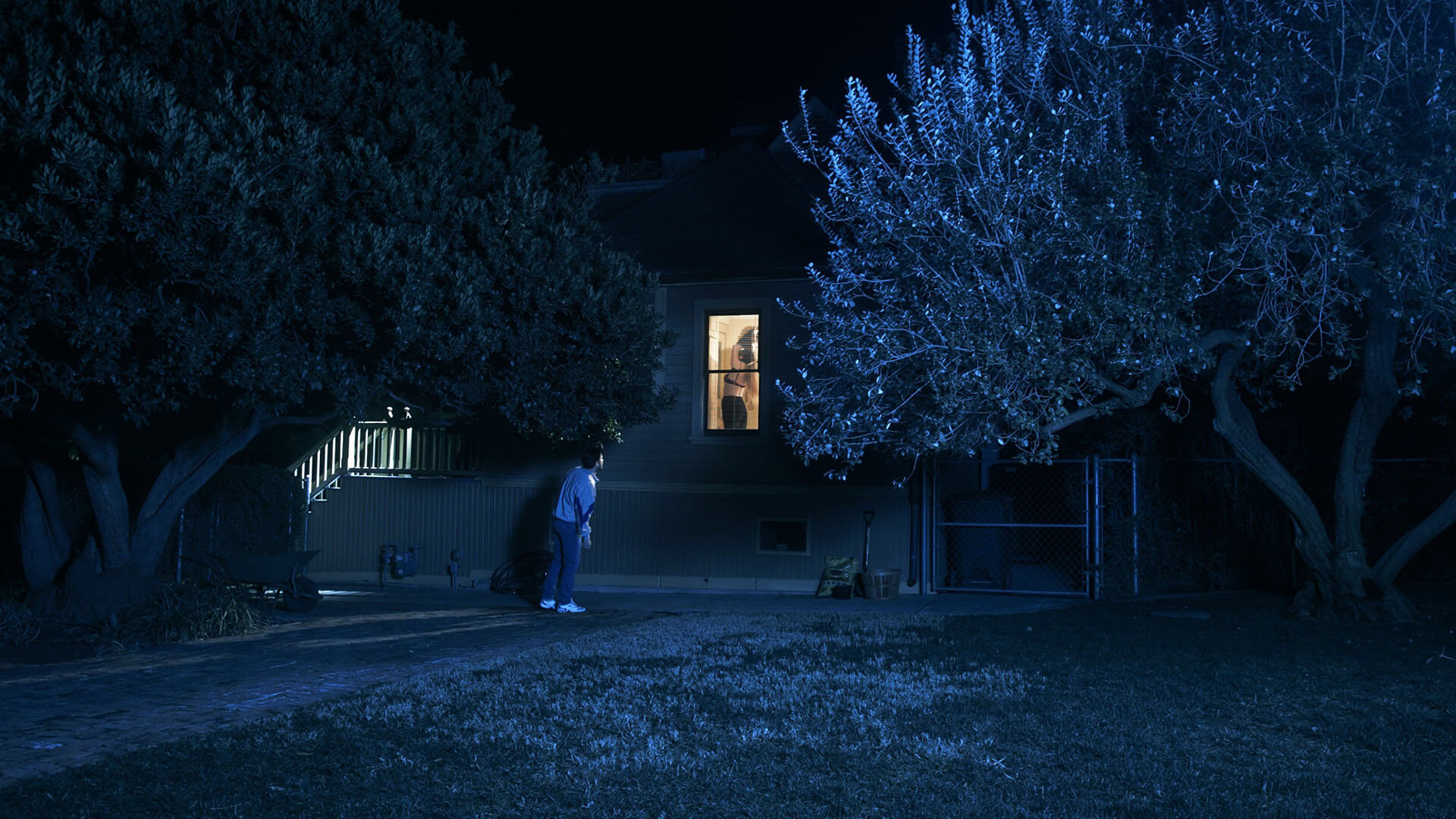
Adapted from Raymond Carver’s short story of the same name, Henry Chastain’s The Idea is a nine-minute drama about a middle-aged couple’s months-long fixation with the goings-on of their neighbours. An activity to which they devote actual preparation and around which they have built a full routine, it sees them watching the couple next door with an intensity suggesting foundational importance. Like all voyeurism, it spills more about the viewer than the viewed.
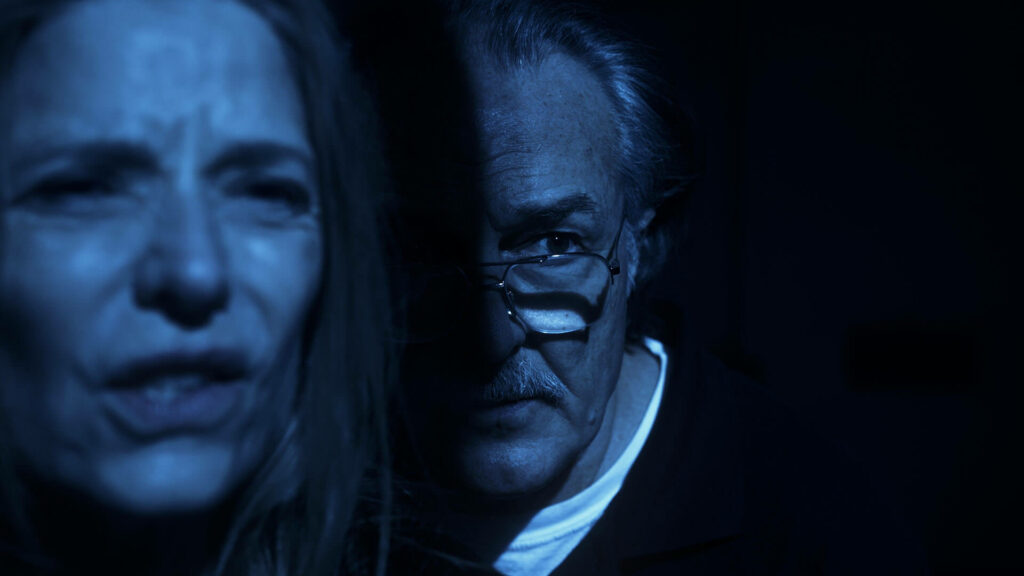
On some nights, the woman next door (Jill Galbraith) undresses by her bedroom window and her partner (Nolan Jones) slips out of the house to watch her. A performance of secrecy, guilt, perversion. Unlike the protagonists of the film, whose spying has nothing of performance to it. It is as sincere as fear and utterly devoid of self-consciousness. Vern (Dar Dixon) is less devoted to their nighttime hobby than his unnamed wife, the true protagonist, played by Melora Walters of Big Love (2006–2010) and Magnolia (1999) fame. The wife likes to refer to the woman next door as “trash”, and fantasises about the day she can say it to this other woman’s face.
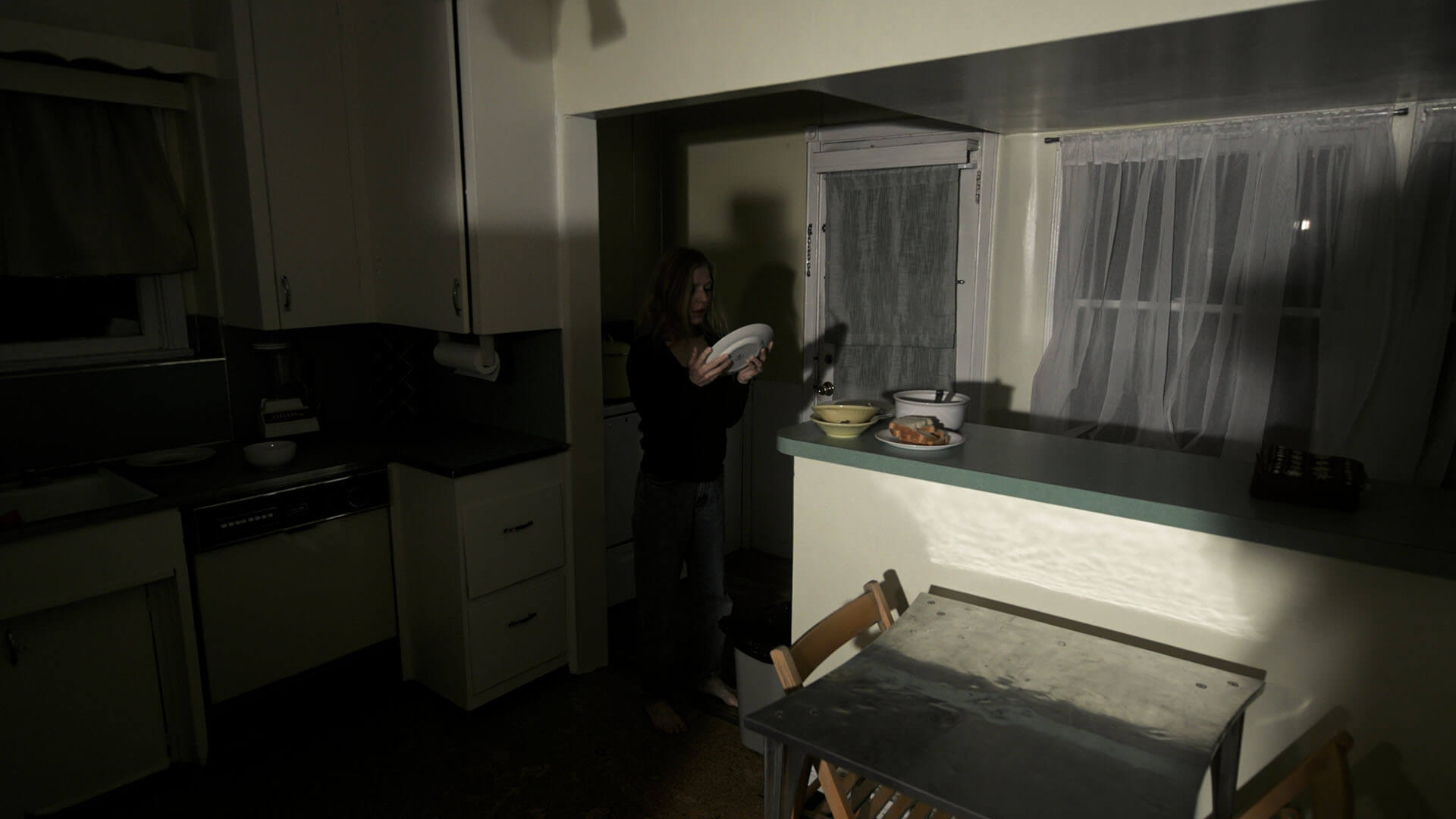
But of course, the film is not about that woman at all, whose face we barely see. Or her lawful pervert partner. Even Vern, whose interest dies down with the end of the performance, is not our focus. No, it is the unnamed wife, whose preoccupation with her favoured entertainment overwhelms any chance of a proper introduction to the second set of spectators—us. Their intricate nosiness mirrors ours in that it asks nothing of either other than complete attention. We need never look inwards.
The film imperceptibly begins its damnation of the wife when the boundaries separating her from “that trash” show signs of wearing down: there are ants in the house. What does it say about her if ants can infest—invade, even—her home? What separates her from that other woman whom the wife needs to define herself as morally superior? With no change in the film’s pace or tone, the wife descends into a neuroticism of cleanliness as though haunted by the spectre of dirt. Walters deftly uses quotidian detail to characterise the wife: a terribly bored suburban woman whose sexuality is in a flux of bloom and atrophy. The camera watches, a la The Zone of Interest, in a display of its own surveilling function.
In its last seconds the film plays with its source, creating a permeability between reality and interiority in tandem with the other boundaries that are already being toyed with. The result is an intriguing diegesis, pointing more directly at us than ever as the final voyeurs. Better yet, it illustrates how naturally Carver’s story is suited to cinematic adaptation.
Watch The Idea Short Film
No comments yet.
Got Something to add to this article?
Your email address will not be published. Required fields are marked *