Article too long to read?
The Oscar- and BAFTA-qualifying UK animation festival introduces stricter rules on generative AI as Georgian short When the Sea Was Calm and British animation A Little Death take major awards.
The Manchester Animation Festival (MAF) has announced that films containing generative-AI-created or transformed moving images will no longer be eligible for its competition from 2027, introducing a significant change to its submission policy as entries open for next year’s edition.
The announcement comes alongside the festival’s 2026 awards results, with Mamuka Tkeshelashvili’s When the Sea Was Calm winning the Short Film Award and Leto Meade and Jonathan Rockefeller’s A Little Death receiving Best British Short Film.
The 12th edition concluded on 12 November 2026, following five days of screenings, industry events and animation-focused discussions across Manchester.
The festival’s revised policy reflects a wider debate within the animation industry about generative AI, artistic ownership and the future of human-led creative production.
Manchester Animation Festival Introduces New Generative AI Restrictions
Under its newly published 2027 rules, Manchester Animation Festival will reject films if any part of the final moving image has been generated or transformed using a generative audio, image or video model.
The policy applies to films submitted to the festival’s competition from 2027 onwards.
The organizer also states that submissions found to be ineligible because of generative AI use will not necessarily be reviewed and will not qualify for a submission-fee refund.
This represents a more restrictive approach than simply asking filmmakers to disclose their use of AI tools.
Importantly, the published rule specifically addresses generative content or transformation within the final moving image. It should not automatically be interpreted as a prohibition on every form of AI-assisted production workflow.
Filmmakers using automated tools during development or post-production should consult the festival’s full policy before submitting, particularly where the distinction between conventional software assistance and generative transformation may be unclear.
Festival Director Emphasizes Human Creativity
Festival director Dr Steve Henderson linked the change to the organization’s commitment to the artists and craftspeople working within animation.
He said the festival wanted its new rules to reflect support for the creative professionals whose skills underpin the medium.
The position follows earlier public comments from Henderson expressing concerns about how generative AI systems draw upon existing artistic work and the potential consequences for animation professionals.
The new policy makes those concerns part of the festival’s formal competition eligibility requirements.
As generative video tools become increasingly sophisticated, animation festivals face questions about how to assess artistic authorship, technical innovation and the use of machine-generated images.
Manchester’s decision establishes a clear position for its 2027 competition, although the practical interpretation of individual production techniques may require further guidance.
When the Sea Was Calm Wins the Oscar-Qualifying Short Film Award
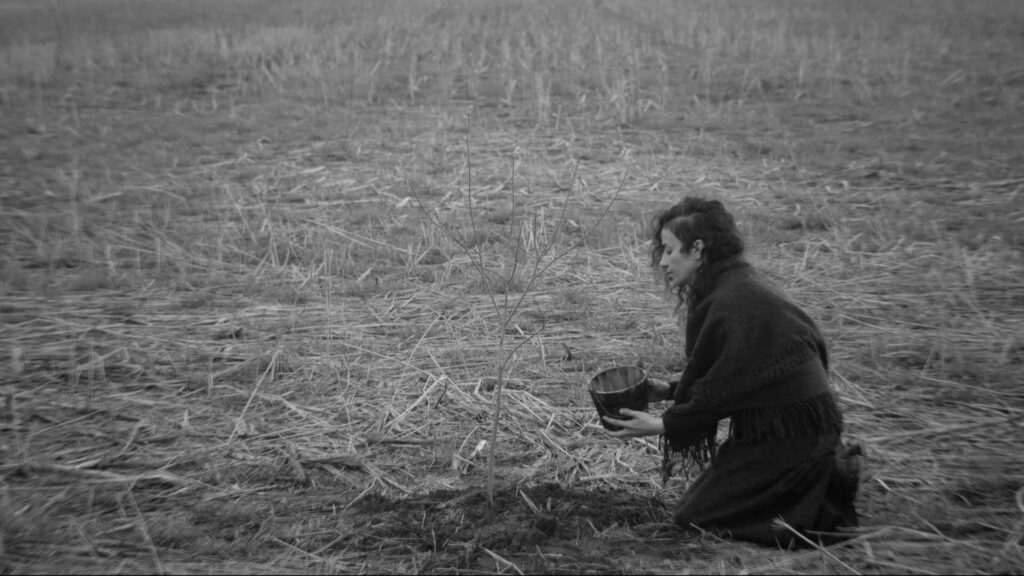
The festival’s principal Short Film Award went to When the Sea Was Calm, directed by Georgian filmmaker Mamuka Tkeshelashvili.
The 18-minute animated short is set in Sokhumi in the summer of 1992, before the outbreak of war transforms its residents’ lives.
The story follows a 13-year-old boy experiencing his first love while spending his days cycling, swimming and playing football with friends.
When the conflict reaches the city, the girl he has fallen for is forced to leave.
Decades later, the boy, now an elderly man, returns to the ruined city, confronting the memories of a childhood interrupted by violence.
Using puppet and cut-out animation, Tkeshelashvili explores displacement, memory and the relationship between personal loss and historical conflict.
Caucasian Film Service and 20 Steps Productions produced the film, with Vladimer Katcharava credited as producer.
Its festival history includes appearances at Annecy and DOK Leipzig.
The Manchester Short Film Award is particularly significant because the festival qualifies films for the Academy Awards.
Under the festival’s published qualification rules, a Short Film Award recipient can be considered for the Academy Awards’ short-film competition without the standard theatrical qualifying run, provided the film meets the Academy’s remaining requirements.
The Manchester win does not earn an Oscar nomination, but it offers a potential route to Academy Awards consideration.
British filmmaker Anna Ginsburg’s Hag received a Special Mention in the Short Film competition.
A Little Death Takes Best British Short Film
A Little Death, co-directed by Leto Meade and Jonathan Rockefeller, won the Best British Short Film Award.
The 12-minute, 23-second UK–US animated production follows Death as he tries to train a gentle, easily distracted apprentice.
What should be a straightforward assignment becomes increasingly complicated as the apprentice struggles to follow Death’s methods.
Eventually, Death receives unexpected professional advice from the very person they have arrived to collect.
Adapted from Nicholas Gurewitch’s graphic novel Notes on a Case of Melancholia, Or: A Little Death, the short combines dark humor with a story about kindness, responsibility, and learning to approach familiar tasks differently.
Michelle Brøndum and Jonathan Rockefeller produced the film, with a screenplay by Rockefeller, cinematography by Jamie Touche, editing by Giorgia Zarantonello, and music by Alastair McNamara.
The cast includes John Sparkes and Nami Annette Gillet.
Its Manchester award follows a festival journey that has included selection at the 2026 Annecy International Animation Film Festival.
Elizabeth Hobbs’s Daughters of the Late Colonel, a UK–Germany production, received a Special Mention in the British Short Film category.
Swiss Animation Wins Student Film Award
The Student Film Award went to To Kill a Velofahrer, directed by Helmi Korhonen, Ines Nungässer, Livio Frauendorf and Marvin Büeler.
The Swiss animated comedy follows Franz, an urban planner defending his supposedly visionary bicycle-lane designs to his superiors.
Outside the meeting room, those plans create chaos across the city.
Running about three minutes and 20 seconds, the film was produced through the animation program at Lucerne University of Applied Sciences and Arts, with SRF also involved in the production.
Its recognition demonstrates the role of student animation in the festival’s program.
Muling Tzai and Olivia Lin’s Land of No Man received a Special Mention.
Other Manchester Animation Festival 2026 Winners
The festival recognized work across international features, shorts, commissioned productions, immersive experiences, and children’s animation.
| Award | Winner | Director |
|---|---|---|
| Short Film | When the Sea Was Calm | Mamuka Tkeshelashvili |
| Best British Short | A Little Death | Leto Meade, Jonathan Rockefeller |
| Student Film | To Kill a Velofahrer | Helmi Korhonen, Ines Nungässer, Livio Frauendorf, Marvin Büeler |
| Feature Film | In Waves | Phuong Mai Nguyen |
| Immersive Film | Mirage | Naima Karim |
| Commissioned Film | Kikkoman: Unleash Legendary | Mariano Fernández Russo |
| Children’s Award | Singularity | Andy Goralczyk |
| Audience Award | Into the Forest | Antonin Niclass |
The Industry Excellence Awards also recognized individual contributions to writing, storyboarding, character animation, and character design.
Joe Wells received the Scriptwriting Award for Pablo Next Level, while Bryony James won Storyboarding for the same production.
Sam Turner received the Character Animation Award for Do I Look Like I Care?, and Kostas Firinidis was recognized for Character Design on How Smart Are Crows?
The awards highlight a range of animation disciplines, including the creative and technical roles that contribute to completed productions.
What the AI Policy Means for Filmmakers
For animators considering future festival submissions, the new rule adds an important eligibility consideration.
Generative AI is already being used within some filmmaking workflows for image creation, video generation, visual transformation, and other production tasks.
Manchester’s policy distinguishes between animation created through human-directed artistic processes and final moving-image content generated or transformed by generative models.
The decision could influence how filmmakers document their production methods and select festivals for their work.
It also raises broader questions for the animation industry about the relationship between technology and authorship.
Some filmmakers view generative tools as a way to experiment with visual ideas or reduce production costs. Others argue that their use raises unresolved concerns about consent, training data, creative employment and the protection of artistic work.
Manchester Animation Festival’s revised rules clearly align its competition with the latter concerns about creative ownership and craft.
However, the long-term consequences for submissions, festival programming and the wider animation sector remain to be seen.
Manchester Animation Festival 2027 Submissions Are Open
Submissions for the next edition opened on 12 November 2026, and the festival is scheduled to return 14–18 November 2027.
The 2027 FilmFreeway listing provides the following deadlines:
| Stage | Date |
|---|---|
| Submissions opened | 12 November 2026 |
| Early-bird deadline | 3 March 2027 |
| Regular deadline | 23 June 2027 |
| Final deadline | 30 July 2027 |
| Selection notification | 10 September 2027 |
| Festival | 14–18 November 2027 |
Short films must run under 30 minutes and have been completed after 17 July 2026.
Filmmakers may enter works in progress, provided they clearly identify their status and deliver the completed film by 27 August 2027.
The published early-bird standard fee is £15 for short films and £7.50 for student films, with higher fees applying at later submission stages.
Filmmakers must review the revised generative AI requirements before submitting.
Applications are available through the festival’s official FilmFreeway page.
What Happens Next?
The 2026 competition has concluded, with the winning films continuing their respective festival journeys and potential awards campaigns.
For When the Sea Was Calm, the Manchester Short Film Award creates an Academy Awards qualification opportunity, subject to the Academy’s rules.
For filmmakers preparing new animated shorts, the immediate development is the opening of the 2027 submission cycle and its revised eligibility conditions.
As other festivals develop their own approaches to generative AI, Manchester’s decision may join a wider discussion about how international animation competitions define and recognize artistic authorship.
No comments yet.
Got Something to add to this article?
Your email address will not be published. Required fields are marked *