Article too long to read?
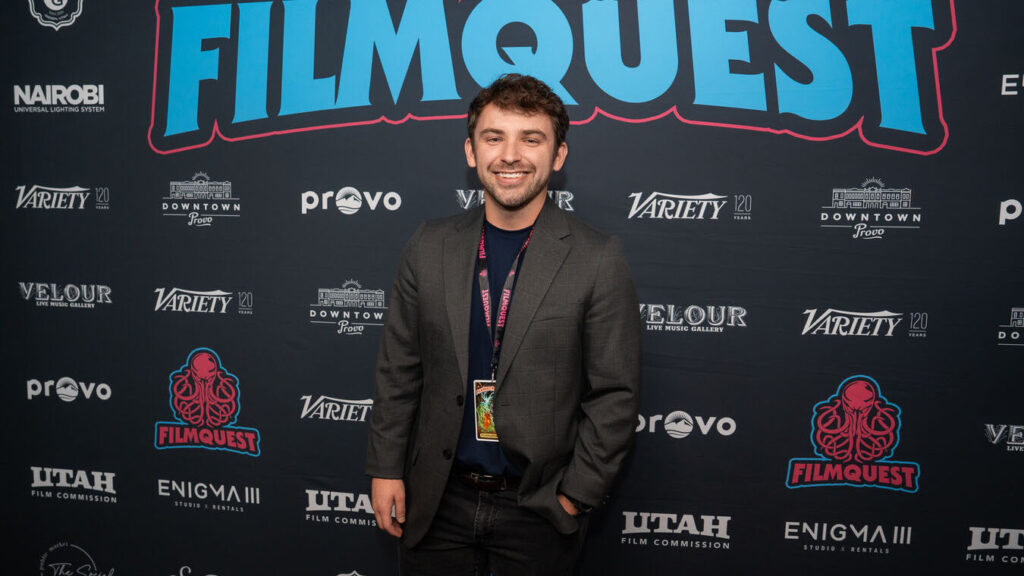
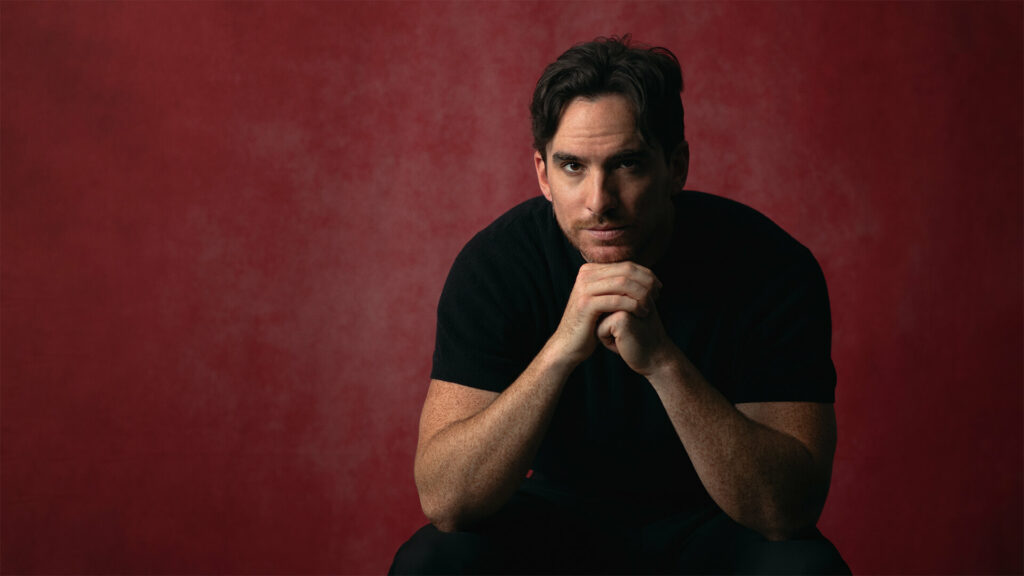
Brandon Shypkowski’s 29 Palms arrives with the quiet force of a film that knows exactly what it is withholding. A 20-minute drama about intimacy, denial, mental health, and the terrifying unknowns that can exist between two people, the film earned a 5-star review from Indie Shorts Mag and a place in our Hall of Fame.
For Shypkowski, who wrote, directed, and stars in the film, 29 Palms is more than a debut. It is an introduction to his voice as a filmmaker: restrained, melancholic, emotionally severe, and deeply attuned to the things people fail to say. In this conversation, he reflects on the personal experience that shaped the film, working opposite Chikako Fukuyama, the influence of horror on drama, and the universality of feeling misunderstood or othered.
Indie Shorts Mag: Congratulations on the incredible success of 29 Palms, including a perfect 5-star review and a place in the Indie Shorts Mag Hall of Fame. Our review called it an “astonishingly taut drama.” As this is your directorial debut, what was your guiding vision for establishing such a distinct and powerful tone?
Brandon Shypkowski: Let me start by saying THANK YOU for the review. It’s such a nail-biting process, and I’ve found this film can be really polarizing.
In story, I think I was influenced most by Haruki Murakami. I wanted to create something that felt nostalgic and melancholic and, at times, severe, to drive home the themes of my film.
In tone and pacing, I was really inspired by some of my favorite filmmakers: Ryusuke Hamaguchi, Hirokazu Koreeda, and Chloé Zhao. They create such brilliant character-driven stories, and that was just the perfect lane for this film. Also, Chloé Zhao can do no wrong in my book, so I’m sure there is a lot of visual inspiration from her work.
Indie Shorts Mag: The film delves into the profound and sensitive subject of mental health and suicidal ideation with rawness and honesty. What drew you to explore these difficult themes, and how did you navigate translating that emotional weight into a narrative for the screen?
Brandon Shypkowski: Oh man, it was really hard. So for those who don’t know, someone close to me shared that they had set a date to end their life. And that date had already passed, but they hadn’t gone through with it. This was someone I never would have suspected was even dealing with depression.
It consumed me for a long time because I know I would have blamed myself. And I think writing this film was me working through that experience. I needed a way to manage the guilt I felt. So I wrote a screenplay.
I keep jokingly referring to the final draft of the film as the 53rd version, but I honestly think I rewrote this screenplay about that many times, as new and challenging feelings were coming up in real time. Ultimately, I wanted people to feel what I felt and to explore what comes from that.
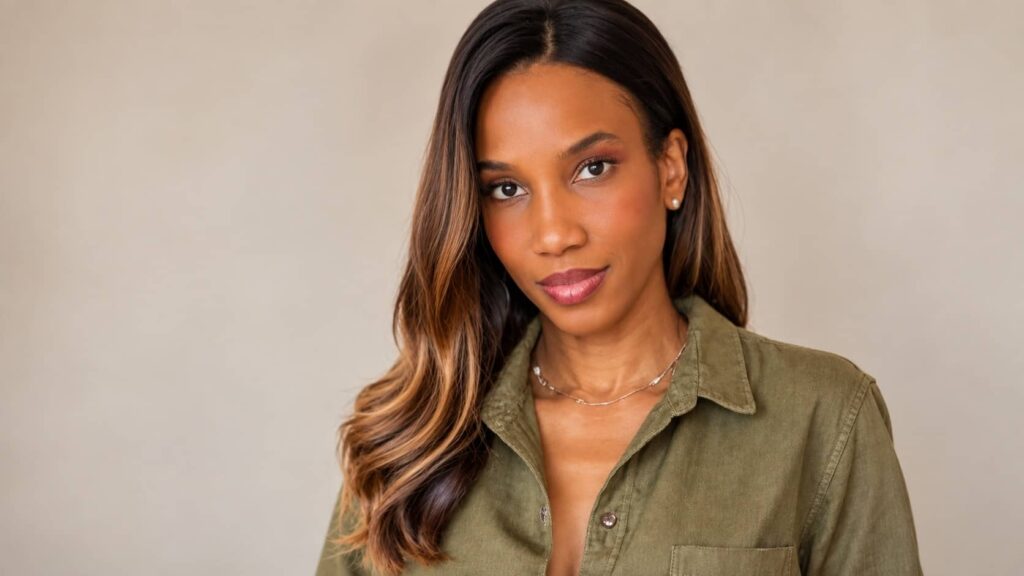
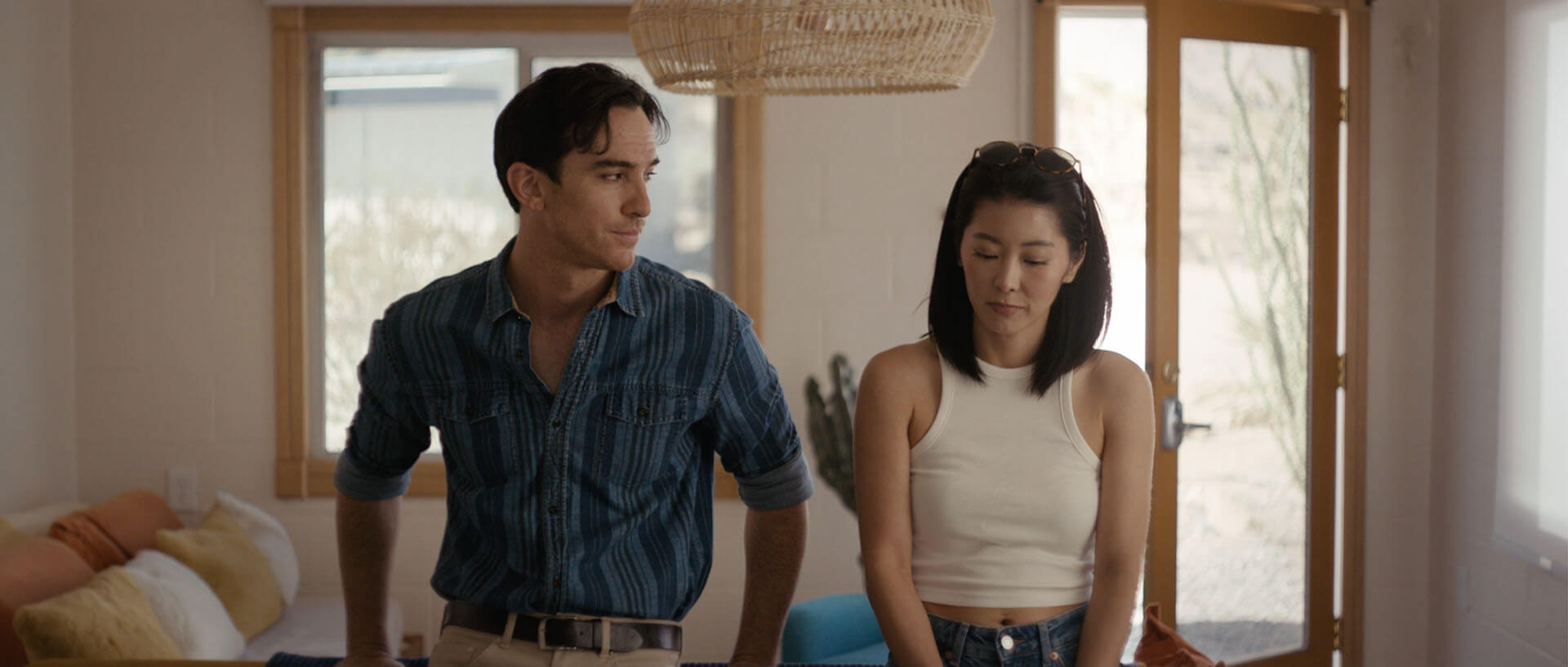
Indie Shorts Mag: The dynamic between Yuuki and Josh is central to the film. You not only directed but also wrote the screenplay and starred as Josh. How did you balance these three demanding roles, especially when acting in scenes with such intense emotional weight opposite Chikako Fukuyama?
Brandon Shypkowski: Let me say, it was a CHALLENGE. I don’t think I could have done it without my rockstar producing partner, Erik Odom.
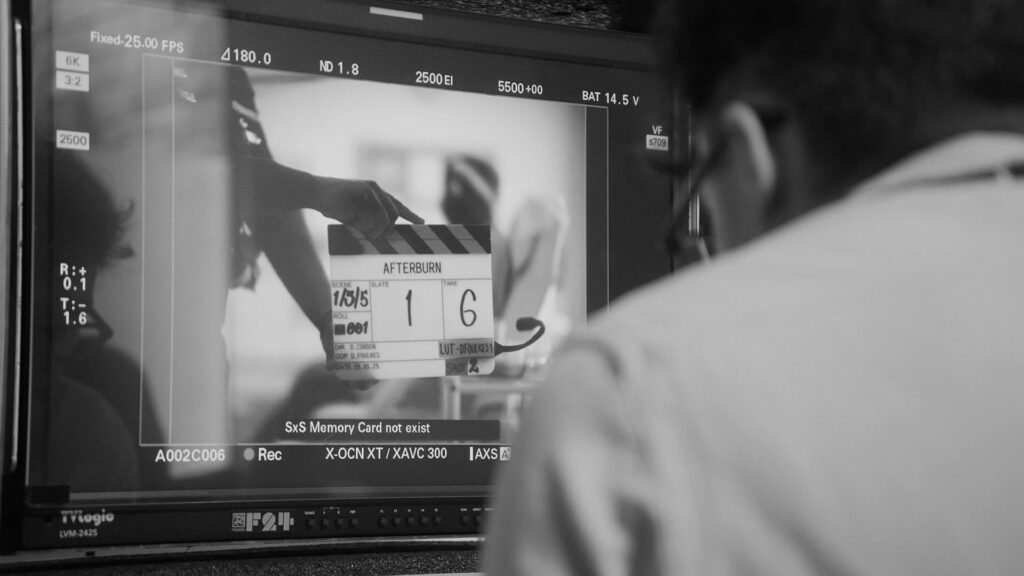
There were moments where we were crunched for time, because it’s indie filmmaking and you’re sort of always crunched for time. I would have been massively behind schedule if I tried to watch playback on all of the shots I was in. In those moments, I needed someone I could trust behind the monitor. Someone who could let me know which shot I should watch to figure out if we could move on.
I truly don’t think I could have done it otherwise. It really is a team effort. And don’t get me wrong, I slid into home base battered and bruised. I worked myself into a really intense cold by the end of production. But driving that U-Haul with rented equipment back from Joshua Tree, sicker than a dog with the heat on full blast, I still felt high on life because I gave it everything I had. Nothing beats that feeling.
Indie Shorts Mag: Our review highlighted the film’s masterful use of “sound and silence,” noting that the silence becomes a “threatening presence.” Could you talk about your collaboration with Sound Designer Will Digby and your philosophy on using sound, or the lack of it, to build tension and convey unuttered emotions?
Brandon Shypkowski: Will Digby is the BEST. I’ve worked with Will a few times now, and he really came in and did his thing. The guy is just a master of his craft and the reason our film sounds so great.
He added so much texture that I think the audience doesn’t even necessarily know is there, but it definitely informs what they feel.
In terms of my philosophy on sound, I believe less is more. I think restraint in sound design can bolster what is on screen, as long as what’s on screen is powerful enough on its own. I immediately notice when a film has over-egged the pudding. It can border on phony and take you out of the film. But great sound design takes it all to another level entirely.
Indie Shorts Mag: The film explores a relationship between a Japanese woman and an American man. You made the deliberate choice to keep much of the dialogue in Japanese. Why was preserving this linguistic authenticity so crucial for telling this specific story?
Brandon Shypkowski: Originally, I intended to tell this story in English. But the more I explored these characters, the more that felt like a cop out.
Yuuki and Josh are sort of an amalgamation of couples I observed while living in Japan. And the truth of these characters is that Josh speaks better Japanese than Yuuki speaks English, which makes sense because they met at a university in Japan.
I did have a few people tell me it was a mistake, that people wouldn’t want to read subtitles. But I would much rather preserve the authenticity of the story than try to guess what people want. I’d like to believe people want authenticity. Besides, if a foreign-language film like Parasite can win Best Picture at the Oscars, I think we’ll be fine.
Indie Shorts Mag: 29 Palms leaves the audience with a “devastating silence,” avoiding easy answers. What do you hope viewers are thinking and feeling as the credits roll? What kind of conversation do you hope the film inspires?
Brandon Shypkowski: I never set out to make a film that gave answers. I think it would be a mistake to try and tell an audience how to feel about something like depression or suicide. And the ending of the film is pretty polarizing. But I don’t mind that.
I think whatever reaction you have is valid. I just want you to feel something. My favorite cinema does that: gives the audience a feeling and leaves them to decipher it. Stories that demand your attention long after watching and, in the process, provide some sort of truth.
I guess I do hope that people walk away from this film with a sense of empathy for everyone they come into contact with, because you never know what someone might be going through, even if they don’t show it. I definitely try to tune into that idea more.
Indie Shorts Mag: Many independent filmmakers face a long and challenging road to bring their vision to life. Could you share some insights or advice from your journey of getting 29 Palms made, from initial concept to the final cut?
Brandon Shypkowski: A lot of problems can be solved if you’re willing to put in the time. If you don’t have money, you pay in time spent planning and figuring out a solution that doesn’t take advantage of the crew or make them work 15-hour days on end.
In terms of tangible advice, always do a shadow shoot if you can. Go to the location before the shoot and use Artemis Pro or some other camera app, and go through each shot.
You will quickly realize, “Oh, this shot won’t work because there’s a wall where the camera needs to go,” or “This shot won’t work as planned because the sun is blasting through the windows at this time of day.” Doing this puts out SO many fires before production, and you’d be shocked how many indie filmmakers pretty much skip it.
Indie Shorts Mag: From Killer Date to your screenplay Santa Fe, you have a strong background in the horror genre. While 29 Palms is a drama, it certainly contains elements of quiet horror. How has your experience with horror influenced your approach to building suspense and dread in this film?
Brandon Shypkowski: I actually wrote my first horror film, like through-and-through quiet horror, Santa Fe, while shooting 29 Palms.
I think there’s a huge connection between horror and drama. Ari Aster says something like he doesn’t view his films as horror necessarily, but rather dramas dealing with deep emotional themes that have horror elements. And I absolutely love that. I think that’s nail on the head.
I’m sure a lot of people will disagree with me on this, but I think great horror is fundamentally character-driven story with real catharsis. So, I actually approach drama and horror from the same perspective. 29 Palms just has less blood.
Indie Shorts Mag: As an LGBTQ filmmaker, how does your identity inform your storytelling and your perspective as a director, even when the film’s narrative isn’t explicitly queer-focused?
Brandon Shypkowski: There is always a through-line in my work of feeling either misunderstood or othered. Like you are a very specific puzzle piece that doesn’t quite fit for some reason out of your control. And through that lens, I like to explore what society tells us we should be.
For example, society tells Yuuki she should be happy because she’s “Designer of the Year” and is in a successful relationship. But she’s not happy. Society also brings shame on Josh for not being a breadwinner and maybe a “man” in that sense.
There is so much tension between societal expectation and who people really are, and that theme is universal. But certainly, having any identity that isn’t the status quo heightens your awareness of those things.
Indie Shorts Mag: With 29 Palms serving as your powerful introduction to the world as a director, what’s next for you? Are you planning to step behind the camera again soon, perhaps even to bring your award-recognized screenplay Santa Fe to life?
Brandon Shypkowski: That’s the plan! I have two feature-length scripts. One is Santa Fe, and the other is a horror film taking place in a Japanese mountain village, that I am hoping to direct in the next year or two.
I’ve been getting really great feedback, which has been encouraging. I am incredibly grateful for that. So, anyone out there looking for psychological horror, you know where to find me!
With 29 Palms, Brandon Shypkowski has crafted a debut that resists easy resolution, choosing instead to linger in the silences between people, the private weight of suffering, and the uneasy truths hidden beneath ordinary intimacy. As he looks ahead to feature-length psychological horror, his voice as a filmmaker already feels sharply defined: empathetic, restrained, and unafraid of the dark.
No comments yet.
Got Something to add to this article?
Your email address will not be published. Required fields are marked *