Article too long to read?
Harrison Fuller’s You Are Free to Leave is a Prague set drama spanning the course of one night when a couple disintegrates under the corrosive force of one half of its constituents. Unfolding with the trance-like quality of suspended time, it shifts between a solitude approaching peace and dissonance akin to isolation once the man and the woman part ways.
The film deals in illusions, and time is just one of its veils. The characters themselves are not exempt from tricks of the light that change the forms of companions and co-passengers. The same person is unrecognisable in the lenience of darkness; love looks very different in a matter of hours. Tara (Diba Beihaghi) may as well have been confronted with a vampire intent on their prey when she looks directly at the camera that has transformed into the overbearing gaze of her partner, Harry (Fuller). Just that morning they were exchanging sweet kisses; without the cushioning of intermediate scenes, morning and night clash like two solid bodies with no give. You might even think they are two different men. The street lights add to the feeling of unreality, a mere dream from which Tara can just wake up when its time.
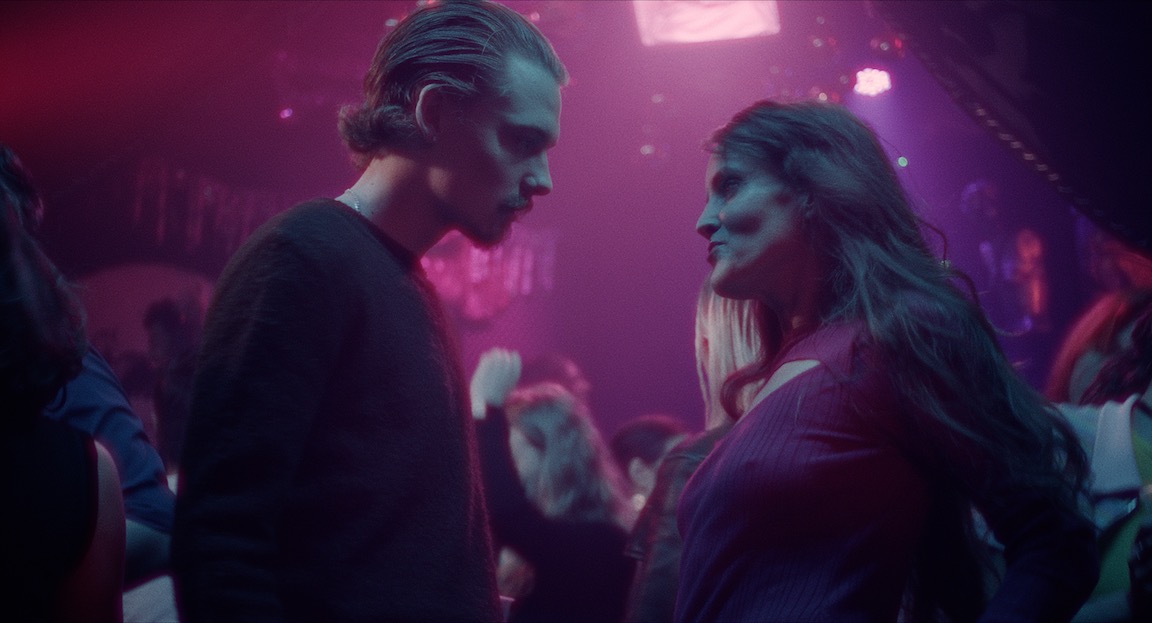
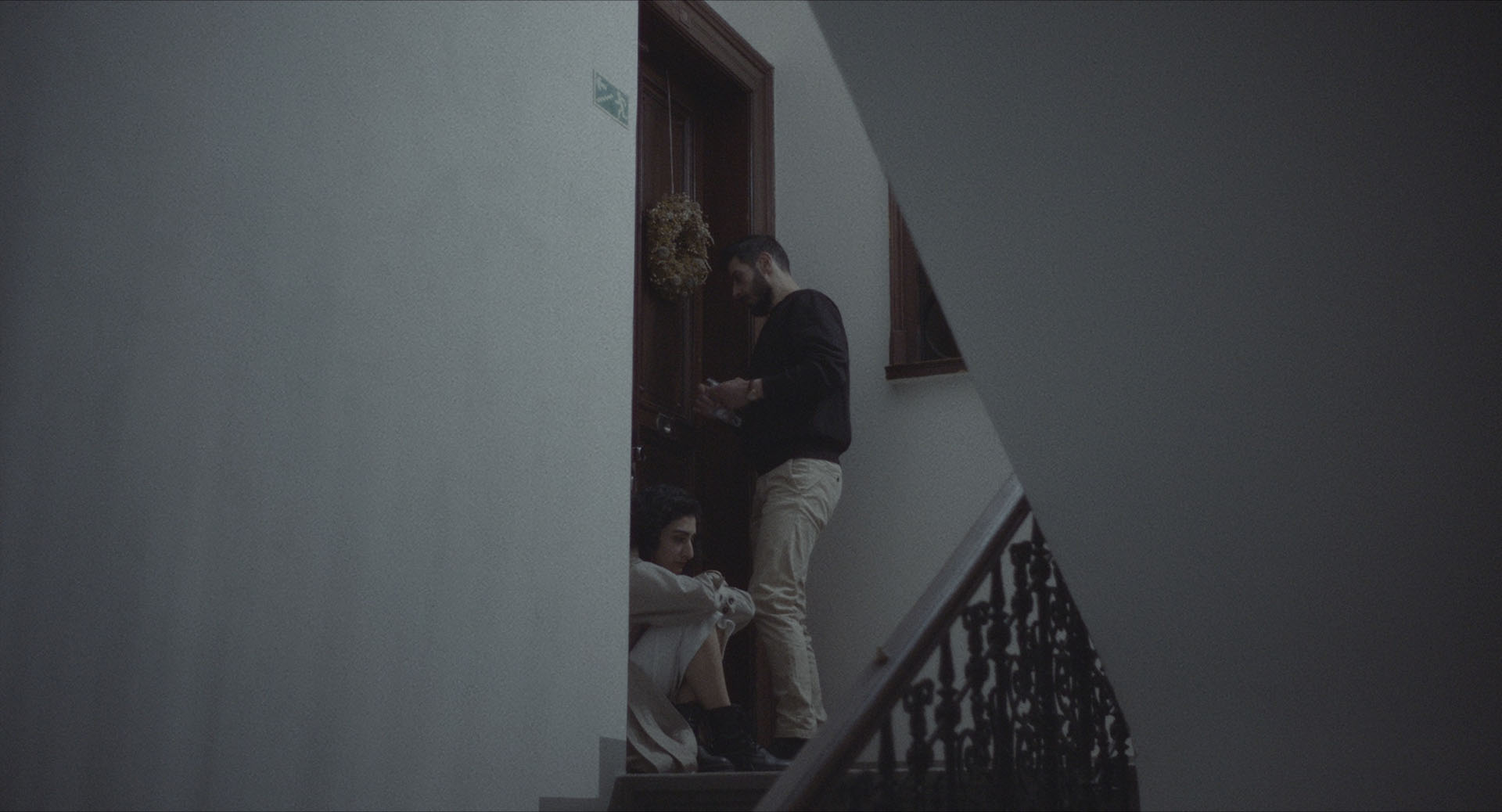
This is the prologue. The story proper begins at the club to which Harry has directed his search for something usable, a pastime to kill the rest of the night. It results in Karolina (Veronika Bellová). To him she is Katerina or whoever; it does not matter to either of them. On her part, Tara is found by her neighbour, Ruslan (Ali Habib Shreim). The writing does not lean much on exposition. Tara’s pitiful state, locked out of the apartment she shares with Harry, caught in the stupor of being stranded, speaks for itself. For a very brief time, while the two characters are reconfiguring where and how to find refuge, the sequence reads like regular realism.
Music is sparingly used, and because of its overtly romantic nature (and only as long as it lasts), you question if what you are seeing between Tara and Ruslan is only a pantomime of connection. But perhaps it is a way to hold on to the night, a third space of independence and essential integrity. The Harry-Karolina thread plays out like a crude imitation of Tara and Ruslan, a mirroring without the substance and warmth of feeling—rather like Jordan Peele’s Us, a surprise encounter but a natural one. It is as unpleasant as it is fascinating to watch Bellová act out the response to Harry that Tara has not or cannot afford. The film’s most powerful sequence features Beihaghi in a monologue. The film’s craft crescendos into a sequence that retains its light touch even as paroxysms of terror weep their delicate way out of Tara. The editing links together ideas that serve to replace exposition: they connect Tara and Harry.
You Are Free to Leave is an essay that expects keen perception and sensitivity. The final shot works on the privilege of insight. You now understand its seeming irrationality better, if not completely. Without belabouring the point, without boiling her down, the film has opened up the pitiful woman into an interiority so rich that even the most grasping of hands cannot reach the depths of her. Yet as resilience is always punished with ceaseless assault and essential freedom is so primary it becomes invisible, the film condemns you to live with it, remember it. And you will.
Watch You Are Free to Leave Short Film Trailer
No comments yet.
Got Something to add to this article?
Your email address will not be published. Required fields are marked *