
Article too long to read?
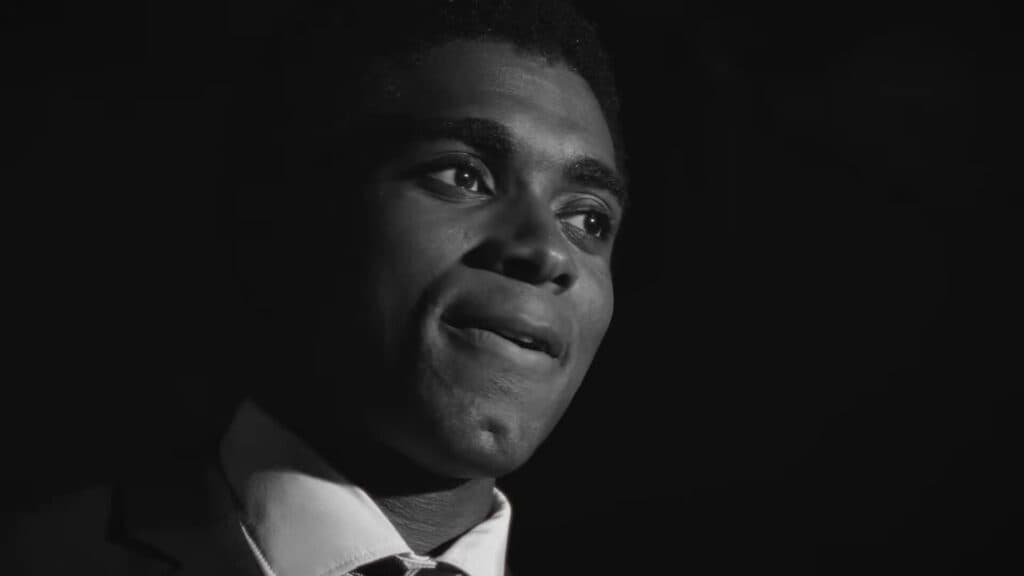
Rarely does a short film capture the texture of memory and the vastness of grief with the tactile precision of Anjini Taneja Azhar’s Who Are You, Nanu? Fresh off a glowing 5-star review and an induction into the Indie Shorts Mag Hall of Fame, Azhar’s latest work is a transcendental exploration of loss through the lens of magical realism. Shot on 35mm amidst the scorching heat of Varanasi, the film serves as both a “dark, visual lullaby” and a cinematic ode to her grandfather’s incredible survival story. We sat down with the writer-director to discuss the rigorous discipline of shooting analog in extreme conditions, the emotional alchemy of translating personal family history into fiction, and the unique challenges of bringing a storybook world to life on the banks of the Ganges.
Indie Shorts Mag: Your personal connection to ‘Who Are You, Nanu?’ is incredibly profound, stemming from your relationship with your grandfather. Could you share how you navigated the creative process of translating such a personal and emotional story into a cinematic narrative, especially when deciding what to include from his extraordinary life?
Anjini Taneja Azhar: I’ve always viewed the film as an ‘ode’ to my grandfather (Nanu in Hindi) rather than a biopic. Our elders possess so many stories that inspire and help mold us into who we are, beginning from a young age, whether we realize it or not. In my family, my Nanu always told us grandchildren the story of Pakistan’s infamous 1935 earthquake that orphaned him after flattening nearly his entire village. He shared tales of his peregrinations navigating childhood, amidst a country being torn into two as he witnessed the partition of India and Pakistan, seemingly like a ghost, as many orphans in India find themselves. These stories of resilience, in particular, stuck with me.
I lived with my grandfather and grandmother ever since I was a child, so I’ve always been quite close to them. They watched me grow up, and in parallel, I watched them grow old. My grandfather always felt- and still feels- like such a young, kindred spirit deep in his soul. When you watch someone who once brimmed with energy and spunk, someone who has always been there, slowly succumb to the turmoils of old age, the reality of human life’s fragility hits you. My mother began having conversations with me a couple years ago about the changes I would begin seeing in my grandfather as he aged throughout my occasional visits home. These visits to my hometown became fleeting windows peering into the formidable, and unstoppable, cycle of life. In a way I feel this process is synonymous with getting to know and learn an entirely new person; I had found this pill a difficult one to swallow. Grief often begins early- and for me- it began here. I sat at my desk one night in Los Angeles and recalled my grandfather in the memories in which I cherished him most. I grieved the person he was, in order to reckon with the person he was becoming, just as he himself began to navigate what this final era of life feels like. This is how the initial idea for ‘Who Are You, Nanu?’ arose. I view my grandfather through the eyes of my ten-year-old self. When I look at him, I do not see the delicate ninety one-year-old man in front of me. I see a younger self, before his hair had fully greyed, with rounder cheeks and brighter eyes. I remember the lessons he taught me and the nicknames he called me; the very names he has long forgotten by now. This is how I see him still and how I will remember him always, so, I wrote this film through those very eyes of my younger self. I see much of myself in my nine-year-old protagonist, Isha.
Indie Shorts Mag: The film is described as a ‘dark, visual lullaby’. Can you elaborate on this creative choice and how it informed the visual language and tone of the film, especially in depicting a child’s perspective on death?
Anjini Taneja Azhar: I wanted the film to feel like a dusty children’s storybook plucked off a shelf: a story frozen in time. In terms of the lullaby… My grandmother (Nanima in Hindi) and mother used to sing the ‘Chandha Mama’ lullaby to me when I was very little. As long as I can remember, I’ve loved the moon, the stars, and anything space, so this lullaby clung to me through my adolescence and always did so with my Nanima’s and mother’s voices echoing in my mind. The materialization of these voices in my mind as memories and feelings- haunting, soft, nostalgic- were exactly what I wanted to capture with my creative approach for ‘Who Are You, Nanu?’
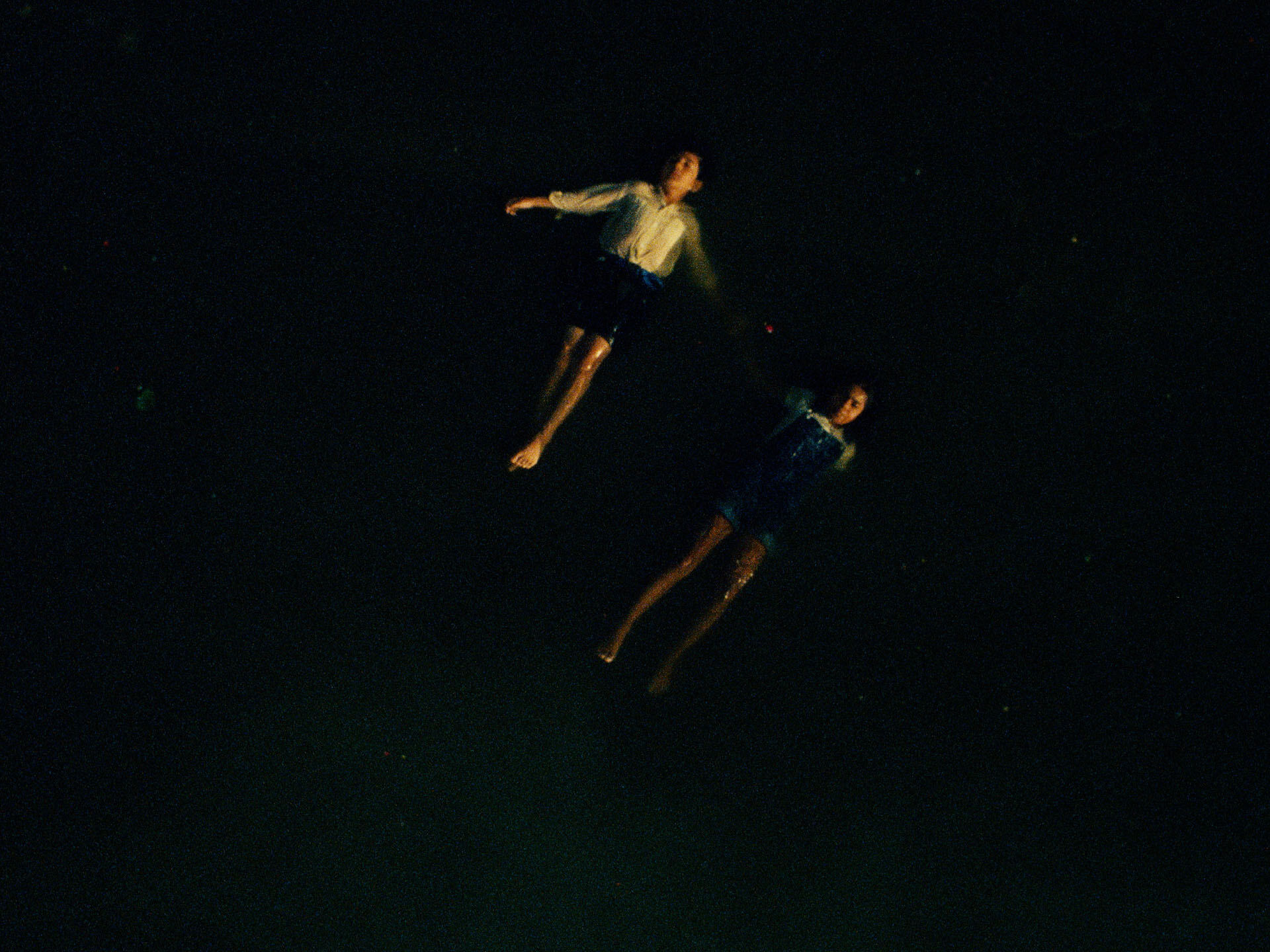
What would a film look like if it took my memory of this lullaby sung to me and turned it into a picture? I knew when telling this story it needed to feel personal: this is about as personal and close to my heart as it gets in terms of a visual translation. A child’s perspective on death is a fascinating thing. Children see things clearer- for what they are- or at least this is something I believe. When I was a child, death felt far more infinite. The mystery of it was vast and there were little confines to what the ‘rules’ of death were. There were no answers to where we go or what happens once we pass, and I found comfort in this unknowing. In fact, I personally find this unknown to be the truest thing there is when it comes to death. To really bring this forward through my protagonist’s journey, I wanted the creative approach to lean into magical realism element — best described as a ‘dark visual lullaby,’ given that magical realism allows you to push the very boundaries of fact and fiction to create a new reality for one’s characters. For example, we open on an extreme close-up of Isha burning on a cremation pyre completely stoic (her daydream) meant for her Nanu, hinting at her present association of death as an aggressive and terrifying idea, however the film ends on the exact same shot of her in the water at peace, daring to shed a tear. Her perspective of death has now found its reality, no longer a dream (or so we think), and this perspective is tranquil, just like the soft ripples of the water that carries her. These are my instances of the reification of a ‘lullaby’ into visual emotion or visual language.
Indie Shorts Mag: The choice of 35mm film and a 4:3 aspect ratio gives ‘Who Are You, Nanu?’ a distinct storybook feel. What was the thought process behind these technical decisions, and how do you feel they contribute to the overall viewing experience?
Anjini Taneja Azhar: With the objective of the film feeling like a storybook lost on a shelf, a 4:3 aspect ratio was a must. When I was a child, many of my books were close to a 4:3 ratio. They were nearly square-shaped picture books, so the images filled the pages entirely and I was able to get absolutely lost in them. The choice in aspect ratio is in direct inspiration of that. In regards to 35mm film, there were two schools of thought for me when it came to shooting on this format. Firstly: discipline. Shooting on any form of analog film, however especially on 35mm for a low-budget production, requires exceptional discipline from the entire crew. The stakes are raised. As the camera begins to roll and you hear the familiar ‘pur’ of the magazine, every breath hitches, every crew member and actor is at ultimate attention… You must get it right, you have few chances to do so, and this is what you have prepared so many months for. I love this. I’m deeply impassioned by this environment on set: everyone joining together for a love of story and art, pushing themselves to be the best craftsman they could possibly be when it matters most. The second school of thought for shooting on 35mm, which is of course far more gargantuan in importance, is the feeling. Film is emotion. 35mm film can capture texture, age, the crevices of one’s skin with this aged feeling that allows it to feel like a lost photograph. Analog film, when watching, evokes an intimate feeling of dream and memory. In fact, I feel the emotion in which analog film procures for the screen is almost impossible to articulate into words— it’s simply something felt in the heart when you see it. That, to me, is exactly what this film needed and how I saw this story.
Indie Shorts Mag: Your Nanu’s life was marked by incredible resilience, from surviving the Quetta earthquake to his success with British Airways. How did his spirit of perseverance influence you, not just in the making of this film, but in your journey as a filmmaker?
Anjini Taneja Azhar: The true gift that the child of an immigrant receives is the privilege to dream. Our parents and grandparents have lived to survive, but rarely to dream. My Nanu was no exception to this. When the earthquake in his village, he was the mere age of one year old, and his mother passed away along with his father a victim of amnesia following an injury during the earthquake. There was no one to remember him by during his childhood, not even a birthday to recall— the one we celebrate now is a date we’ve made for him. He was forced to survive with success looking like a safe home and a sense of basic comfortability. Hearing the stories of his perseverance during this time and just how far he had come, exceeding every systematic expectation of someone like him against unimaginable odds, gave me a deep sense of gratitude for the privilege I possess to follow my dreams. His spirit of perseverance and resilience reminds me to be a fighter through a tumultuous industry like the entertainment industry, but in utter honesty what it really offers me along my journey as a filmmaker is gratitude. Every failure, every hardship, every day that feels more arduous than the one prior, along with every win (both big and small) I see as a gift: the gift to dream. What a beautiful thing it is to actually have the opportunity to try. I push myself harder every day because I understand the weight of this opportunity. My Nanu fought to survive, so that I can fight to dream. This is his legacy towards my journey as a filmmaker.
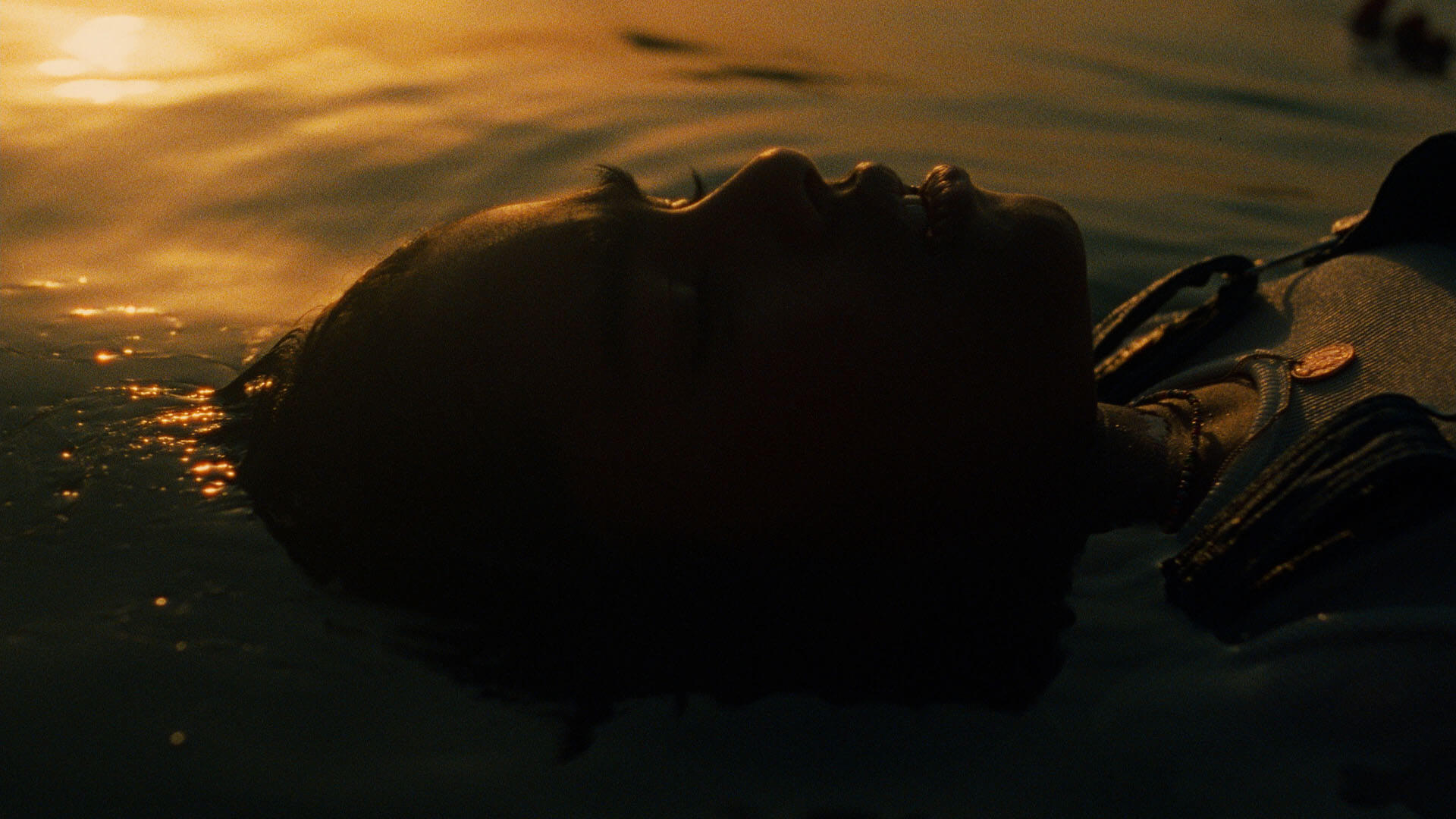
Indie Shorts Mag: The production of ‘Who Are You, Nanu?’ sounds like an epic journey in itself, from shooting in the intense heat of Varanasi to the dramatic recovery of the film cans. Could you share a particularly challenging or memorable moment from the shoot and how it impacted the final film?
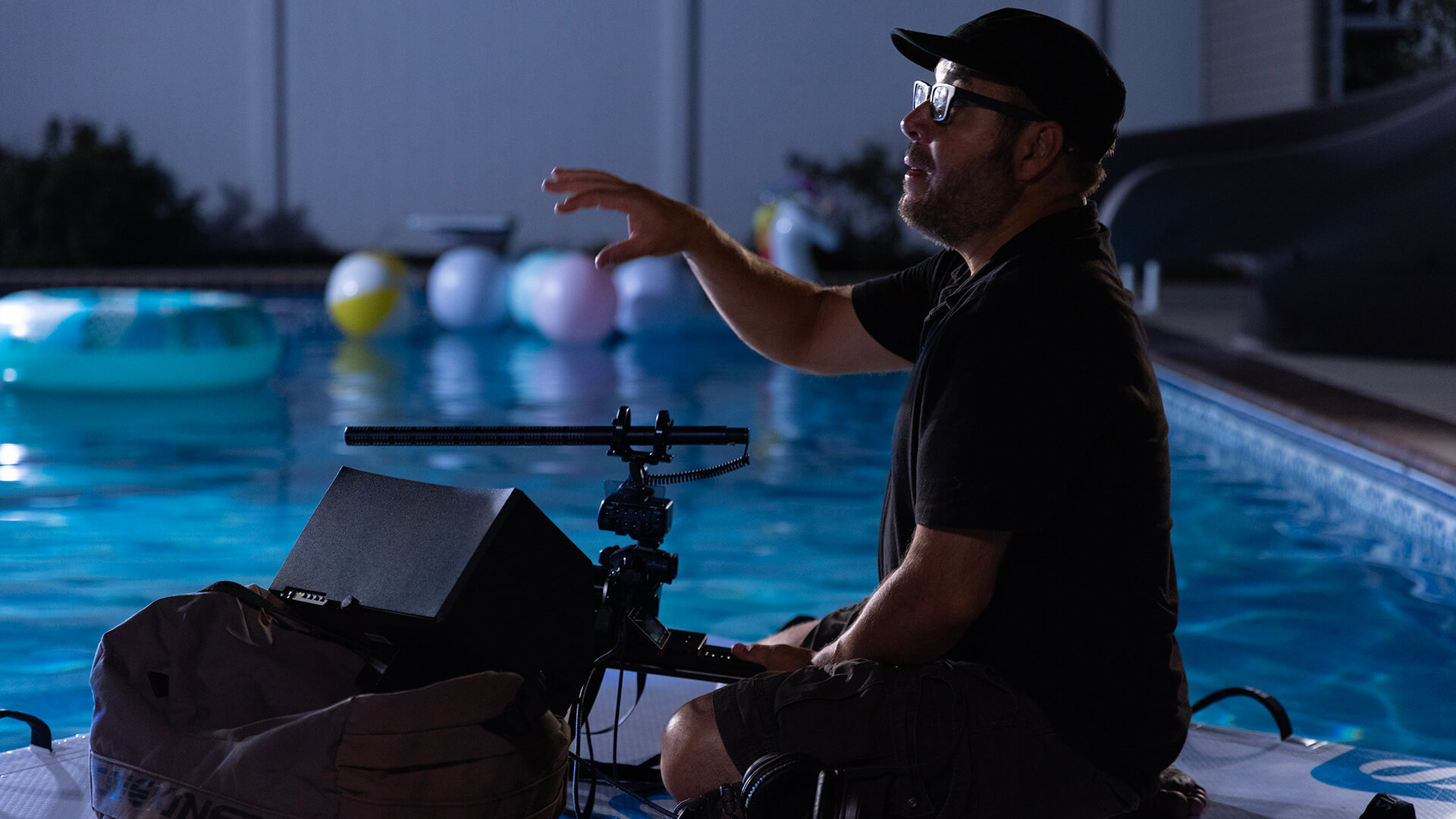
Anjini Taneja Azhar: The production of ‘Who Are You, Nanu?’ changed my life. I am haunted by both dreams and nightmares from this journey— a typical experience of making a film. There’s a particular story on our third day of filming that changed the entirety of the film. It was our hottest day of production; heat stroke would soon fall upon many of our crew members, along with myself and my co-producers. The Ganges River splits Varanasi into two sides, one side the city, and the other mostly rural land and a modest sandy desert. We crossed the river via boat from the city-side to the desert-side after our first half day of shooting when our vessel nearly capsized due to uneven weight distribution of cast, crew, and gear. With the boat lodged at a dangerous angle a few feet from our destination’s shore, susceptible at any point to roll onto its side, producer Sudhir Sherigar and his team built a makeshift bridge out of random pieces of wood found laying around. One by one, first team and crew crossed the narrow bridge onto shore and began the arduous trek in temperatures of over one hundred and ten degrees Fahrenheit up the desert towards our set: a standalone tree on the rural land of Varanasi. Meanwhile, our production team stayed behind to sort out our indisposed boat.
There is a scene in ‘Who Are You, Nanu?’ where Isha ends up perched on the branches of a magnificent tree, overlooking the transcendental city before her whilst Little Nanu gazes up at her proudly. Originally, the scene is scripted as Little Nanu climbing the tree first and convincing a trepidatious Isha to join him. Upon arriving to our picture tree, the temperatures only rose, the early illness of heat stroke began to sink its teeth into the crew, and the wind began to pick up. Before we knew it, a sandstorm took shape, and much of our base camp went flying into the sands of the riverbank, forcing us to pause filming and take cover. Amidst the heat and the storm, morale had begun quivering and our two leads (at the time seven and nine years old) had the impossible task of performing ten feet above the ground on the mere limbs of a tree. Our Little Nanu, charming talent Kabir Pahwa, wore a brave face, yet his discomfort to continue the scene as scripted embroiled in such harsh conditions nine hours into a shoot day was apparent. Whilst my producer Suchitra Pillai, and Pahwa’s parents scrambled to find a solution to ensure his comfort and safety whilst making the day, Sudhir pulled me aside. He wore concern on his face and shared that there was no way Pahwa could safely perform on the tree if he was feeling so uncomfortable, and of course neither I nor production wanted to push our young actor to move forward with anything he was unsure of. At the same time, Jyothi Janath, our lead playing the role of Isha, shared her eagerness to climb the tree and perform the scene on the tree as scripted. The time kept ticking, overtime was approaching, and the wind was quickening again. Sudhir warned I had little time to find another solution that didn’t compromise either the film nor our talent’s safety, whilst trying to make the day in a timely fashion. I asked the grips on set to grab a few flags and keep me sheltered from the tempest of sand and debris. Around me was the chaos of production assistants scrambling to recover gear that was flying away yet again and the shouts of producers trying to keep our set together. Still, I was forced to tune out the havoc as I sat on the ground with a pen and paper and rewrote the scene within ten minutes of sheer focus. When we wrapped filming that day, I recognized the magnitude of this learning lesson; this was one of the moments in a young filmmaker’s career where you really learn what it means to lead, to problem solve, and to be a director. The tribulations of production will throw surprises at you, and it is a filmmaker’s job to turn these challenges into opportunity. You have a day to make, a crew you cannot let down, and a film to get done. The scene as it stands in the film’s final cut is the product of this moment, with its heart still intact yet its writing entirely different than its original version, led valiantly by Janath and Pahwa during an impossible day where failure was simply not an option.
Indie Shorts Mag: The film beautifully brings together a crew of Bollywood veterans and the local people of Varanasi. What was it like to foster this collaboration, and how did the unique blend of experiences contribute to the film’s authenticity?
Anjini Taneja Azhar: This film is about legacy. It is about generations old and new coming together to celebrate storytelling. I believe, with a full heart, that we accomplished exactly this with our production off-camera. Our producing team and crew both brought together individuals far more experienced and talented than I along with younger professionals who were just breaking in. Regardless of which one you were, I could see on our set how much value each individual brought to the film and just how much we were able to learn from one another. There was no ego, just a passion for story and craft. It was a beautiful thing to share. Our Varanasi unit included a plethora of the local crew, from boatsmen to production hands who experienced their first professional film set with us. In fact, it was many of their first time crewing up ever. If I’m quite honest, this was a huge honour for me, and to this day moves me. I got to see eyes widen and the world appear a little more enchanting for many of these team members as they witnessed the magic of moviemaking for the first time. There was one particular gentleman who worked both as a production assistant and at times a boatsman (our company moves were often by boat). He was rather shy to speak at first, but our line producer Vindhya Malik would bring him closer to the cameras to watch as we filmed our scenes, and slowly he would feel comfortable enough to chime in more and more and ask questions about the filmmaking process. By the end of production, he was enthralled by the world of a film set. I hope, if anything, our production left our local crew with the deeply inspiring effect of storytelling and cinema on one’s soul, or perhaps even the importance of cinema and how it brings people together. I hope we were able to leave our local unit crew more heartened by the thought that perhaps to dream for a living is not a far-fetched idea after all. This film would have been impossible without the Varanasi locals who worked tirelessly with such open hearts on their first film job with us. This clearly showed in our ability to capture Varanasi authentically through the eyes of our protagonist. I am massively grateful.
Indie Shorts Mag: ‘Who Are You, Nanu?’ is not a biopic, but an admiration of your grandfather’s life. How did you balance the personal, factual elements of your Nanu’s story with the fictional, imaginative journey of Isha and Little Nanu to the moon?
Anjini Taneja Azhar: I have never really been a filmmaker whose style of storytelling is through a biopic. When I think about people’s lives, I often don’t see this biographically but reimagined from the emotions and anecdotes that a person’s journey evokes for me. I suppose that’s why magical realism and surrealism are genres that I take to so intensely: they are very much the reimagining of fact into fiction that, yet, still feels realer or more accurate than fiction every could . Because this is how I organically see the world, I naturally pull the elements from my Nanu’s biographical story that have influenced me the most in my life and translate them into a narrative based on how I feel when I think of him. To put it simply, my approach to writing a story like this is a dance of the mind and the heart to create one concise story.
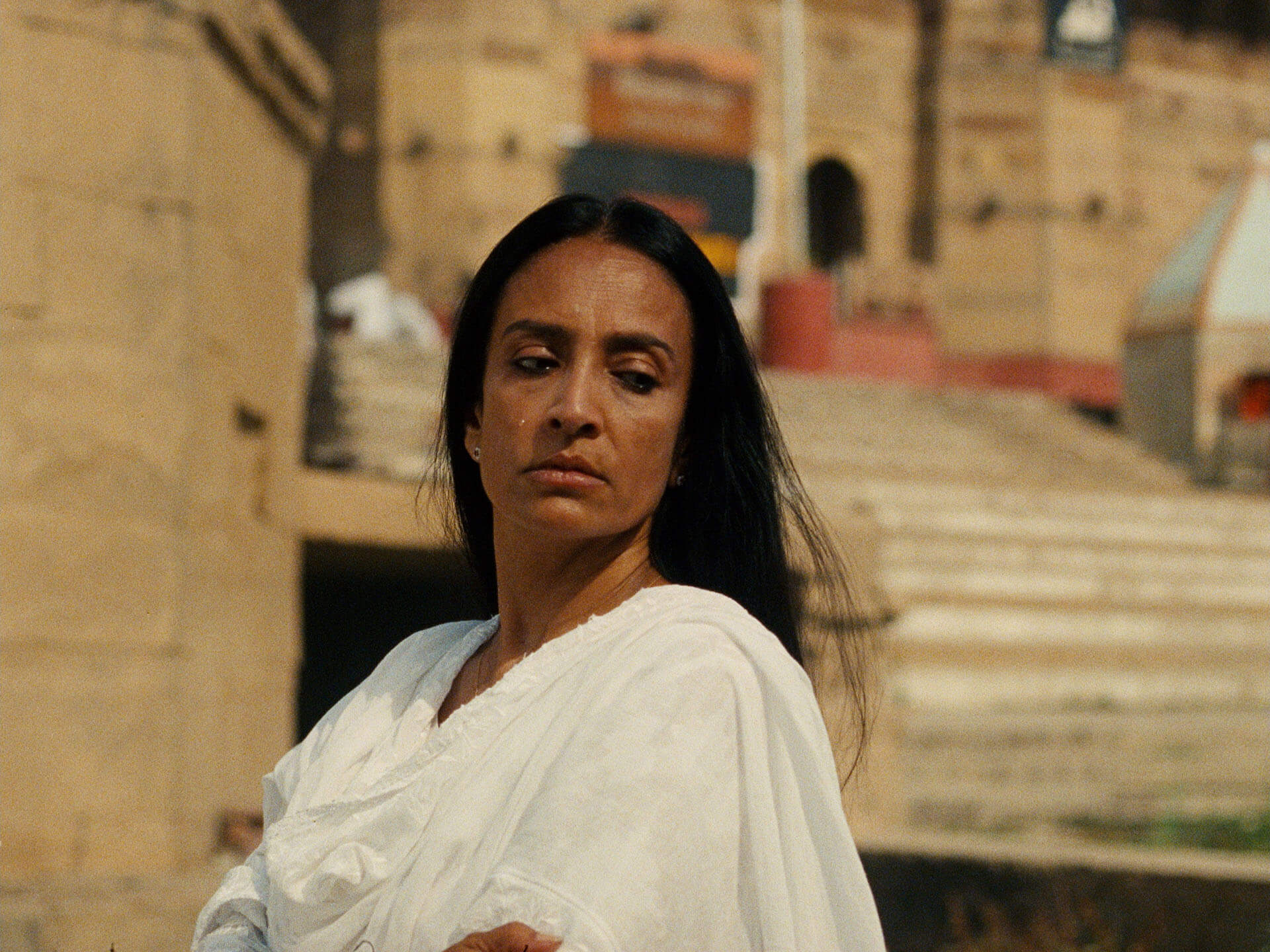
Indie Shorts Mag: The film explores the theme of intergenerational connection and the stories that are passed down. What do you hope audiences, particularly those from different cultural backgrounds, take away from the relationship between Isha and her Nanu?
Anjini Taneja Azhar: Regardless of culture or background, the backbone of every community is family, and for many families, it is our elders. While I don’t generally believe in setting any expectations on an audience when it comes to final thoughts or takeaways from my films, I can share what I took away from Isha and Little Nanu’s experience, along with what I hope the film inspires. For me, Isha and Little Nanu’s relationship was a way to bring warmth to my grief, a grief that often feels cold and calcified, as I watch my Nanu age in real time. This on-screen relationship was also my way of seeing my grandfather as his own individual human being completely separate from any familial role. I explored seeing my grandfather the way I imagine he might see himself: someone who was once a young boy that dreamt, grew up, shared adventures with friends, and experienced heartbreak. When I see him sitting in the living room quietly, eyes staring ahead reflecting introspectively on his life, I sometimes feel a sense of silent understanding. Perhaps I even feel closer to him, having explored through this film, what I can only imagine, is this other version of him before he was ever a ‘grandfather’ or even a ‘father.’ I hope Isha and Little Nanu’s relationship can inspire audiences to connect with their elders and ask questions, and to see them in this light as well— to push the boundaries of understanding when it comes to the generations before us. But if anything, I hope Isha and Little Nanu show that we are more similar than we are different, and inspire connection.
Indie Shorts Mag: Winning the Shore Scripts Grand Jury Award must have been a significant moment. How did this early recognition of the script shape the development and production of the film?
Anjini Taneja Azhar: Winning the Shore Scripts Grand Jury Award was my first time ever winning a grant. If I’m to be frank, it was probably my first time winning anything. This milestone is one that you never really forget as a filmmaker. I applied as a shot in the dark, having submitted to Shore Scripts many times before, with zero expectations whatsoever. I definitely thought, ‘a magical realism short film on 35mm film, in a country across the planet, at one of the most iconic natural landmarks on the world is far too ambitious for a grant.’ It’s true, for valid reason, that many film funds choose projects that are more ‘produceable’ or ‘doable.’ I spent years placing as a finalist or second (or third) place for film funds and screenplay competitions, so I never thought twice about advancing until I placed in the Top 5 finalist round. When I received the email from Julia at Shore Scripts that I had won, I had to physically pace around the room because I thought I was dreaming. I was always told that when it comes to short film financing, the first drop in the bucket is always the hardest, and then the rest finds its way. Shore Scripts was my first drop in the bucket, and this film simply would not have happened without them. Our Shore Scripts win and recognition was a massive contributor to us boarding the remainder of our executive producer team and even our partnership with British Airways. Shore not only provided fiscal support, but was a sounding board every step of the way. They put the filmmaker and their vision first. Never once did I hear my ideas or my dream for this film was ‘too ambitious.’ Their approach with me was that, yes, this was a massive undertaking, but they were ready to support our team in any way they could to make it happen: and indeed they did. I was even paired with a wonderful mentor, Academy Award nominee Maria Gracia Turgeon, to which I learned such invaluable lessons. Needless to say, winning the Grand Jury Award from Shore Script’s film fund changed my life.
Indie Shorts Mag: Now that ‘Who Are You, Nanu?’ is ready for the world, what are your hopes for the film? What kind of conversations do you wish it will inspire among its viewers?
Anjini Taneja Azhar: As mentioned, first and foremost, I hope this film inspires a deeper dialogue between the young generation and our elders. I also hope that, with the crazy stories of our production journey and our dedication to analogue filmmaking, this film can inspire those to see the value in the best parts of our craft… to shoot on a format that you can feel in your hands, to capture texture and colour practically, to build sets and props with curiosity and effort. It comes from us, people, not a computer. In a time where we find ourselves losing what it means to truly be human through a dangerously unfettered epidemic of technological ‘innovation,’ practical filmmaking— art made with our hands and from the heart— is how we find our way back to humanity in its most authentic form. This film is the product of exactly that from every single person who worked on it. I hope our film inspires a reconnection to analogue filmmaking and the practical craftsmanship of cinema.
From the near-loss of the film cans in Mumbai to navigating sandstorms on the riverbanks, the creation of Who Are You, Nanu? mirrors the very resilience of the man it honors. Azhar’s journey reminds us that filmmaking is not merely about technical execution, but about exercising the “gift to dream”—a privilege hard-won by the generations that came before us. As this stunning 35mm fairytale begins its journey into the world, it invites audiences to look closer at their own elders, seeing them not just as family figures, but as the spirited protagonists of their own untold stories. Who Are You, Nanu? is a triumph of both heart and craft, marking Anjini Taneja Azhar as a visionary voice in independent cinema.


About the Author

No comments yet.
Got Something to add to this article?
Your email address will not be published. Required fields are marked *