Article too long to read?
Sound design and music are two critical elements that shape the emotional and immersive experience of short films. While sound design focuses on creating a believable world with footsteps, ambient noise, and effects, music drives emotions, highlights key moments, and connects scenes. In short films, the balance between these two elements becomes even more important due to limited runtime. Here’s a quick breakdown:
- Sound Design: Builds realism through effects, Foley, and ambient sounds. It grounds the story and enhances the setting.
- Music: Evokes emotions, underscores themes, and often takes the lead during pivotal scenes.
- Key Differences:
- Timing: Sound design starts early in production, while music is added later.
- Role: Sound design supports the scene, while music amplifies emotions.
- Cost: Sound design involves gear and recording, while music may require licensing or custom composition.
Both elements are essential, but knowing when to prioritize one over the other depends on your story, budget, and creative goals.
Sound Design vs Film Scoring, What’s the Dif? (Good Will Hunting, My Own Private Idaho, To Die For)
How Sound Work Makes Short Films Better
Sound work is key to shaping how people feel about your short film. It builds a rich sound world that makes your story live. It’s more than just catching talk – it’s about piling up sounds to make parts look real and full of life.
Basics of Sound Work
Sounds from within the film’s world are sounds that fit into the film’s setting – what your characters can hear. Think of steps on rocks, a phone ring, or a car engine rumble. These sounds make the part look real.
Foley is making normal sounds afresh after filming. For instance, a Foley person might hit coconut halves to sound like horse steps or wrinkle paper to sound like a fire’s crackle. These added sounds often take over or boost the ones picked up during filming.
Sound effects add punch and focus to certain parts. The swing of a sword, glass breaking, or a door’s creepy squeal are some uses. These effects point out key moves and scenes in your film.
Background noise fills the air, giving mood and location. Whether it’s bird chirps in a park, cars humming, or the low buzz of neon lights, these sounds make the place seem real.
These main parts are the blocks for making a full, rich sound world.
Making Mood and Real Feel
Sound work can quickly set the mood and place of your film. A few seconds of wind howl might take viewers to a cold, lonely spot, while soft rumble of subway trains may show a lively city scene.
Silence, when used right, can be strong. It brings out key sounds and ups the stress at sharp parts.
Mixing different audio bits puts depth in your parts. Like, a simple talk can feel deeper with soft noises in the back or light sounds around.
Sound work also tells feelings and ideas. Sharp, cold sounds can bring a lost future feel or factory vibe, while soft, earthy tones like leaf whispers or water flow can make things calm and quiet.
Tech Bits of Sound Work
Past the basics, tech steps make your audio smooth and together.
Sound cutting is where all the sound parts match up. Using sound cutting tools, cutters lay out and match sounds with the film parts. This step covers piling tracks, fixing timing, and making all sounds seem meant.
Mixing sets sound parts right. Talk should stay clear and main, while background sounds must add, not cover the main parts. Mixing includes tuning up sound levels, fixing sound pitches, and placing sounds in spaces to make them mix well.
Managing sound range makes the audio good on any tool, from a phone speaker to a big theater sound system. This step keeps sound even all over.
Final audio touch-ups are the last tweaks. Tricks like matching, squeezing, and echo help sounds mix like they all were made together, even if they were not.
How Music Makes Short Films Better
Music is the heart of your short film, drawing out deep feelings that just looks and talk may not show alone. Though sound sets up the world where your people live, music touches the watcher’s feelings, more so at big times. This link shows how music lifts both the tech and story part of your film.
The Feel of Music
Music is a fast way to set the feel and air of a scene. One note can let the viewer know if they’re seeing a thrill, love story, or funny bit. The right tune can change a simple chat into a stiff talk or lift a plain time into something we will not forget.
Quick beats bring a rush feel, while slow sounds make us think of sad or deep times. The choice of gear – like touching strings or bold brass – can make the feel stronger. The aim is to match your music to the feel of your story.
Music also links scenes, helping move from one feel to another. A song that comes up often can connect scenes and show how people change or the plot moves.
Music In and Out of the Scene
To use music well, know the split between in-scene and out of scene music. In-scene music is heard in the film’s world by both the roles and the watcher – like a song from a car radio or live show in a scene.
Out of scene music, on the other hand, is only heard by the watcher. This covers film scores made in post, like big sounds in big parts or a soft piano tune for a role’s quiet fight. This sort of music shapes the feel of a film well. Moves from in-scene to out of scene sound can make smooth and strong feel changes in the story.
Each kind has a role. In-scene music can show who a person is or the time and place of the story, while out of scene music can shape how the watchers feel in a tight way.
Music with Pacing and Type
Music and sound set the film’s air, and its beat should go with the tale’s pace. For example, quick moving scenes might use fast, strong tunes, while slow, talk-heavy parts do better with calm, low tunes that let the acts stand out.
Though type often guides music picks – like creepy tunes for horror or fun pop for love comedies – it’s good to try new things. An odd music pick, like a fun tune in a tense part, can add depth and make your film pop.
The music should move with the story, gain force at high times and ease back at calm parts. This keeps the watcher in without hiding the tale.
With short films, the music must hit hard fast. A clear, catchy tune often does more good than a big, slow piece. And think of the place – be it in old times or today, the music needs to fit the people and their world well.
Sound Design vs. Music: Direct Comparison
Sound work and music shape how we hear a film, but they do different jobs. Knowing these shifts helps us use our tools – time, money, and ideas – better.
Sound work makes a true sounding world. It builds sounds that make parts of the movie seem right, like steps or air noise. Music, however, guides how we feel, moving us as the tale grows.
When they step in also splits them. Sound work starts early, often before the film is made, while music comes in later, after the movie’s feel and emotion parts are set.
Sound work lets you pick each sound, choosing what and when. Music, in turn, sets the mood, touching whole parts of the film more than just bits.
Made Easy: Sound Work vs. Music
| Aspect | Sound Work | Music |
|---|---|---|
| Main Job | Makes it sound like real life | Sets the mood |
| When Done | From the start to the end of making it | Often added at the end |
| Costs | Money on gear, recording, and cutting | Money on rights, making tunes, or tune stores |
| Control | Care for details | Wide and sets the feel |
| How Seen | Mostly felt without noting | Mostly stands out |
| Use In Types | Good all around | Changes with the type |
| Skills Needed | Good at field sound and cutting sound | Knows tunes and how to make them |
| Working With Others | Must work with all on set | Mainly with the one who leads and the one who cuts |
These small things show us when and how each part works best, giving us a clear plan for their use in making films.
How people feel these parts also changes. Good sound design may not be seen – it puts viewers right inside the film’s world. But bad sound design stands out and can pull people away from the story. Music, on the other hand, sticks with people longer. Many leave still singing a tune or song after the film ends.
Money also brings out their differences. Sound design needs money for gear, field work, and tools to cut and fix audio. Music costs, on the other hand, look at if you’re getting songs, paying a music maker, or using ready music banks.
Film types use these parts in their own ways too. Scary movies use sound a lot to make tense spots and give frights, while love comedies often lean on music to set the mood and speed. Action movies use both – sound for real feel in packed spots and music to lift the big feelings.
The skills for each area differ too. Sound work needs know-how in catching, cutting, and sound places. Music needs a grasp of song build, beat, and how tunes hit feelings. For many who make films on their own, trying out basic sound feels easier than making new music.
Lastly, fixing each part varies. Sound fixes are often tech-like, such as tuning out noises or making talk clear. Changes to music, though, rest on how well the beat or tune fits with the film’s feeling at that moment.
When to Pick Sound Work Over Music
There are times in making movies when making sound matters more than music. If you’re making a real world, adding soft fear, or saving money, sound work can be what helps reach your art goal. Let’s look at some times when sound work stands out.
Movies that look real do well with good sound work. Docs, mind scare movies, and real-life tales use true sounds to pull people in. Sounds like busy streets or moving leaves can feel more right than music, making it feel smooth.
Scary and nerve-racking films use sound work to make it more tense. Think of a squeak from the floor, soft steps far off, or a long, strange quiet. These small hints often make us feel more than loud music. By using sounds like wind, far cars, or old, moving house parts, you can make a feel that’s real and very creepy.
Small money also makes sound work a smart pick. Making sounds from the world is often cheaper than paying a music maker or using song rights. With a simple mic and some new ideas, you can catch special sounds from places that pre-made music can’t match.
For movies about people and their feelings, less music can be good. When the focus is on talk or small acts, music might take away from the deep feel of the scene. Instead, day-to-day sounds – like clothes moving, machine noise, or even how a person breathes – can make it more real and pull us into the tale.
In films about mind ideas, sound work can show what’s inside a person. Making daily sounds weird, making small sounds loud, or even taking out sounds we wait for, can show deep feelings and add to the story.
These ways show how making sound can give us strong sound times, as you can see in the cases below.
Cases of Good Sound Work
"The Creator" is a great example of how directors can lean on authentic on-set sound. Gareth Edwards used practical sound effects during filming, even mimicking "pew pew pew" noises himself, to sync performances with the immersive world he envisioned.
Short films about real life often use sound moving left and right to make true-to-life settings. Think of the noise an espresso machine makes on one side, steps moving from ear to ear, and soft talk all around. These tricks can make a simple coffee shop talk seem very real.
Psychological thrillers use sound to show strong feelings. Over and over sounds like a ticking clock, the buzz of bright lights, or water falling can make you tense. By picking just the right sounds, these films make you feel uneasy and fit right with what you see.
City drama shorts need real city noises to start the story. Mixing sounds of cars, far-off talks, air cooling noise, and steps in all beats makes a full, true city feel.
Indie film makers often use sound tricks to do more with less. They take their sound tools with them to get their own sound bits, like the echo in a subway, a building’s buzz, or how the wind sounds in a place. These sounds make the film feel right in a way that ready-made music can’t match.
sbb-itb-376fc17
When to Focus on Music Over Sound Design
While sound design excels at grounding a story in realism, there are times when music must take the lead. Music becomes the star when emotions, timing, and abstract storytelling come into play. It has the unique ability to evoke feelings, enhance comedic beats, and transport audiences to imaginative realms that natural sounds alone can’t achieve. This shift from atmospheric sound to emotionally charged music is what creates some of the most unforgettable moments in film.
Take emotional montages, for example. These sequences often rely on music to carry the narrative. When a character’s journey is condensed into a few minutes or multiple story beats are woven together, music becomes the emotional thread that holds everything in place.
In comedy films, music plays a different but equally important role. Musical cues are essential for nailing comedic timing and setting the tone. As Universal Production Music points out, "Comedies, whether lighthearted or dark, rely on musical cues to enhance timing and tone". A perfectly timed musical sting can elevate a punchline, while strategic silence can create a pause that makes the joke land even harder. While sound design captures the scene’s realism, music adds the playful edge that brings the humor to life.
Abstract and surreal storytelling also benefits from music’s versatility. In unconventional narratives, music can create otherworldly atmospheres, transporting viewers to places beyond reality. Universal Production Music explains, "The right track can ground the viewer or completely throw them off balance – intentionally". This ability to either anchor or disorient audiences is where music truly shines.
For genre-blending films, music is often the glue that holds disparate elements together. Whether you’re mixing genres or creating something entirely new, the right music establishes the film’s identity and keeps the narrative flowing. A carefully chosen track with a specific "vibe" can be the key to audience immersion and engagement.
Period pieces and futuristic settings also lean heavily on music to define their worlds. A synthesizer-laden score immediately signals a sci-fi setting, while orchestral compositions can transport viewers to historical eras. As East End Arts puts it, music has "the power to evoke emotions, set the tone, and enhance the storytelling in ways that visuals alone cannot".
Music’s Role in Emotional Scenes
When it comes to guiding audiences through complex emotions, music becomes indispensable. In moments where dialogue is sparse or absent, music steps in to carry the story and communicate feelings that visuals or sound design can’t fully express.
Silent or dialogue-light scenes often rely on music to fill in the emotional gaps. A recurring musical theme can evolve alongside a character, creating a deeper emotional connection that sound effects alone might not achieve.
Deep feelings can be hard to put into words, but music can show them well. In November 2014, a movie maker named MrBender wanted a "dark, simple, bare score" for his short film Rat: A Fable. The film showed "a dark wild part of being human", and MrBender used music to make a tight feel instead of just sound. This shows how music can show deep ideas better than just sound.
Big high points are also where music does well. Even though sound can make a scene tight and set the mood, music brings out the deep feel that makes these parts hard to forget. Be it a high flying piece or a sad tune, music makes it matter more, making sure the view sticks with the people watching.
At the end of the day, music gets to the heart in ways just real sounds can’t. It links what people see to what they feel, leaving a mark that pure sound might not hit.
How Sound Design and Music Work Together
The magic of short films often comes alive when sound design and music work in harmony. Rather than treating these elements as separate pieces, skilled filmmakers recognize their combined potential. Together, they create a richer, more immersive experience that neither could achieve on its own.
The secret to this collaboration lies in understanding the unique strengths of each element. Sound design shines when it comes to creating realism and grounding scenes in believable settings, while music excels at conveying emotion and abstract ideas. When these roles are clearly defined, both can coexist seamlessly without clashing.
From the start, filmmakers plan how sound effects and music will interact, carefully mapping out the audio landscape. This early planning helps avoid the common mistake of overlapping elements that compete for the same emotional or sonic space. This synergy sets the stage for more detailed layering and mixing techniques, which we’ll explore next.
Layering Techniques and Audio Space
Creating an effective audio mix involves strategic layering, where each element has its own space in terms of frequency and position. Typically, music occupies mid and low frequencies, while sound effects can stretch across the entire spectrum. For instance, if music includes a deep bassline, sound effects can focus on mid and high frequencies. On the other hand, if the scene includes low-frequency sounds like rumbling engines or explosions, the music might shift to higher frequencies or melodic components.
Another useful technique is temporal spacing – alternating the focus between music and sound design rather than playing them simultaneously. For example, let sound effects dominate during intense action sequences, then allow music to take center stage during emotional moments. This ebb and flow creates breathing room for both elements to shine.
Stereo positioning adds another layer of separation. By placing certain sound effects in the left or right channels while keeping the music centered, or using subtle panning, you can create distinct audio spaces. This approach works particularly well for headphones, a common way audiences experience short films.
The idea of audio foreground and background mirrors visual composition techniques. Just as a cinematographer uses depth of field to highlight specific elements, audio mixing can push certain sounds forward while keeping others in the background. For instance, music might provide a subtle emotional undertone while sound effects handle the immediate action – or the reverse, depending on the scene’s needs.
Dynamic Mixing for Balanced Audio
Once the audio elements are layered, the focus shifts to dynamic mixing, which ensures everything works together smoothly. This process goes beyond adjusting volume – it’s about crafting intentional relationships between sounds that enhance the story. Volume, EQ, and timing all play a role in guiding the audience’s attention to the right place at the right time.
One key principle is dialogue priority. In most narrative films, spoken words take center stage, and both music and sound design must support, not overshadow, the dialogue. This often means carving out frequency space for dialogue, typically in the mid-range around 1-4 kHz. If music or effects compete in this range, they need to be reduced or tweaked to make room.
Emotional dynamics are another crucial consideration. For example, as music swells during a dramatic moment, sound effects might fade into the background, only to return as the music recedes. This natural ebb and flow keeps the audio feeling organic rather than mechanical.
Scene transitions offer creative opportunities to blend sound design and music. A sound effect might evolve into a musical note, or a melody might fade into ambient noise. These seamless handoffs help maintain immersion while guiding the audience’s focus.
During the mixing process, reference monitoring is essential. Short films are viewed on a variety of devices, from phone speakers to theater systems, and the mix needs to hold up across all of them. Testing on different playback systems ensures that the balance between music and sound design remains intact.
Finally, loudness standards for different platforms – like streaming services, film festivals, and social media – must be considered. Each has its own audio requirements, and planning for these specifications early can prevent last-minute adjustments that might disrupt the carefully crafted mix.
Professional tools like sidechain compression can also help. This technique automatically lowers the music’s volume when dialogue or key sound effects are present, ensuring that nothing important gets lost in the mix.
Practical Tips for Independent Filmmakers
Great sound design and music can make or break a short film, but achieving high-quality audio doesn’t have to drain your budget. With strategic planning and smart investments, independent filmmakers can create professional-grade audio that elevates their work. The trick lies in knowing where to focus your time and money.
As George Lucas famously said, "Sound and music are 50% of the entertainment in a movie". This insight is especially valuable for indie filmmakers working with limited resources. Thanks to modern tools and techniques, achieving excellent audio is more accessible than ever before.
Budget and Resource Planning
Start by getting the basics right: capture clean dialogue during production. Investing in a solid shotgun microphone and recorder, like the Zoom H4n or Tascam DR-05X, can save you from costly fixes later. These tools are reasonably priced, typically ranging from $200 to $400, and can eliminate the need for extensive additional dialogue recording (ADR).
Location matters, too. Choose settings with good acoustics and minimal background noise. For instance, a quiet indoor space might be a better choice than a bustling street, which would require significant post-production cleanup.
When budgeting, keep in mind the costs of professional services. Audio engineering rates vary widely, from $20–$40 per hour for beginners to $70–$120 per hour for experienced professionals. Mixing services can start at $30–$50 per hour for newcomers and go up to $90 or more for seasoned engineers.
Take advantage of free resources wherever possible. Websites like Freesound.org, ZapSplat, and the BBC Sound Archive offer extensive libraries of sound effects at no cost. For music, MobyGratis provides free tracks tailored for indie projects. You can also record your own foley sounds using everyday props. Not only does this save money, but it often results in more authentic effects.
By carefully managing your resources, you’ll be better equipped to decide whether to handle audio tasks yourself or bring in professional help.
DIY vs. Hiring Professionals
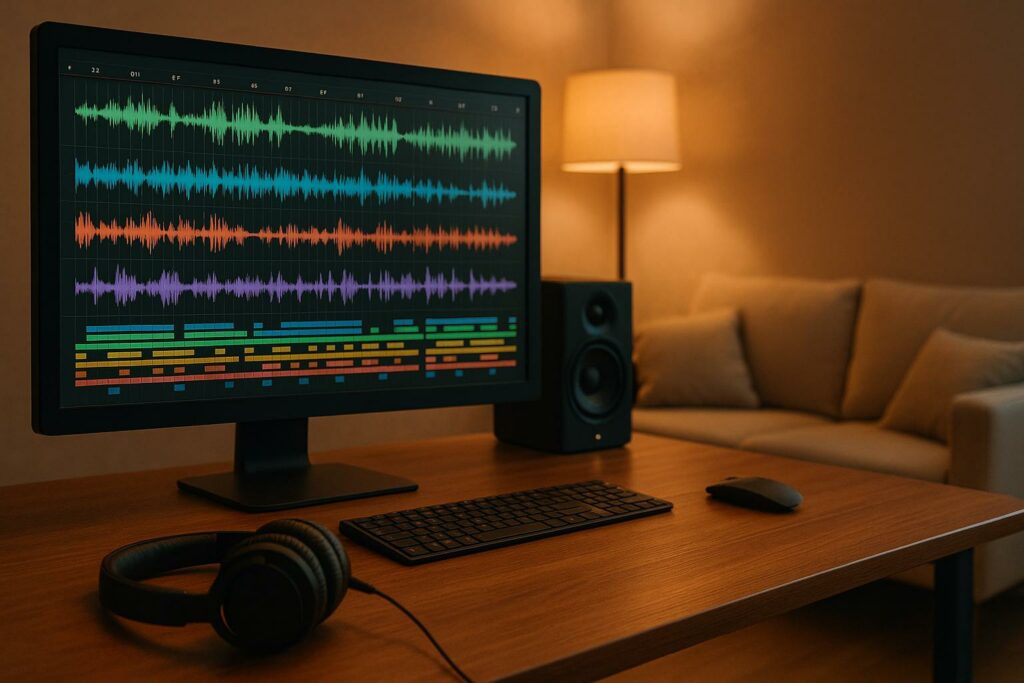
Whether to take a DIY approach or hire professionals depends on your skills, timeline, and the complexity of your project. For tasks with a manageable learning curve, like basic dialogue editing or sound effect placement, DIY can be a great option. Affordable software like Adobe Audition or DaVinci Resolve Fairlight makes these tasks achievable. However, avoid using overly basic tools like Audacity for complex mixing, as they lack the advanced features needed for professional-quality results.
If you decide to hire help, look for someone versatile – an audio expert who can handle live recording, mixing, and post-production sound design. Bundling these roles can save money compared to hiring multiple specialists. You might also consider recruiting film or audio students eager to build their portfolios, as they often charge lower rates. For feature-length projects, offering equity or profit-sharing can attract seasoned professionals, while short films might benefit from networking, bartering, or calling in favors.
Sometimes, scaling back your ambitions can also pay off. A simple scene with well-executed audio often delivers a stronger impact than a complicated one marred by poor sound quality.
Once your audio work is complete, getting external feedback can help you refine your film even further.
Getting Feedback Through Indie Shorts Mag
Submit your finished short film to Indie Shorts Mag for a professional review. Their evaluations focus on key elements like sound design and music, offering detailed insights into how these aspects shape your film’s overall impact. While standard reviews take 6–8 months, an expedited option is available for a fee, with a turnaround time of under 2 months.
Indie Shorts Mag reviews include specific ratings for music and in-depth commentary on sound design. For example, their review of the short film Sound highlighted that "most of its nominations and awards went for its Sound Design" and praised Jeffery Alan Jones’s music. This kind of feedback can guide you in refining your approach for future projects, ensuring your sound elements captivate audiences.
Conclusion: Finding the Right Balance
Creating an impactful short film means weaving sound design and music into a seamless audio experience. The way you balance these elements should align with your genre, budget, and overall creative vision.
Sound design anchors the audience in the world of your story, setting the tone, building suspense, and shaping the environment. On the other hand, music amplifies emotional depth, steering the audience’s feelings and highlighting dramatic beats that dialogue alone might not capture.
Understanding when to let each element take the lead is key. For example, thrillers often rely heavily on sound design to craft a tense atmosphere, while romantic dramas lean on music to evoke heartfelt emotions. These principles, along with practical tips for independent filmmakers, can help you make informed choices.
Finally, technical execution is vital. Clean dialogue, well-balanced audio levels, and intentional mixing ensure that sound design and music complement each other, delivering a polished result – no matter your budget.
FAQs
How can independent filmmakers balance sound design and music on a tight budget?
Independent filmmakers working with tight budgets can still achieve great sound design and music by thinking outside the box and making smart choices. Start by exploring free or low-cost sound libraries and trying out some DIY techniques to create unique sound effects. For music, look into royalty-free tracks or seek out affordable composers who can craft something special without breaking the bank.
Another key tip is to capture the best possible audio during production. High-quality sound on set reduces the need for costly fixes in post-production. When it comes to editing, there are plenty of free or budget-friendly software options that can help you refine both the sound design and music, giving your project a polished feel without overspending. Careful planning and keeping things simple can make all the difference in delivering professional results on a limited budget.
How can sound design make short films feel more realistic?
Sound design is key to making short films feel authentic and immersive. One way to achieve this is by focusing on diegetic sounds – the natural noises that exist within a scene, like footsteps, the rustle of clothing, or the hum of background chatter. These subtle details help anchor the audience in the world of the film.
Another technique is incorporating Foley effects. These are sounds recreated during post-production, such as the squeak of a door or the clink of a glass. Foley artists meticulously craft these effects to match the on-screen actions, adding depth and realism. Lastly, precise audio mixing ensures that all these elements – natural sounds, Foley effects, and dialogue – blend perfectly with the visuals, creating a seamless and engaging experience for the audience.
When should filmmakers focus on music instead of sound design to enhance emotions in a short film?
Filmmakers aiming to evoke strong, immediate emotions in key moments of a short film should give music a central role. Music has a unique ability to heighten feelings like joy, fear, or sadness, striking a chord with audiences in ways that often surpass the impact of sound design.
During scenes of emotional intensity or pivotal revelations, music becomes a powerful tool for guiding viewers. Through its melodies, tempo, and dynamics, it creates an emotional shorthand that resonates universally, pulling the audience deeper into the story. While sound design is essential for crafting atmosphere and realism, music stands out for delivering unmistakable emotional signals that leave a lasting impression.
Related Blog Posts
About the Author

No comments yet.
Got Something to add to this article?
Your email address will not be published. Required fields are marked *