Article too long to read?
Your film submission package is your first impression with festival programmers. It can determine whether your film gets noticed or rejected – often before it’s even watched. A complete, organized package signals professionalism, while missing or disorganized materials can lead to disqualification. Here’s a quick breakdown of what you need to know:
- Research Guidelines: Each festival has unique eligibility criteria (e.g., runtime, premiere status, funding sources). Missing a single requirement can mean automatic rejection.
- Deadlines & Fees: Festivals have tiered deadlines – early bird, regular, and late – with increasing fees. Track these to avoid overspending or missing out.
- Technical Specs: Ensure your film meets format, resolution, and audio standards. Some festivals require DCP, while others accept digital files.
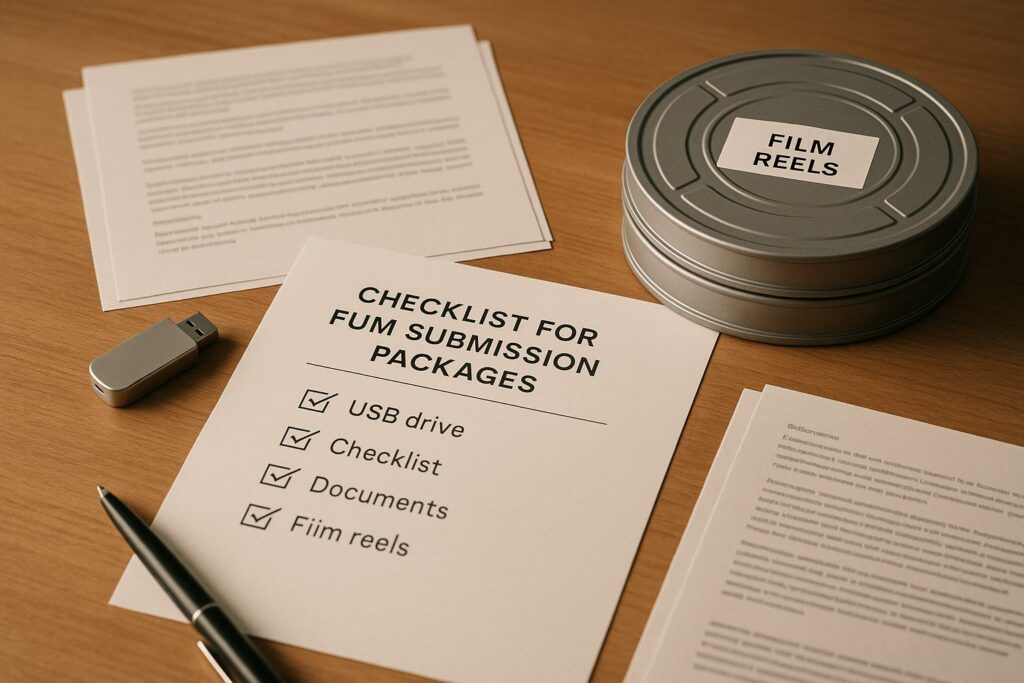
- Core Materials: Include a digital screener, director’s statement, synopsis (short and long), and cast/crew credits.
- Press Kit: High-resolution stills, a poster, trailer, and bios help festivals market your film.
- Legal Docs: Provide rights clearances, music licenses, and release forms to avoid legal issues.
Pro Tip: Use a submission tracker (e.g., Google Sheets) to organize deadlines, fees, and requirements. Tools like FilmFreeway and Trello can streamline the process.
Ep 0329 FilmFreeway Submission: Tips & Tricks for 2025
Research Festival Submission Requirements
Before diving into your festival submission process, it’s crucial to thoroughly review each festival’s specific guidelines. Every festival has its own set of rules, deadlines, and technical specifications. The success of your submission often hinges on how well you understand and adhere to these requirements. Start by confirming each festival’s eligibility criteria to avoid unnecessary rejections.
Check Festival Eligibility Criteria
Eligibility criteria can make or break your chances before your film even gets reviewed. These requirements vary widely, and missing just one can lead to automatic disqualification.
One of the most basic – and critical – factors is runtime requirements. For instance, Sundance mandates that feature films must be at least 50 minutes long. Short films have their own thresholds, which differ from one festival to another. Some festivals even impose strict maximum runtimes. If your film is 45 minutes long and the festival requires a 50-minute minimum for features, your submission won’t stand a chance.
Another common requirement is premiere status. Many festivals, including Sundance, demand a world premiere. This means your film cannot have been shown theatrically, broadcast on TV, released on home video, or made available online before the submission deadline. At Sundance, films must maintain this status until February 3, 2025, to qualify.
Financing origin is another factor to consider. For U.S. Narrative and Documentary Feature Films at Sundance, at least 50% of the funding must come from within the United States. This rule can exclude international co-productions or projects with substantial foreign backing.
The completion timeline is equally important. Most festivals prefer films completed within the last two years. For example, AFI FEST 2025 only accepts films completed or premiered after October 1, 2024. This ensures that festivals showcase recent work rather than older productions.
Finally, some festivals have specific genre requirements or require subtitles for non-English films. Carefully reviewing these rules can save you from wasted submission fees and unnecessary disappointment.
Note Submission Deadlines and Fees
Submission deadlines typically follow a tiered system, affecting both costs and your planning strategy. Festivals generally offer early-bird, regular, and late submission periods, with fees increasing at each stage.
Early-bird deadlines are the most budget-friendly but require you to plan well in advance. Regular deadlines are a balance between cost and time, while late deadlines, if available, come with premium fees. For example, the Cannes Film Festival‘s short film deadline is March 3, 2025. Meanwhile, documentary shorts qualifying between July 1, 2025, and September 30, 2025, must submit all materials by October 9, 2025, by 5:00 PM PT.
To stay organized, consider creating a submission tracker spreadsheet. Include columns for the festival name, submission dates, early-bird and late deadlines, fees, special requirements, and submission status. This tool helps you budget effectively and stay on top of critical deadlines.
Submission fees can add up quickly, especially if you’re targeting multiple festivals. Some festivals, like the Berlinale, charge processing fees for evaluating submissions. Tracking these costs in your spreadsheet allows you to manage your budget and prioritize festivals that align with your goals.
A tracker also helps you manage conflicting premiere status requirements. For instance, if one festival demands a world premiere and another accepts regional premieres, you can plan your submissions to avoid disqualifying your film from either.
Review Format and Technical Requirements
Once you’ve confirmed eligibility and deadlines, focus on meeting the technical specifications for your submission. These requirements are the backbone of your submission package, and failing to comply can result in rejection or delays.
Video file formats differ significantly across festivals. Some require Digital Cinema Package (DCP) submissions, while others accept digital files or even DVDs. Resolution standards also vary – some festivals demand 4K, while others accept HD formats.
Aspect ratio compliance is key to ensuring your film displays correctly on screen. Whether your project uses 16:9, 2.35:1, or another format, make sure it aligns with the festival’s requirements. Similarly, frame rates matter – some festivals insist on 24fps, while others allow variable frame rates.
Pay attention to audio standards as well. Festivals may specify stereo, 5.1 surround sound, or other configurations. Even the codec you use can affect playback, so double-check these details to avoid technical issues.
The Berlinale, for instance, has multiple submission sections – Competition, Perspectives, Panorama, Generation, Berlinale Shorts, Forum, and Berlinale Classics – each with its own technical requirements. This highlights the importance of tailoring your submission to the specific section you’re targeting.
To streamline the process, consider preparing multiple versions of your film in different formats. While this requires extra time and storage, it ensures you’re ready for festivals with varying technical demands. Pairing this preparation with your submission tracker will help you finalize your submission package without last-minute stress.
| Festival | Key Requirements | Deadline Example | Special Notes |
|---|---|---|---|
| Sundance 2025 | World premiere status, 50% U.S. financing for features | Varies by category | No prior digital distribution |
| Cannes | Varies by section | March 3, 2025 (shorts) | Multiple submission categories |
| AFI FEST 2025 | Completed after Oct 1, 2024 | Varies by category | Regional focus |
| Berlinale | Processing fees required | Varies by section | Seven different sections |
Required Components for Film Submission Packages
When submitting your film to festivals, having a complete and polished submission package is non-negotiable. Even the best films can face rejection if their submission materials are incomplete or poorly prepared. Here’s a breakdown of what you need to include to make a strong impression.
Core Materials
At the heart of every submission are a few essential items that festivals expect. These materials are your first chance to make an impact, so attention to detail is key.
- Digital Screener: This is the centerpiece of your submission. Ensure it adheres to the festival’s technical specifications – any glitches or mismatches could lead to disqualification.
- Director’s Statement: A brief but meaningful explanation of your vision and creative process can go a long way. Festival programmers value insight into what inspired your film and how it was brought to life.
- Film Synopsis: Provide two versions – a short synopsis for program listings and quick reviews, and a longer version that dives deeper into the story, characters, and themes. Both should be compelling and polished to spark interest.
- Cast and Crew Credits: Accuracy is crucial here. Highlight any notable achievements or previous work from your team to showcase their expertise and add credibility.
Press Kit and Promotional Materials
Beyond the essentials, promotional materials can significantly enhance your submission. A thorough press kit not only helps festivals market your film but also provides valuable resources for journalists and audiences.
Your press kit should include:
- High-Resolution Stills: Eye-catching images from your film.
- Poster: A professionally designed poster that captures the essence of your movie.
- Trailer or Promo Video: A teaser that excites potential viewers.
- Behind-the-Scenes Photos: A glimpse into the filmmaking process.
- Bios for Cast and Crew: Concise yet engaging biographies of key team members.
If your film has garnered accolades or laurels from previous screenings, include those too. These recognitions can add weight to your submission and demonstrate its appeal at other venues.
Rights and Clearance Documentation
Legal documentation is a must to ensure your submission complies with copyright and licensing requirements. Festivals often require proof that all materials used in your film are legally cleared.
- Music, Footage, and Release Forms: Include documentation for music rights, footage licenses, and model/location releases. These protect both you and the festival from potential legal issues.
Submitting without these documents can lead to outright rejection, as festivals aim to avoid any legal complications. Organizing these materials in a clearly labeled folder reflects your professionalism and readiness.
| Component Type | Required for All Festivals | Impact on Acceptance | Notes |
|---|---|---|---|
| Digital Screener | Yes | High | Must meet technical specs |
| Synopsis | Yes | High | Both short and long versions helpful |
| Director’s Statement | Often | Medium-High | Adds personal context |
| Press Kit | Often | Medium | Used for festival marketing |
| Rights Documentation | Yes | High | Legal requirement |
sbb-itb-376fc17
How to Organize and Track Submissions
Staying organized is key to avoiding missed deadlines, duplicate submissions, and miscommunication.
Create a Submission Tracker
A well-structured tracker is the backbone of managing submissions effectively. Google Sheets is a simple, free tool that works well for this purpose. At a minimum, include these columns: festival name, submission date (in MM/DD/YYYY format), deadline, submission fee (e.g., $35.00), status updates, premiere requirements, technical specs, and any special notes about festival-specific rules.
For those looking for more advanced options, Airtable offers database features that allow for custom views, filtering, and sorting. This can help you focus on urgent tasks or categorize submissions by festival type.
If you’re using FilmFreeway, its built-in dashboard simplifies tracking by providing automated status updates for festivals on the platform. However, you’ll still need to track submissions made directly to festivals outside FilmFreeway’s network.
Set automated reminders for 30, 14, and 7 days before deadlines to stay ahead. Use color-coding in your tracker to prioritize tasks: red for urgent deadlines, yellow for those coming up soon, and green for completed submissions.
Don’t forget to monitor submission fees. Use U.S. dollar formatting and take note of early bird discounts – these savings can add up significantly if you’re submitting to multiple festivals.
Once your tracker is ready, the next step is ensuring smooth communication within your team.
Manage Team Communication
With your tracker in place, clear and efficient communication becomes crucial for keeping submissions on track. Collaborative tools can help streamline this process. For example, Slack is perfect for creating dedicated channels focused on festival submissions. Use one channel for logistical updates like deadline changes and acceptance notifications, and another for creative discussions about festival strategies.
For visual project management, consider Trello. Set up columns such as "Researching", "Preparing", "Submitted", and "Awaiting Response" to visually track each submission’s progress. Assign team members to specific tasks, and sync due dates with your master tracker.
To avoid confusion, assign clear roles within your team. Have one person act as the submission coordinator, responsible for updating the tracker and sending deadline reminders. Designate others to handle technical requirements, file preparation, or press materials.
Weekly check-ins are a great way to align your team on priorities and deadlines. Use these meetings to review the tracker, confirm that all materials are ready, and address any challenges. Tools like Google Workspace make it easy to schedule these meetings with shared calendars that display submission deadlines and team availability.
Version control is critical when multiple people are working on submission materials. Store everything in a shared Google Drive folder, and use consistent file naming conventions (e.g., FilmTitle_Synopsis_v3) to avoid submitting outdated versions of documents.
| Tool | Best For | Key Features |
|---|---|---|
| Google Sheets | Basic tracking | Free, collaborative, automated reminders |
| Airtable | Advanced organization | Database features, custom views, filtering |
| FilmFreeway | Platform integration | Automated status updates, built-in submission |
| Slack | Team communication | Dedicated channels, file sharing, notifications |
| Trello | Visual project management | Card-based system, team assignments, due dates |
To keep everyone informed, send out weekly status updates summarizing completed submissions, upcoming deadlines, and any responses from festivals. This ensures everyone stays in the loop, even if they miss a meeting, and creates a record of decisions and changes in your submission strategy.
Common Submission Mistakes to Avoid
After putting in the effort to understand festival requirements and meticulously organizing your submission tracker, the last thing you want is for simple mistakes to derail your hard work. Even the most prepared filmmakers can slip up, often because they rush through the process or assume all festivals operate the same way. By recognizing and avoiding these common errors, you can save yourself time, money, and frustration – and boost your chances of acceptance.
Missing Required Materials
One of the most frequent mistakes is submitting incomplete press kits. This often includes low-resolution images, missing bios, or files that aren’t properly labeled. A complete press kit should include at least five high-resolution stills, a director’s photo, bios, and a poster, all organized in a clearly labeled ZIP file.
Another common oversight is forgetting subtitle files. Many festivals require properly formatted SRT files, especially for films with non-English dialogue or for accessibility purposes. If you fail to include English subtitles for non-English films, your submission might be rejected outright.
Filmmakers also sometimes overlook the need for multiple versions of their synopsis. Some festivals require a short, medium, and long synopsis, each tailored for different promotional purposes. Submitting only one version can limit your options and leave you scrambling to create additional versions at the last minute.
Technical materials are another stumbling block. Festivals often require both a DCP and an MP4 version of your film, along with the correct audio mix (e.g., stereo or 5.1 surround sound). Failing to provide these can lead to disqualification.
To avoid these pitfalls, create a master folder with all standard materials and update it for each submission. Having a team member double-check every package before sending it off can also catch errors you might miss.
Not Following Festival Guidelines
Festival guidelines can be tricky, and ignoring them can cost you valuable opportunities. Premiere status requirements, for instance, are a common source of confusion. Major festivals like Sundance have strict rules regarding whether your film qualifies as a world, North American, or regional premiere. Misunderstanding these rules can disqualify your submission.
Submitting the wrong format is another frequent issue. For example, sending a DVD when the festival explicitly asks for a DCP might lead to automatic rejection.
Even small details, like inconsistent formatting, can make a bad impression. Using European date formats (DD/MM/YYYY) instead of the U.S. standard (MM/DD/YYYY) or listing fees in foreign currencies instead of U.S. dollars can signal a lack of attention to detail.
Then there are deadlines – another area where filmmakers often slip up. Some assume deadlines fall at midnight, but festivals may have specific cutoff times or time zone requirements. Missing early bird pricing windows can also mean paying significantly more for your submission.
The solution? Read each festival’s guidelines carefully. Creating festival-specific checklists and personalizing your cover letters can show that you’ve done your homework and understand what makes each festival unique.
Poor Submission Organization
Disorganization can sabotage even the best intentions. Without a solid system, you might miss deadlines, submit incomplete packages, or lose track of where you’ve already submitted and paid. This kind of chaos can hurt your reputation and waste resources.
Payment errors are another risk. Failing to track fee waivers or reduced rates for specific demographics can lead to unnecessary expenses. Similarly, submitting outdated materials due to poor file version control can make your submission look unprofessional.
To stay on top of things, use consistent file naming conventions like “FilmTitle_Synopsis_v3” and store everything in shared cloud folders with clear version control. Assign someone as the submission coordinator to manage a master tracker and send out reminders for upcoming deadlines.
For added efficiency, color-code your tracking system: red for deadlines within seven days, yellow for those due in two weeks, and green for completed submissions. Setting automated calendar alerts 30, 14, and 7 days before each deadline can help you stay ahead of the game.
Conclusion: Final Steps for Your Submission Package
Your submission package represents months of hard work, and these final steps can make all the difference in securing acceptance. By ensuring all required materials are included, meet technical and legal standards, and present your film professionally, you significantly improve your chances of impressing festival programmers.
Before sending off your package, have your team conduct a final review. This step is crucial for catching any overlooked details. Double-check that all technical specifications are correct, documents like rights clearances and bios are included, and file naming conventions are accurate. Keep your tracker updated with key details such as the festival name, deadline, fee (in U.S. dollars), required materials, and notification date. This level of organization demonstrates your professionalism and dedication to the submission process.
Experts in the field emphasize treating submissions with the same level of care as your filmmaking. Polished materials, careful attention to festival guidelines, and a thorough final review are essential. One filmmaker who followed this approach – double-checking technical specs, tailoring cover letters, and adhering to guidelines – saw their short accepted into multiple festivals. Festival programmers specifically commended their attention to detail.
Think of your checklist as a roadmap. Breaking the submission process into manageable tasks ensures that every requirement is met, giving you confidence as you navigate this journey. Whether you’re targeting prominent U.S. festivals or smaller regional events, a systematic approach makes even the most daunting process achievable.
Once your package is ready, don’t hesitate to tap into available resources. Platforms like Indie Shorts Mag offer a wealth of support, from submission opportunities to tutorials on creating effective press kits. They also share insights from filmmakers who’ve successfully gone through this process – valuable guidance as you take your next steps.
FAQs
What are the most common mistakes filmmakers make when assembling their film submission packages?
Filmmakers sometimes miss crucial details when putting together their film submission packages, which can seriously hurt their chances of getting into festivals. Here are a few common missteps:
- Leaving out required materials: Forgetting key items like a properly formatted screener, a concise synopsis, or a director’s statement can result in disqualification.
- Not following submission guidelines: Overlooking specific festival instructions – such as file formats or naming conventions – can make your submission appear careless.
- Subpar presentation: Low-quality trailers, posters, or stills can create a bad first impression with the selection committee.
The fix? Carefully review the festival’s requirements and make sure your submission is complete and professionally presented before sending it in. Attention to detail can make all the difference.
What’s the best way to stay organized when managing multiple film festival submissions and deadlines?
To keep track of your film festival submissions efficiently, start by setting up a centralized tracking system. This could be a spreadsheet or a project management tool where you can log essential details like the festival name, submission deadlines, fees (in USD), and any specific requirements. Make sure to include columns for the submission status, notification dates, and links to the submission portals for easy access.
Don’t forget to set calendar reminders for important dates, such as early bird and final deadlines, so you don’t miss out on key opportunities. You might also find it helpful to organize festivals by priority or by how well they align with your film’s genre and intended audience.
Staying on top of these details not only helps you meet deadlines but also lets you focus on creating a strong and polished submission package.
What should I include in a press kit to strengthen my film festival submission?
A well-crafted press kit can help your film grab the attention of festival organizers and the media. Here’s what to include:
- Engaging synopsis: Write a concise, captivating summary of your film in 150-200 words.
- Professional stills: Add 3-5 high-quality images, including scenes from the film and behind-the-scenes moments.
- Director’s statement: Explain your creative vision and the inspiration driving your project.
- Cast and crew bios: Feature brief bios for key team members, highlighting their significant accomplishments.
- Technical specs: Provide details like runtime, aspect ratio, language, and format.
- Press release: Create a one-page release with essential information, awards, and premiere dates.
For an extra touch, consider adding a trailer link, festival laurels, and your social media handles. Organize all materials neatly and label files clearly to make them easy to navigate. A well-prepared press kit can leave a strong impression on festival decision-makers!
Related Blog Posts

About the Author

Related Posts


No comments yet.
Got Something to add to this article?
Your email address will not be published. Required fields are marked *