Article too long to read?
Ned Wakeley’s Bitter Tides is a 25-minute fragmentary narrative about changed courses—the first when disaster strikes and again when a path forks between change and continuity. The story of a woman going through grief alone until a hand reaches out of the fog and offers itself as witness, the film uses a fortuitous encounter as the conceit upon which to base its visually rich experiment in ellipsis.
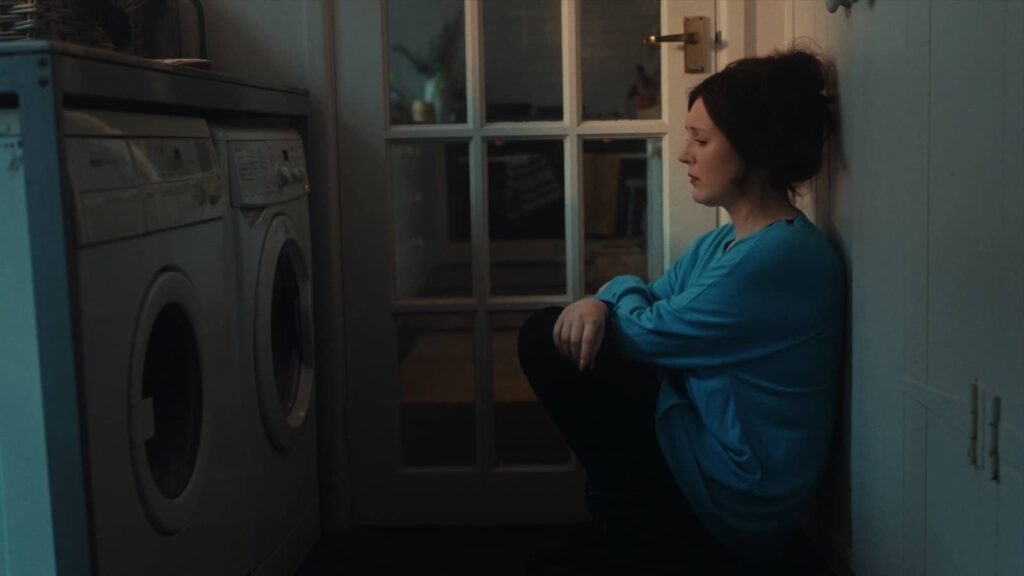
Save for her dog, Anna (Jade Olivia-Patrick, also the co-writer) is utterly alone with the visions of a loss so fresh that the house is still spaced for two. A little girl and an indifferent ocean haunt her memory; in these images, she herself is wrapped in emergency blanket, siren lights reflect off her, turn her into the embodiment of an emergency. It is an economic sequence. Not novel, but refreshing nonetheless.
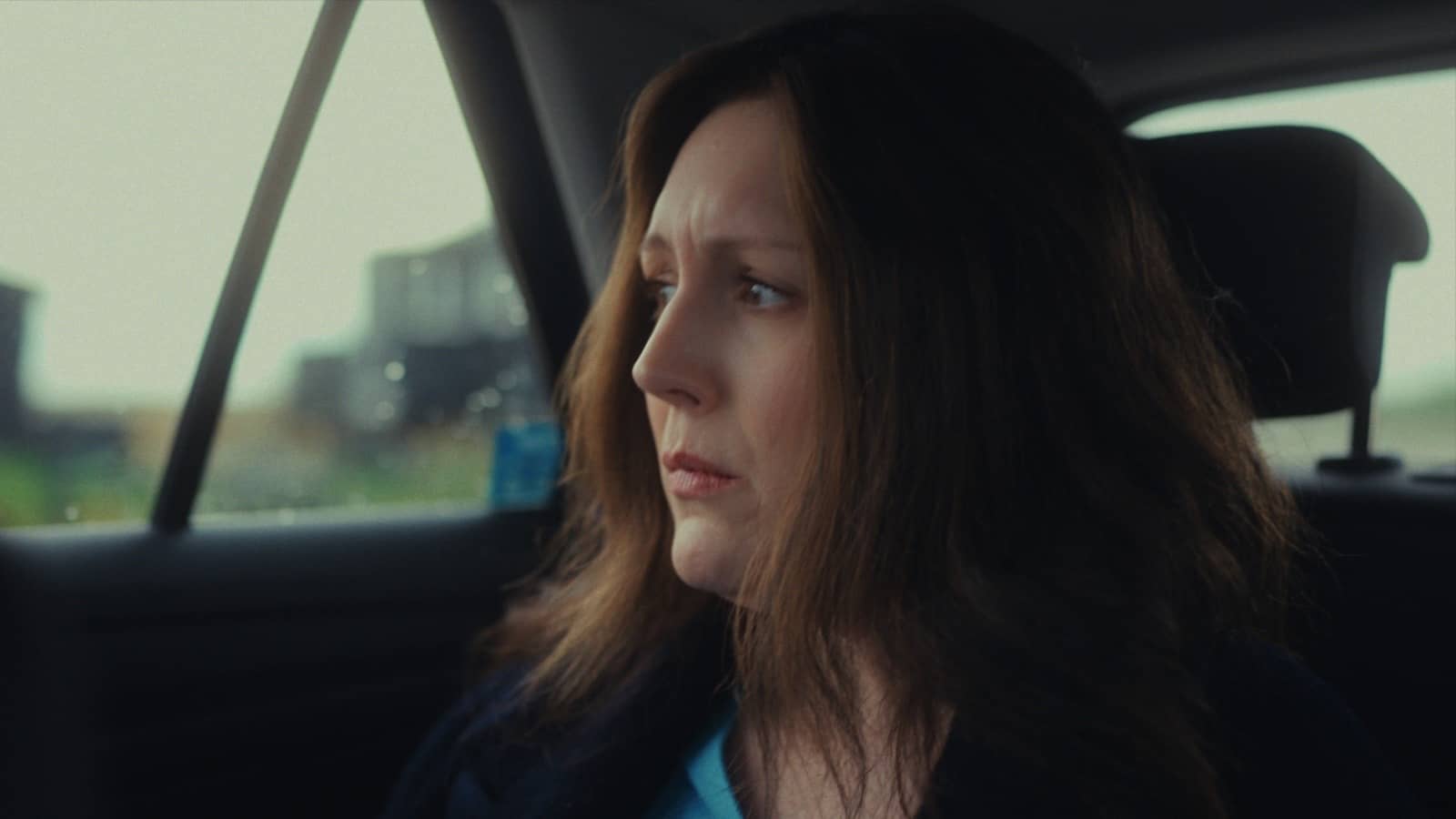
Inside the house the camera moves like the gaze of another person, a startling, unsettling witness to a very personal grief. It even looks as if Anna is aware of this observing eye and is obliged to live her loss in the immediate vicinity of its intruding presence. The walls are too close, the ceiling too low. Perhaps this is what it is like to lose loved ones in a public way. Or perhaps it is the wishful haunting of a woman by her dead daughter.
As long as she is inside the house, the film maintains its documentary like approach. Small details, the grit of living, like someone scratching their knee, become indelible with the camera’s all-recording ability. In all the bleakness of dragging herself through living, Anna is exposed. And yet it does not feel, at all, like being seen and understood.
This gap will not be touched until Anna gets into a cab on a grief-guided impulse. We will not see his face for over two minutes, but the driver (Duane C Tucker), unnamed and almost preternaturally compassionate, sits down for her and for the first time, someone other than a bystander or a public official sees Anna’s grief. The film knows that it will be compared to Driving Miss Daisy and so calculating the distance to safety, builds that initial phase of the equation elliptically. What the two characters say to each other while they are in the car is left out of the soundtrack, we don’t even see the driver at this point. All it allows is the image of her anguish.
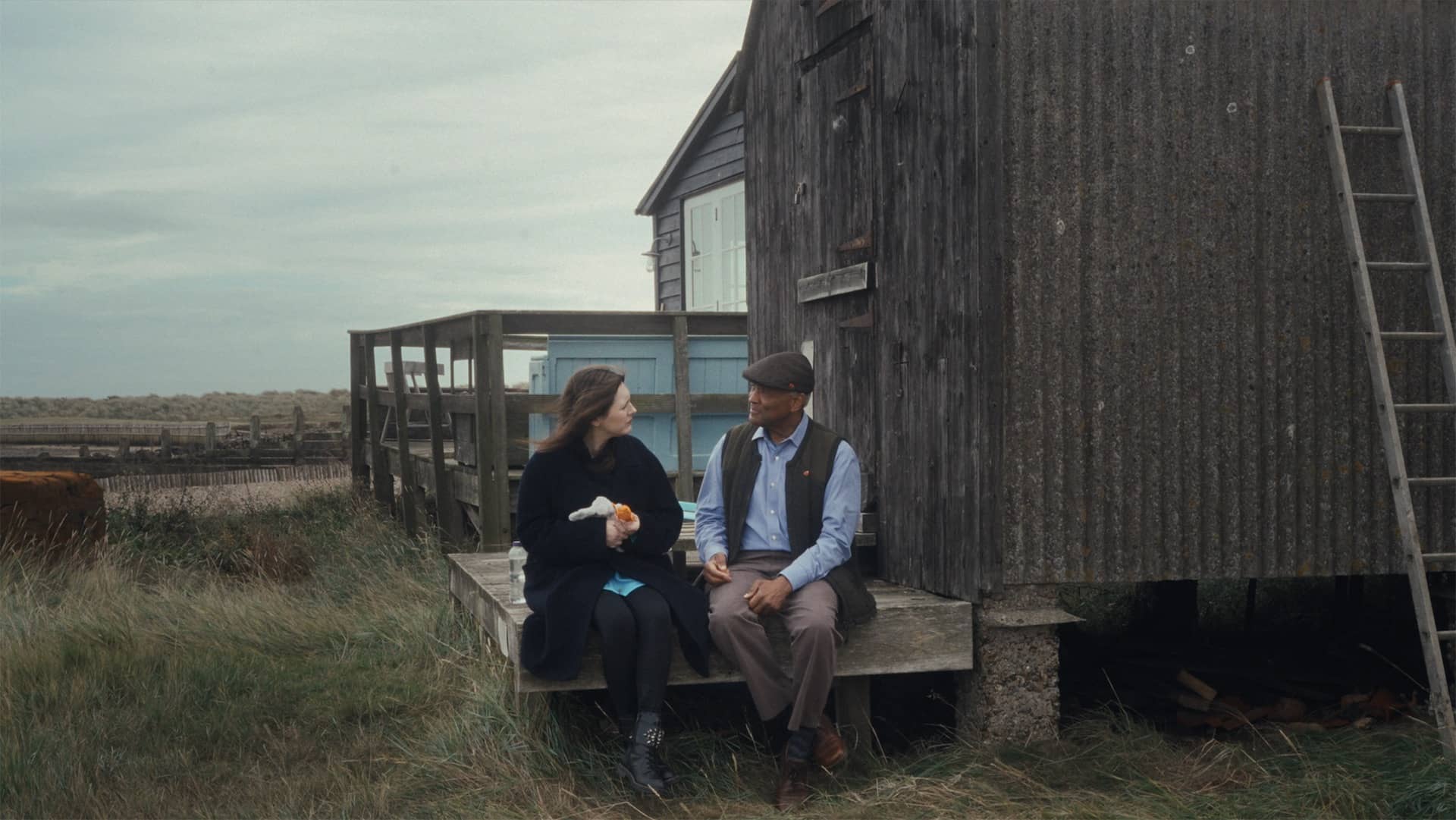
But out in the open, within view of the water but just far enough away, the driver changes into a new role and finally faces the camera. He offers Anna an orange, the poetic symbol of care and regeneration of hope. He looks at the ragged plushie in her hands like the pieces of Katja Kemnitz’s Too Much Love, says, That bunny’s been loved. He asks to hear about its owner. The driver knows grief and recognises love. As Anna embodied loss, he is here now to embody care.
The closeups in this sequence are lensed such that the faces are lifted out of their backgrounds (the look is very late 90s and early 2000s). The characters form a minute world of their own while other lives go on, not necessarily indifferent, but unknowing of the multitudes of grief in any environment whether peopled or otherwise.
Contrary to expectations, the Driver scene, instead of being the endpoint, leaves a substantial portion of the runtime up to the Anna of after. By its end, Bitter Tides establishes itself as a film to be seen for its style, which serves and still ascends above the plot. The past never stops haunting the present, and yet, with a shift in colour alone, the film says, It’s okay, this is what the price of love is.
Watch Bitter Tides Short Film Trailer
No comments yet.
Got Something to add to this article?
Your email address will not be published. Required fields are marked *