
Article too long to read?
To promote your short film on YouTube, give the right viewers a clear reason to watch, make the full film easy to find, and keep promoting it beyond release day. Start with an honest title and thumbnail, build a targeted launch plan, then use YouTube Analytics to understand where viewers arrive and why they stay or leave.
That work matters even with a small channel. YouTube’s discovery guidance explains that recommendations depend on relevance and viewer response. Good metadata helps people understand your film; it cannot guarantee recommendations or a particular number of views.
For a finished short, the practical question is how to connect its story with people who might enjoy it. Here is a release plan you can adapt to your film, audience, and available time.
Check that your short film is ready for a public release
Before scheduling publicity, confirm that a public YouTube release fits your distribution plans. Check the current rules of festivals you still want to enter and any premiere or exclusivity commitments. Requirements vary, so ask the relevant programmer or distributor if you’re unsure. If you are still choosing a route, our guide to self-distribution and traditional distribution provides a broader starting point.
Then review the actual viewing experience:
- Confirm that your music, footage, and other permissions cover the intended online release and promotional clips.
- Watch the uploaded version on a phone and a larger screen. Check dialogue, image quality, credits, and the ending.
- Add accurate captions and proofread automatic captions, including character names and important sound cues.
- Check visibility and audience settings, and address any restrictions or claims shown in Studio before announcing the release.
Define an initial audience more precisely than “people who like films.” A restrained supernatural story might suit viewers who seek atmospheric horror. A documentary about a local music venue might reach its existing community first. Write one sentence describing that audience and why this film would interest them. Use it to guide your packaging and outreach.
Give your title and thumbnail a clear promise
A stranger may know nothing about your cast, festival history, or film title. Your YouTube title and thumbnail need to communicate enough of the experience to make watching feel worthwhile.
Imagine a fictional eight-minute horror short called LAST TRAIN, about a commuter who discovers another passenger on an apparently empty train. Possible titles include:
- LAST TRAIN | A Supernatural Horror Short Film
- The Last Passenger Is Not Alone | LAST TRAIN Horror Short
The first clearly identifies the film and genre. The second leads with the premise. Neither is a guaranteed winner. Choose wording that fits the story, and avoid claims like “the scariest film ever.” Add an award only when it is accurate and useful to the viewer.
For the thumbnail, try a readable image of the commuter with an unsettling figure reflected in the window. An alternative could emphasize an empty carriage with one unexpected silhouette. Keep the crucial detail visible at phone size. A festival poster with tiny credits and several laurels may lose its meaning when reduced to a thumbnail.
YouTube recommends accurate, concise titles and uncomplicated thumbnails. Let the image and title contribute different information. Preserve the film’s atmosphere and avoid revealing its final twist.
Where available, use YouTube Studio’s A/B testing to compare up to three title or thumbnail options, including combinations. It requires advanced feature access, works on desktop, and applies to eligible long-form videos. Shorts are excluded, and Premiere videos become eligible after the Premiere ends. Tests evaluate watch time, rather than simply rewarding the most clicks, and may produce no clear winner.
If testing is unavailable, record the date and reason for a change. Repeatedly replacing everything makes results difficult to interpret, especially when the audience is changing too.
Write a useful description and keep tags simple
Use the opening lines to explain the film without spoiling it. For the hypothetical LAST TRAIN, that could be:
“A late-night commuter boards an empty train, then notices a passenger who should not be there. LAST TRAIN is an eight-minute supernatural horror short about the fear of being followed.”
Follow with cast and crew credits, relevant production information, verified festival selections, and useful links. Give interested viewers a clear next step, such as another film or a making-of video. Put publicity contact details where a journalist can find them easily.
Use genre, language, and subject terms naturally when they describe the work. A description should answer viewers’ questions; repeating “best short film” adds little.
Do not spend hours building a huge tag list. YouTube says tags play a minimal role in discovery, except when they help with common misspellings. Prioritize the title, thumbnail, and description. Tags and hashtags are different features, and neither justifies filling your description with unrelated keywords.
Plan promotion before and after launch day
Give yourself a manageable release schedule. The following is a working plan, not a platform requirement.
Before release
Prepare the full-film upload, captions, thumbnail options, and a small set of promotional assets. Give cast and crew the release date, watch link when available, a still, and adaptable sample copy. Ask them to share with people who would genuinely enjoy the film.
Contact suitable publications early enough for them to consider coverage. If offering an advance screener, make its access and any publication embargo clear. Check submission policies before assuming an outlet will review a film already online.
On release day
Test the public watch link while signed out. Check that captions and playback work. Share the film through your existing audience channels, and tell people what kind of experience it offers and how long it runs.
Be available to respond to thoughtful comments. A question about the story or a filmmaking choice can start a useful conversation. Avoid requests for empty comments purely to raise engagement counts.
During the following weeks
Give each new post a reason to exist. Share a sound-design breakdown, a cast perspective, or a spoiler-free production challenge. Release supporting Shorts and follow up with interested outlets according to their stated process.
Keep a simple record of the date, audience, asset, and destination for each promotion. Review it alongside traffic sources in Studio. A small publication that brings engaged viewers may deserve more attention than a broad post that produces a brief spike.
Reach communities and publications that fit the film
Build a short outreach list around genuine relevance. Consider genre publications, local arts coverage, groups connected to the film’s subject, and communities you already participate in. Read recent work from each outlet before pitching. A technical cinematography forum and a horror newsletter need different reasons to care.
For each prospect, note the relevant contact or submission route, audience fit, and any rules about self-promotion. In a community, contribute to the discussion and use designated sharing threads where required. Posting the same unexplained link everywhere is unlikely to build trust.
A useful pitch includes a specific angle, the film’s runtime, a watch link, and access to supporting materials. For example:
“Hello [editor], your recent coverage of [relevant topic] prompted me to get in touch. My eight-minute horror short, LAST TRAIN, uses reflections and off-screen sound to build a haunting inside a single train carriage. It will be available on YouTube on [date]. Would it suit your short-film coverage? Here are the screener and press kit: [links].”
Adapt that hypothetical pitch to facts you can support. Do not invent a connection to an editor’s work or send large unsolicited attachments.
Prepare a concise press kit with a logline, synopsis, filmmaker biography, key credits, captioned stills, release details and contact information. The Indie Shorts Mag Film Press Kit Generator can help organize those materials. Make sure the recipient can open the links without requesting access.
Use YouTube Shorts to lead viewers to the full film
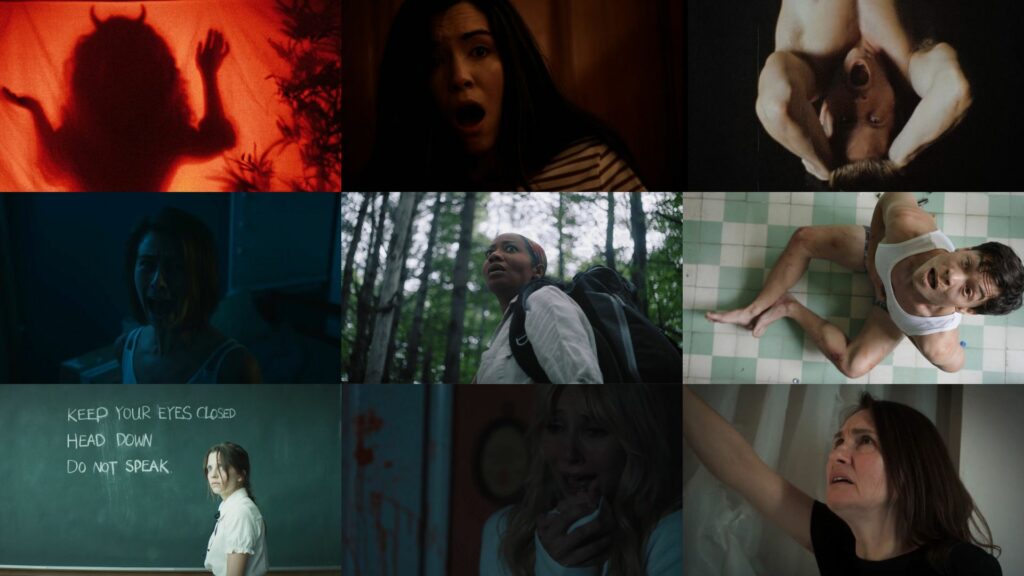
A promotional Short can introduce the film to someone who would never search for its title. Choose an extract that works on its own and gives a fair sense of the tone. You might use an unresolved moment, a striking practical effect, or a brief explanation of how a scene was made.
Check that a vertical edit preserves essential action and readable captions. Avoid sacrificing the reveal that makes the complete film worth watching. Also check that the film’s permissions cover the promotional version you intend to publish.
After uploading the Short, open it in Studio and select your full film as its Related Video. This requires advanced feature access. The destination must be on your channel and public or unlisted. Viewers then see a clickable link beneath your channel handle.
For a public release campaign, check that this leads to the intended watchable version. Add a clear invitation such as “Watch the full LAST TRAIN using the related video link.”
Do not rely on a pasted watch URL in a Short’s description or comments: those URLs are not clickable. And assess whether your Shorts actually send people to the film. A popular clip can have a different audience from an eight-minute story.
Give interested viewers somewhere to go next
Organise your channel so a new viewer can find your finished films, with behind-the-scenes material grouped separately when useful. Update relevant older films to point toward the new release.
End screens can promote another video, a playlist or a subscription during the final 5 to 20 seconds of an eligible video. Leave the dramatic ending and important credits unobscured. End screens are unavailable on videos marked made for kids and may not appear in every viewing context.
If this is your first film, a thoughtful making-of video can provide a next step. Invite viewers to subscribe for future work without promising a release schedule you cannot sustain. YouTube does not require daily or weekly uploads. Choose supporting material you can make well alongside your next production.
Use Analytics to choose your next improvement
Open the film’s Analytics in YouTube Studio. Review reach and engagement together before making changes. Retention data usually takes one to two days to process, and a small sample may not support a confident conclusion.
Few impressions: Check whether the film is public and whether Studio shows restrictions. Then look at how people are finding it. Limited impressions alone cannot tell you that the thumbnail is wrong. Continue relevant outreach, and make the genre or premise clearer if itis hard to understand.
Impressions without many clicks: Review the title and thumbnail against the audience seeing them. CTR varies by traffic source and audience, so compare similar sources and periods where possible. Search and Home represent different viewing situations. A falling click-through rate can accompany wider reach, rather than signal failure. No universal CTR target diagnoses every short film.
Clicks followed by early departures: Watch the opening yourself. Does the packaging promise a different kind of film? Are there playback, dialogue, or caption problems? Is a long promotional introduction delaying the story? Treat these as possibilities to investigate, rather than conclusions from the graph alone.
Dips or spikes within the film: Audience-retention reports show where viewers leave, skip, or rewatch. A spike might reflect a favorite moment or something confusing. A drop during credits means something different than a drop before the story develops. Review the scene and seek specific feedback before deciding what it means.
Keep a brief change log and allow time to observe results. If you use advertising, distinguish paid from organic viewing when reviewing performance. Don’t recut an intentional quiet scene just to flatten a graph. Use what you learn to improve how you present this film and inform future filmmaking choices.
Can you promote a short film without a budget?
Yes. Relevant community participation, cast and crew sharing, targeted pitches and well-chosen supporting clips can all start without an advertising budget. They still take time, so choose a few useful actions you can sustain.
Avoid services selling artificial views, likes, or subscribers. YouTube prohibits fake engagement, and hiring someone else to generate it does not remove the risk to your channel.
Start with the next useful action
If your film is already live, begin by checking its title, thumbnail, and opening description. Choose one relevant audience to reach this week, then review how those viewers found and watched the film. Give each change a clear purpose. A thoughtful release campaign can keep introducing your short to new viewers long after the first announcement.
Got Something to add to this article?
Your email address will not be published. Required fields are marked *