Article too long to read?
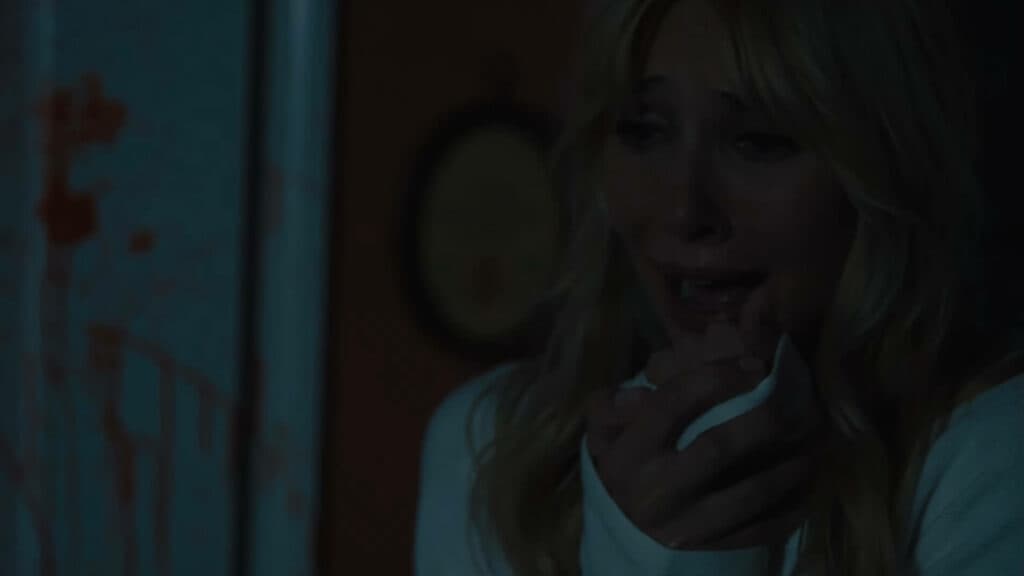
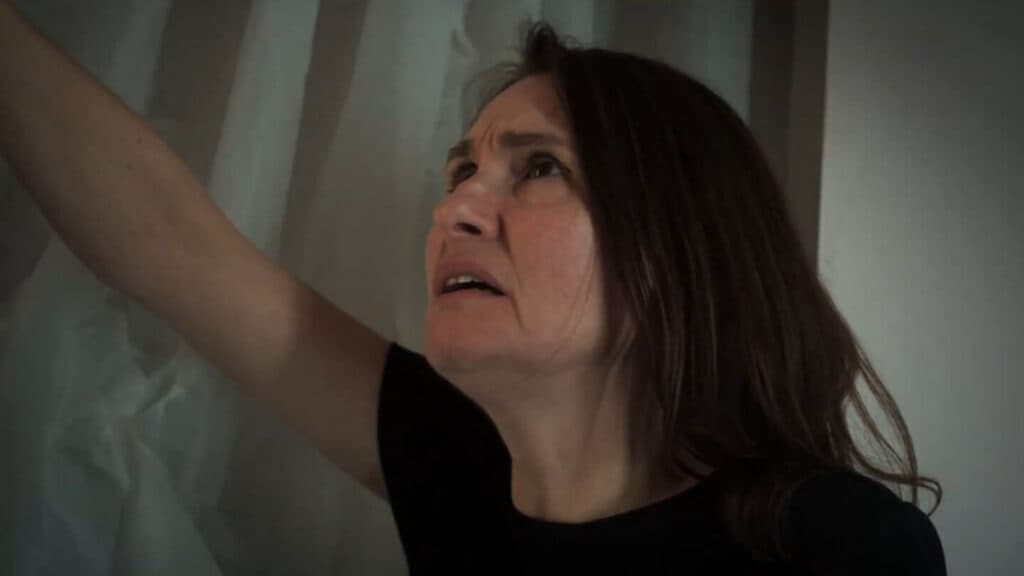
For nearly two decades, Sam Iwata (aka Liu) operated at the apex of the commercial world, crafting pristine campaigns for clients like Lancôme and M&C Saatchi, where the primary directive was to make a product look like a million dollars. But in 2020, Iwata traded the calculated perfection of advertising for the messy, haunting landscapes of the human soul. Now the founder of 38pro Film Ltd., Iwata is applying that same high-stakes discipline to a very different canvas: the psychological thriller. With his latest film Melodies of the Abyss—a speculative fever dream reimagining Kurt Cobain’s final hours—he proves that the precision required to sell a brand is the same precision required to dismantle a psyche. We sat down with the director to discuss his pivot from “dictating” commercial performance to unearthing the raw vulnerability of independent cinema.
Indie Shorts Mag: You spent nearly two decades executing high-stakes campaigns for global brands and A-list talents like Nicole Kidman. How did that intense environment at M&C Saatchi shape the specific “rhythm and emotional truth” you now prioritize in your independent narrative work?
Sam Iwata aka Liu: Commercials and films may share tools — framing, rhythm, performance — but they belong to two very different worlds. In commercials, my role was to elevate the product: to make it look like a million dollars on a celebrity and deliver a simple, persuasive message in seconds. That environment at M&C Saatchi taught me rigor — how to compress meaning into a single beat and shape clarity under pressure.
Film, however, is all about human experience — about living through a character’s journey. Here the director’s responsibility is not persuasion but exploration. Commercials sell clarity; films reveal human complexity through choices that allow ambiguity and feeling to surface. The rigor I learned in commercials still guides me, but now I apply it differently: not to polish a product, but to open space for vulnerability and let audiences feel the pulse of a character’s inner life.
That’s the shift I carry into my independent work. Commercials taught me precision; films let me surrender to humanity. One world sells a product, the other searches for resonance. And it’s in that search that I now find the emotional truth I want my stories to hold.
Indie Shorts Mag: In Melodies of the Abyss, you tackle the psyche of a cultural icon, Kurt Cobain, through a speculative, Faustian lens. What drew you to explore Cobain’s final hours not just as a biography, but as a supernatural struggle between instability and the “quintessential deal with the devil”?
Sam Iwata aka Liu: What drew me to Cobain’s story was never the gossip or the mechanics of his final hours. Melodies of the Abyss begins from a single concept: redemption. I wanted to explore how regret and the longing for love might shape a man at the edge of myth, and how those emotions could still pulse beneath the noise of fame, instability, and conspiracy.
The Faustian lens — the idea of a pact with the devil, the “Club 27” mythology — is not there to sensationalize. It’s a frame that lets me dramatize the inner struggle: was Cobain haunted by a bargain, by Courtney, by fame itself, or simply by his own contradictions? By staging his final hours as a supernatural confrontation, I could move beyond biography into something more universal — a meditation on whether even in the abyss, a soul can still search for grace.
As a writer‑director, I wasn’t interested in retelling what people already know. I wanted to cut into the myth from a different angle, to suggest what may have happened in his mental state at that moment. The film is not about proving facts, but about opening space for ambiguity, for the audience to feel the tension between instability and redemption.
So while the story uses a speculative, Faustian frame, its heart is simple: Cobain’s journey is a mirror of our own need to reconcile regret and to be loved. That is the emotional truth I wanted to hold onto — not the gossip, but the possibility of redemption in the abyss.
Indie Shorts Mag: Our review of Melodies of the Abyss highlighted the meticulous production design—specifically the archival accuracy of the sneakers and the heroin kit—contrasted against the surrealism of the narrative. How do you balance that need for grounded, historical authenticity with the surrealist crescendos that define your visual style?
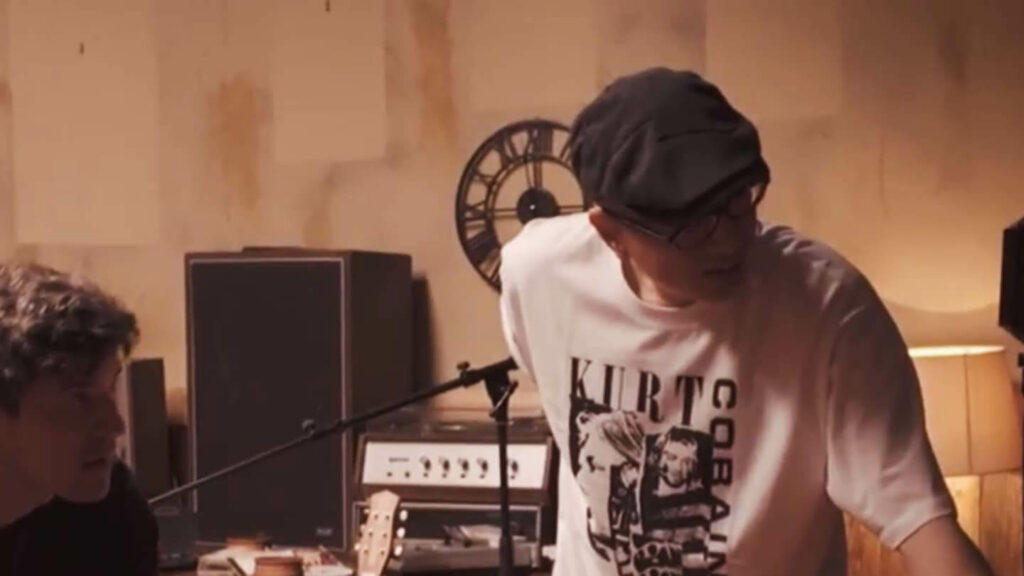
Sam Iwata aka Liu: All my life, I’ve been into Hip Hop and R&B — never a rock or grunge fan. Even now, aside from Kurt Cobain, I wouldn’t call myself a devotee. But three years ago, a short Kurt documentary appeared on my YouTube feed, and I felt compelled to watch it. That moment began an obsession: I spent more than a year learning about him, not to retell gossip, but to find a way into his psyche through storytelling.
That’s why in Melodies of the Abyss, I’m not interested in repeating what people already know. Instead, I build a world based on facts, then use imagination to suggest what might exist in the unseen corners. The sneakers, the heroin kit — those are archival anchors, researched and recreated with precision. They give the audience confidence that the world is real, that the film respects history.
But once the audience is grounded, I let surrealism rise. As the newsletters on our site describe, set design was never just aesthetic — it was psychological scaffolding. Every chipped surface, every crooked frame, every misplaced instrument becomes a mirror of Kurt’s unraveling. The surreal crescendos — dreamlike imagery, Faustian motifs, supernatural intrusions — are not departures from authenticity, but extensions of it. They dramatize the contradictions, silences, and emotions that facts alone cannot capture.
Every pop in the design serves a purpose. For example, I placed a bass guitar in the garage studio, even though Kurt was never a bass player. That choice is deliberate. It’s a clue, a provocation, a question for the audience. To understand why, you have to watch until the very end and pay attention to the news report that plays.
So the balance is simple: authenticity builds trust, surrealism builds resonance. One grounds the audience in history; the other opens them to ambiguity and emotional truth. Together, they allow the film to move beyond biography into a meditation on regret, longing, and redemption.
Indie Shorts Mag: You founded 38pro Film Ltd. in 2020 with the express intent of telling stories on your own terms. Was there a specific moment or project during your commercial career that served as the catalyst for this shift toward creating your own IP and weaving these more psychological narratives?
Sam Iwata aka Liu: After twenty years of directing commercials, I came to a realization: we were never telling stories, we were only crafting reasons for consumers to buy products. In the early years, there were still campaigns with genuine narrative drive, but over time those became rare. That decline was the trigger point for me.
I remember one campaign in particular. Every shot was polished, but I felt no human truth behind it. When I tried to fix that by focusing on performance, the agency and client pushed back. They told me they didn’t need good acting, only that the product looked perfect. I explained that authentic performances are what make the product believable, but the relationship between story and selling had already been lost. That moment stayed with me.
Then the pandemic arrived, and it sharpened the choice. I could remain in what I call the “gold mine” — because commercials pay very well — or I could step away and reclaim storytelling for myself. Founding 38pro Film Ltd. in 2020 was my answer. It gave me the freedom to create my own IP, to explore psychological narratives, and to tell stories on my own terms.
Indie Shorts Mag: Your short film Metempsychosis – Nocturnal Whispers has garnered an incredible 32 awards globally. With the feature-length continuation, Metempsychoses – The Eclipsed Destiny, entering pre-production in 2026, how are you planning to expand upon the themes of that universe without losing the intimacy that made the short so successful?
Sam Iwata aka Liu: I am honored to have received recognition from audiences worldwide, which proves the concept works. Since then, I have continued developing and refining the story, and I completed the feature screenplay two years ago. However, just as the world we live in keeps evolving, I also need to keep updating the world my characters inhabit.
I believe the center of every story is the character’s journey. I spend time developing the characters until I know them intimately. Once they are fully realized, I don’t need to force them into action — they lead the story themselves, moving logically within the world I’ve built for them.
That philosophy is what allows me to expand the scope without losing intimacy. The feature grows into a larger canvas, but the characters remain the anchor. Their choices, contradictions, and silences drive the narrative forward, and by staying close to their inner lives, the audience can stay connected to the human truth at the heart of the film. So even as the universe expands, the intimacy remains — because the characters themselves carry it forward.
Indie Shorts Mag: You’ve mentioned a desire to “blur the lines between reality and imagination.” In your directing process, how do you work with your cinematographers and editors to visually represent that liminal space where the audience isn’t quite sure what is real and what is internal?
Sam Iwata aka Liu: It took me a long time to realize that the key to success in every film project is communication, not control. And to communicate well, I have to be vulnerable and always ask the right question: what is the purpose of the shot? That applies not only to cinematographers and editors, but to everyone I collaborate with.
By focusing on purpose, we find the right visual language together. Sometimes that means grounding the audience in reality, other times it means opening a window into imagination. The blurred space between the two is created through open communication — and that’s how the film achieves its balance.
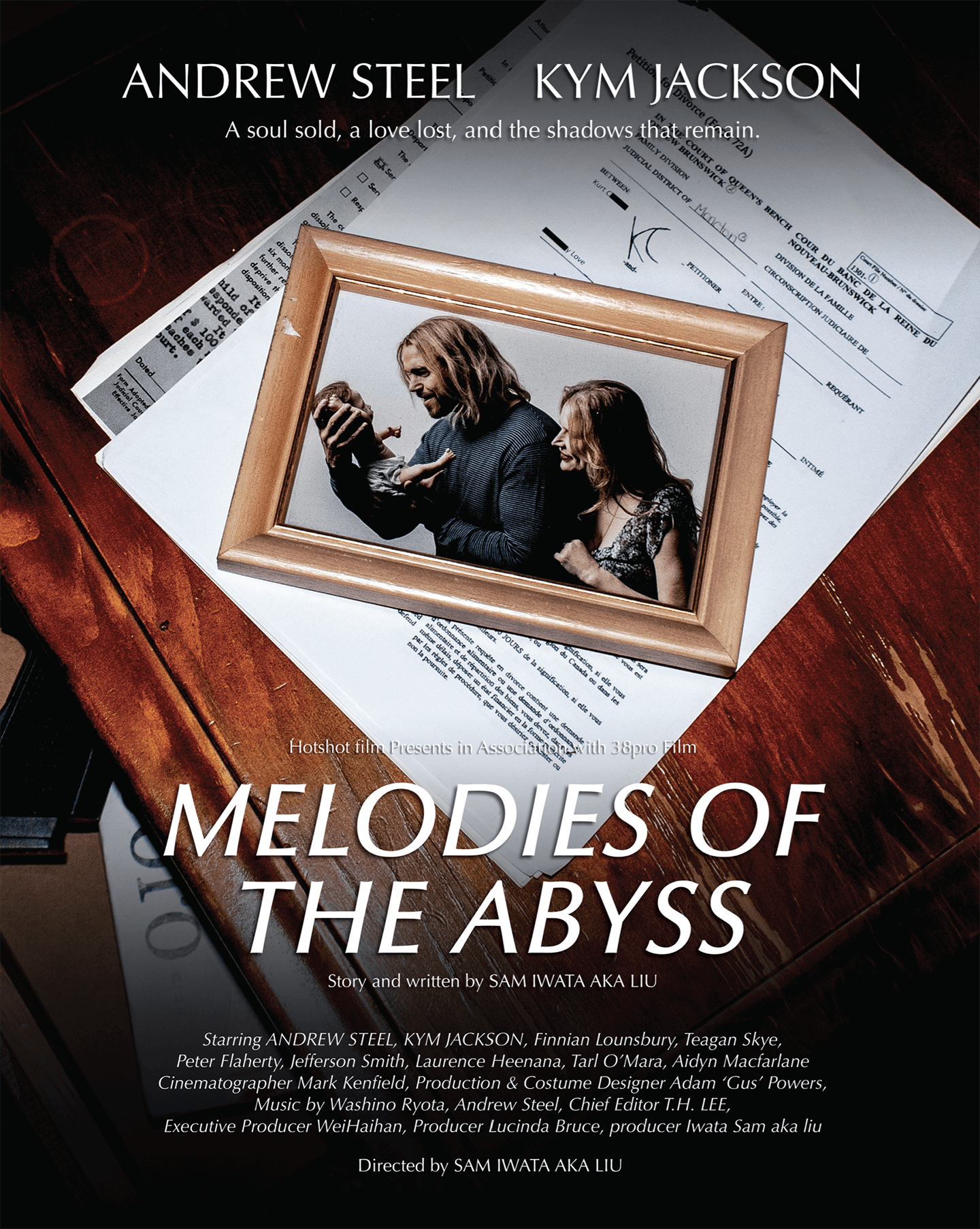
Indie Shorts Mag: Having directed heavyweights in the fashion and commercial world, and now directing actors like Andrew Steel and Kym Jackson in deep psychological roles, how does your approach to directing performance change when the goal shifts from “brand strategy” to “character vulnerability”?
Sam Iwata aka Liu: In the commercial world, directing performance is often closer to dictatorship — the brand strategy dictates the tone, the gestures, even the rhythm of delivery. The actor’s role is to embody a message that has already been defined.
In film, it’s very different. As I mentioned earlier, the process is built on what I believe: communication and vulnerability. Instead of imposing control, I ask the right questions — what is the purpose of this moment, and how does it reveal the character’s inner truth? That creates space for experienced actors such as Andrew Steel and Kym Jackson to bring their own depth and nuance into the performance.
So the shift is from control to trust. Commercials demand precision in service of a brand; films demand openness in service of character. I’ve written more about this in my blog On Tears, Trust, and the Truth Beneath Performance — because ultimately, the work is about creating conditions where vulnerability can surface honestly on screen.
Indie Shorts Mag: Breaking Free won the Platinum Remi Award for Feature Screenplay, adding another layer to your portfolio. When you are wearing your writer’s hat, do you find you are already directing the film in your head, or do you try to separate the writing process from the visual execution until the script is locked?
Sam Iwata aka Liu: As I mentioned earlier, I allow the character to lead the journey, so when I put on my writer’s hat I’m following their actions — and in doing so, I’m already directing the film in my head as the story unfolds. Once the story is written, I’ll go through it again and again, rewrite after rewrite, until it’s concise but readable, ready to be produceable and only then do I lock the visual plan.
Indie Shorts Mag: You mention merging artistry with strategy to ensure stories connect meaningfully. Independent film often struggles with the “strategy” side of things. How has your background in market leadership and international campaigns influenced how you position and promote films like Melodies of the Abyss on the festival circuit?
Sam Iwata aka Liu: The commercial world taught me that strategy is the bridge that lets stories reach the right audience. Since each festival has a different approach and audience, finding the right festival is important — which means doing the research, and that research leads to writing the right cover letter for the right festival, which is crucial. That discipline, combined with clarity of message and sensitivity to cultural nuance, is how I position and promote films like Melodies of the Abyss on the circuit.
Indie Shorts Mag: Looking at your body of work, from the “haunting for life narrative” of Melodies to the upcoming Eclipsed Destiny, what is the singular emotion or question you hope audiences carry with them after the credits roll on a Sam Iwata film?
Sam Iwata aka Liu: I believe every movie should carry a core message that grows out of a concept or idea. Rather than forcing that message, I want the audience to ride with the character’s journey — making that emotional connection. If they leave with the message, that’s a bonus; my real goal is for them to live the experience.
Sam Iwata’s journey from the “gold mine” of advertising to the festival circuit is a testament to the power of creative reinvention. Whether he is directing global icons or orchestrating a supernatural confrontation in a Seattle greenhouse, his focus remains singular: the pursuit of emotional truth. As Melodies of the Abyss continues to collect accolades and his feature Metempsychoses – The Eclipsed Destiny prepares for production in 2026, Iwata is carving out a unique niche where strategic clarity meets narrative ambiguity. For audiences, the result is cinema that doesn’t just deliver a message, but demands an experience—leaving us to question where the reality of our own lives ends and the abyss begins.


About the Author

Related Posts
 Interviews
Crafting A ‘Dark Visual Lullaby’ On 35mm: Anjini Taneja Azhar On The Magical Realism Of ‘Who Are You, Nanu?’
 Interviews
Framing The Future: Jada George On Visual Tension, Dystopian Narratives, And Reclaiming The Black Experience In Sci-Fi
 Interviews
Choosing Yourself: How Hayden Mclean Turned ‘The Last Dance’ into an Act of Faith, Legacy and Global Resonance
No comments yet.
Got Something to add to this article?
Your email address will not be published. Required fields are marked *