Article too long to read?
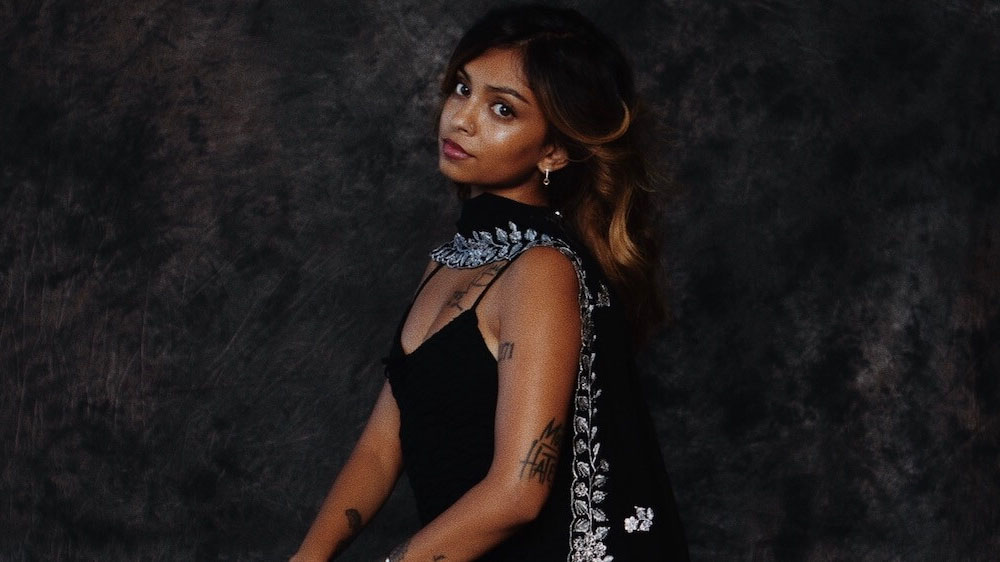
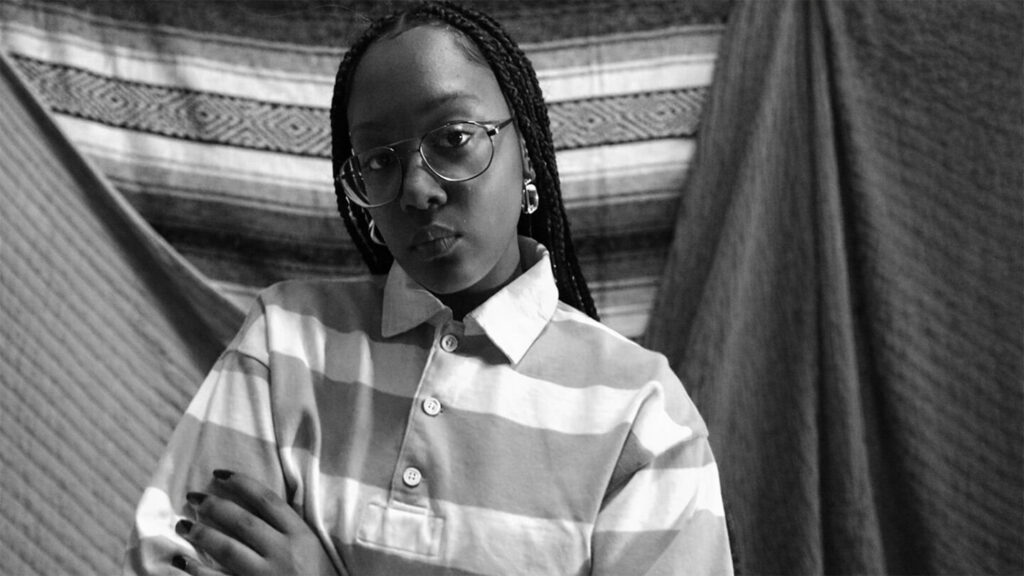
Filmmaking is often about seeing the world differently, but for Los Angeles-based director Jada George, that vision was honed through seven years of professional photography before she ever yelled “action.” Originally from Annapolis, Maryland, George has quickly established herself as a rising voice in independent cinema, blending striking composition with socially conscious storytelling. Her directorial debut, Where The Children Go To Play, offers a haunting, dystopian look at human worth in the age of artificial intelligence, positioning her as a bold new entrant in the sci-fi genre. Currently refining her craft under the mentorship of acclaimed director Pete Chatmon (Insecure, Yellowjackets), George represents a new wave of storytellers determined to reshape genre conventions. We sat down with her to discuss the transition from still to motion, the mechanics of indie world-building, and the importance of reclaiming narratives for underrepresented communities.
Indie Shorts Mag: Your work possesses a very deliberate, striking sense of composition and mood. I understand you have a background in photography and visual arts; how has that foundation in the still image influenced the way you approach blocking and framing now that you are working with motion?
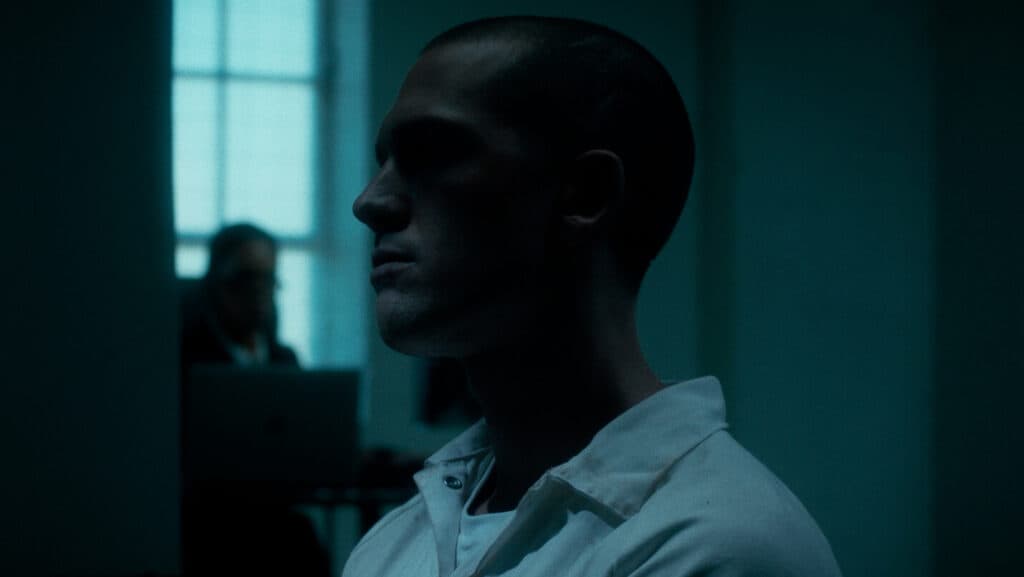
Jada George: With around 7 years of professional photography under my belt, the greatest thing that I’ve learned is how much power one shot could hold. It’s not just about aiming and shooting but it’s about figuring out the story that you want to tell through your lens and locating the best angle to help you translate it. For example, in Where The Children Go To Play, there is a scene where two of our proctors stand over Sevyn to let him know he is not worthy. I wanted to make sure this shot aligned with Sevyn who is sitting in the scene to keep the audience on his level. We tilted the camera upwards to show the proctors over him which emphasizes the power dynamic between the three subjects. Discovering ways to influence perspective in a motion picture is a direct result that comes from the art of photography.
Indie Shorts Mag: Creatives often find that their environment shapes their storytelling. Coming from Maryland and now working in the heart of the industry in Los Angeles, have you noticed a shift in the types of stories you are drawn to, or the way you visualize them, since making that geographical transition?
Jada George: More than anything, I am more inspired to fill the gap in narrative stories that I’ve seen being told. Growing up in Maryland, I experienced many realities from the suburbs to inner city living. Specifically being a Black girl living in a predominantly white area, I noticed at a young age that the stereotypical stories we often see in films starring black leads didn’t directly reflect my reality and I knew that was something I wanted to tackle as a storyteller. I feel a lot of this has to do with the systems set in place for certain communities. You are truly a product of your environment, and you can’t do better if you don’t know any better. Since my move to LA, I’ve found my direct source of inspiration. Being surrounded by major companies in entertainment and seeing just how much money circulates through the industry has only stretched the goals that I have for myself. Reclaiming our narratives and inspiring my community is number one on my to do list as I want to show people who aren’t typically aware of opportunities that anything is possible and that it’s okay to be what they tell us we can’t be.
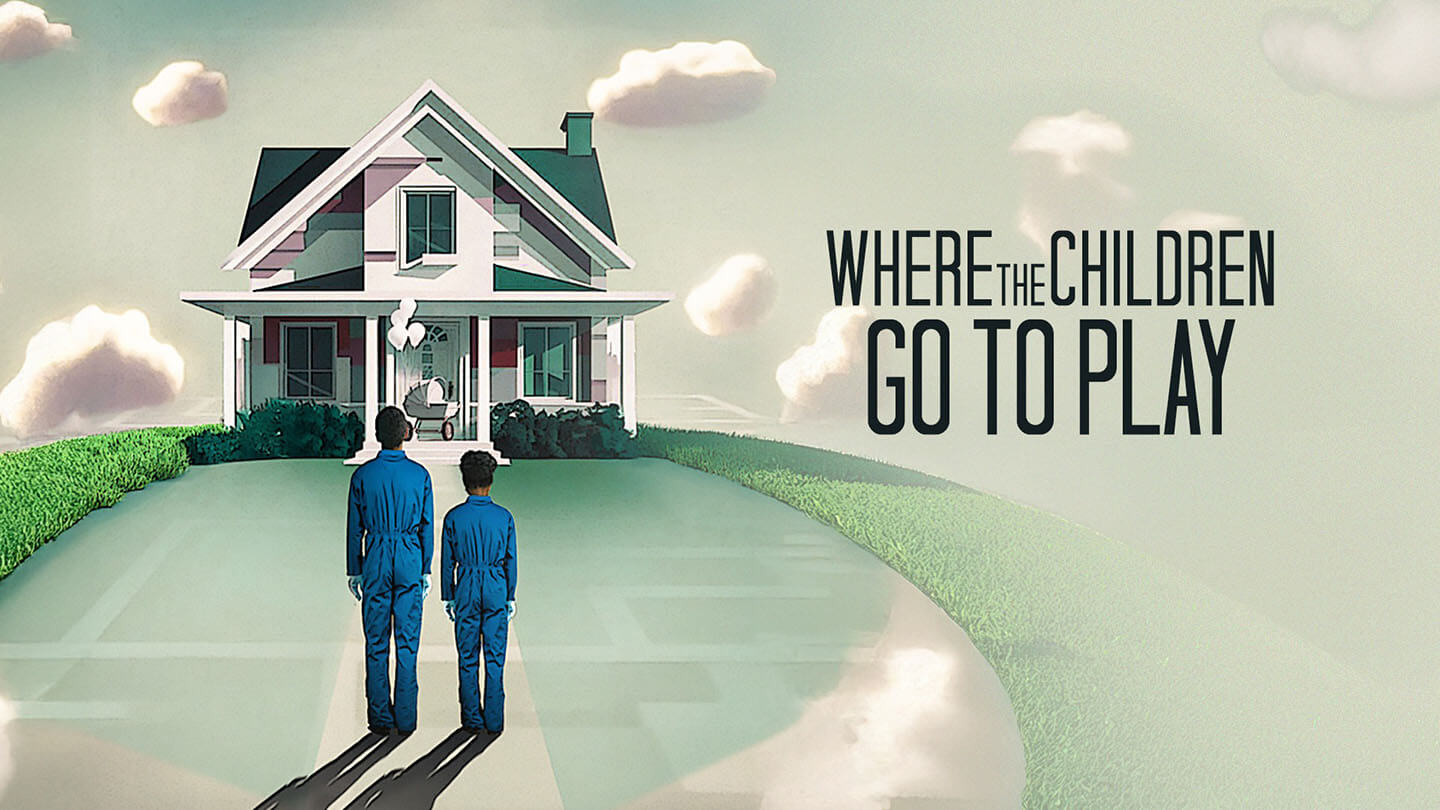
Indie Shorts Mag: Your directorial debut, Where The Children Go To Play, tackles a dystopian setting involving synthetic proctors. What was the spark for this specific concept? Did you set out to write a sci-fi story, or did the social commentary on human worth and survival demand a futuristic setting?
Jada George: Artificial Intelligence and this age of technology we are living in is the inspiration behind this story. In order to properly address the harm that comes with relying heavily on AI rather our own minds and morals, I knew it needed to be futuristic with sci-fi elements. The unsettling nature of Where The Children Go To Play is grounded in the idea that technology created to help us, ends up controlling us. Personifying and bringing to life androids in a way that mirrors human identity shields us from knowing the true motives of our proctors. There is a scene where they tell our candidates that “Humans are too sympathetic to one another to administer the tests” and that alone is chilling. It’s safe to say that humans are afraid of the unknown and in a story like this, that has technology leading the charge, it forces us to ask many questions that we unfortunately won’t know the answers too, as AI has a mind if its own. In a way, we are shut out and left with no choice but to “obey” the androids who’ve convinced us that they are superior to us as a human race. I don’t think this feeling could have been achieved in a world other than dystopian.
Indie Shorts Mag: In sci-fi and dystopian films, there is often a danger of the ‘world-building’ overshadowing the characters. How did you go about directing your actors to ensure the emotional grounding remained the focus amidst such high-concept, technological themes?
Jada George: I think I lucked out with this film because our set was very limited in regards to location and how much of the dystopian world we actually see. It relied heavily on the actors specifically to make our audience aware of the true power dynamics. Our proctors were the villains of this film, representing AI and technology that’s become conscious enough to overrule the human race. For them, it was about blocking, cadence, and finding the perfect beats in their dialogue to emphasize the structure of their beings. I needed them to be intimidating, precise, and in sync with each other to push forward the narrative that they are superior to our candidates. Our two main subjects, Solana and Sevyn, were to represent the average human. From the flux of emotions showcased throughout each assessment level, to the answers given that directly reflects their morals, Solana and Sevyn were directed to simply be vulnerable. In this case, they were made to break in the eyes of a “flawless” system.
Indie Shorts Mag: Creating a dystopian world on an indie budget is a massive challenge. Can you talk about your collaboration with your cinematographer and production designer? How did you decide on the specific visual language—the colors and textures—to convey that sense of unease and judgment found in the film?
Jada George: Our set played a major part in the tone and texture of our story. When I first received the script, I knew I wanted to ensure the 15 minutes of the film influenced a sense of unsettling, uneasiness for our viewers. Despite it only being in 1 location for the majority, the color and room tones needed to be apparent to inspire that feeling. After hours of scrolling through peer space, I discovered the all white tiled room set and I immediately knew this was our spot. We brought our SFX team and cinematographer to location scout with us so we could identify the best angles that would call for the least amount of post work. Most of what you see is practical, as we knew how to cheat the camera angles to block out parts of the set that would pull us out of the world we’ve created. The white walls helped us with the “cold” feeling we were going for and we added extra ceiling lights to enhance the dullness of our shots which play into the harsh and unfortunate realities that our characters are experiencing.
Indie Shorts Mag: Science fiction and speculative storytelling have historically been spaces where Black women were underrepresented, both behind and in front of the camera. Do you view your work in this genre as a form of activism or reclamation, and what unique perspectives do you think are crucial to add to the current sci-fi canon?
Jada George: I see it more as a reclamation. We exist in all spaces and no one story completely reflects who we are as a whole. Too many times we only see stories rooted in trauma and the inhuman history in reference to our relationship with America, and I think that is doing us more harm than good. The power of filmmaking is its ability to bring viewers into extraordinary experiences, providing a sense of escapism from the real world. That’s the magic of storytelling. Even with the unique perspectives that are influenced by a communities societal status, one thing that we all have in common as human beings is our ability to understand each other emotionally. Even when you can’t relate completely to a situation, you are still able to connect to the feeling and emotion that a character is experiencing. My goal is to tell more universal stories that have Black actors in the leading roles, no matter what genre it is. Feeling is the universal language and I believe we will be more rounded as a society if we provide more communities with the power to tell stories from their own perspectives and control their own narratives.
Indie Shorts Mag: You are currently gaining experience working alongside Pete Chatmon, who has directed for massive shows like Insecure and Yellowjackets. What is the biggest lesson you’ve learned observing high-level television directing that you are eager to apply to your own independent film sets?
Jada George: One of the main things that I’ve learned from Pete has been that most of the work goes into your prep. From story breakdowns, to location scouting, story boarding and shot listing, you have to make sure that YOU understand the story that you want to tell. You have to be able to see it in your mind from start to finish so that you can then communicate your vision to your cast and crew. Once you have it down on your end, it then becomes a mission to make sure everything aligns and the source of that alignment is the trust that your team has to have with you. It’s important to make time to speak with everyone one on one before the cameras roll to introduce yourself, provide an opportunity for collaborative discussion, and ensure that no questions go unanswered. In this industry, time is money and what you don’t want to do as a director is fail to “make the day”. By over prepping before the first day of principal photography, it ensures that the flow of set is seamless as everyone knows exactly what needs to happen at every moment to execute your vision.
Indie Shorts Mag: Moving from the solitary nature of photography to the massive collaborative machine of film production requires a different set of muscles. As you navigate complex productions, how do you maintain your specific artistic voice and leadership style when the pressure is on?
Jada George: Having trust in myself and vision while also understanding that this is a collaborative sport has given me the confidence needed as a director. The beauty of over prepping before you begin to talk with your crew is that it’s work that you do on your own. Spending time to do research on shows and films that inspire the story you’re about to tell not only helps you to discover your perspective, but it confirms that the work has been done before, so you can do it too. I make sure that I make my vision as transparent as possible while also knowing that I can’t be married to any of my ideas. If something goes wrong on set or someone challenges a shot you may have, it’s important to spend time finding the solution rather wasting time fighting for something that has a chance of getting cut in post anyways. This opens the door for collaboration and invites your crew to give input and offer ideas that you may not’ve thought of yourself. The goal is to enhance the story and when people trust you and see that you are leading with confidence, they will want to be a part of the magic of execution. It all starts with how you show up for yourself and if you are true to the art of storytelling, no one can take that away from you.
Indie Shorts Mag: As a filmmaker committed to socially conscious storytelling, how do you balance the desire to send a message or spark dialogue with the need to simply tell a compelling, entertaining story?
Jada George: I understand that there is room for both, but as a Black women in a fight to take back our narratives, there is a duty that I can’t turn away from. The entertainment industry, like many others, has a history of gate keeping and picking and choosing who gets to have a seat at the table. I’ve been privileged with the opportunity to be in the room where the table is placed so whether I want to or not, it is my responsibility to be an activist in my own right. I have the power to challenge storylines that come across the table, with the likeness of my community in mind and it would be harmful for me to not speak up in situations that I feel go against who we are. I am pouring into new cups while simultaneously dumping the old, but it goes hand in hand with my commitment to the progression of my community.
Indie Shorts Mag: With Where The Children Go To Play establishing your voice as a director, what themes or genres are you looking to explore next? Are you planning to stay within the speculative realm, or are there other types of narratives you are itching to tackle?
Jada George: I hope to step into the romance space as I am inspired by directors like Gina Prince Bythewood, Nicolas Sparks, and Nancy Meyers. True Black love stories is a genre that we’re failing to capture, but it is something that I think will set the tone for all that I hope to inspire for my community. Seeing examples of black families loving each other out loud and children growing up in 2-parent households is important as it promotes positive relationship goals. I am a sucker for a good tearjerker that doesn’t involve trauma, but the want for two characters to find their perfect match so I am excited to bring on more of those stories. Along with the romance, I simply wish to showcase Black joy in every form no matter the genre. I want to give people more reasons to smile and laugh through my storytelling.
Jada George’s journey from the stillness of photography to the kinetic energy of narrative filmmaking is a testament to the power of perspective. Whether she is constructing chilling dystopian realities or planning her pivot into the warmth of romance and Black joy, her work remains anchored in a deep sense of responsibility to her community and her craft. By balancing the technical rigor learned from high-level television production with an unyielding commitment to authentic representation, George is not just participating in the industry—she is actively widening its aperture. As she continues to expand her body of work, Jada George is undoubtedly a director to watch, proving that the most compelling stories are those that challenge us to look closer at ourselves and the systems we inhabit.

About the Author

No comments yet.
Got Something to add to this article?
Your email address will not be published. Required fields are marked *