
Article too long to read?
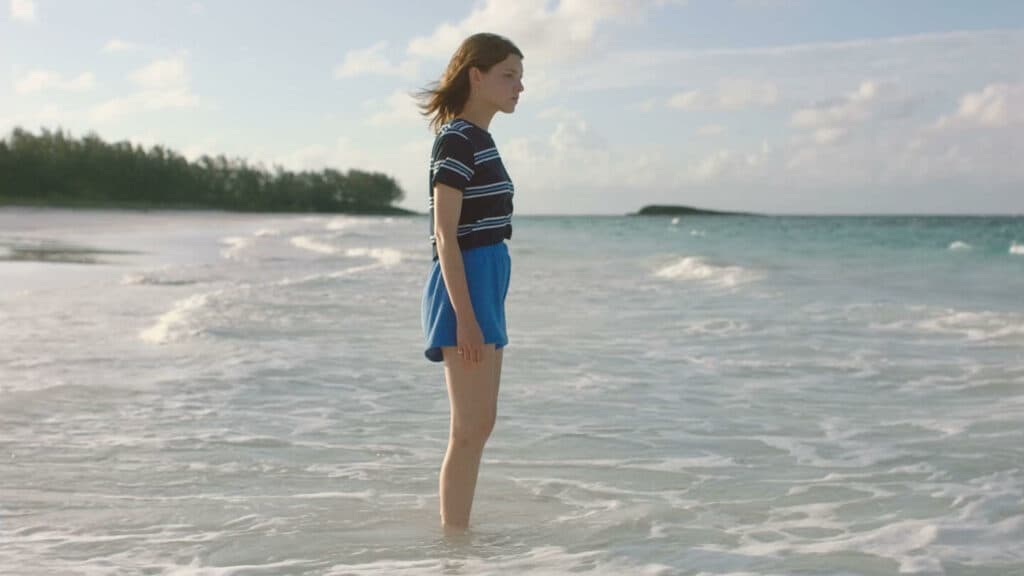
There are short films that arrive as calling cards, and then there are short films that feel like a line in the sand. With The Last Dance, British Jamaican actor, writer and director Hayden Mclean chose the latter. Inspired by the Windrush-era stories he grew up hearing and the reggae pubs his grandfather built from nothing, Mclean’s directorial debut is both a love letter to London’s Caribbean nightlife and a quiet howl against the erasure of cultural spaces. Self-funded at a moment when he felt lost in Brooklyn, unsure of his future in the industry, the film became an unapologetic act of faith: a decision to stop waiting for permission and instead bet on his own voice, his own community, and his own history. Today, that intimate gamble has travelled the world, with The Last Dance screening at more than 40 international festivals and connecting with audiences far beyond East London.
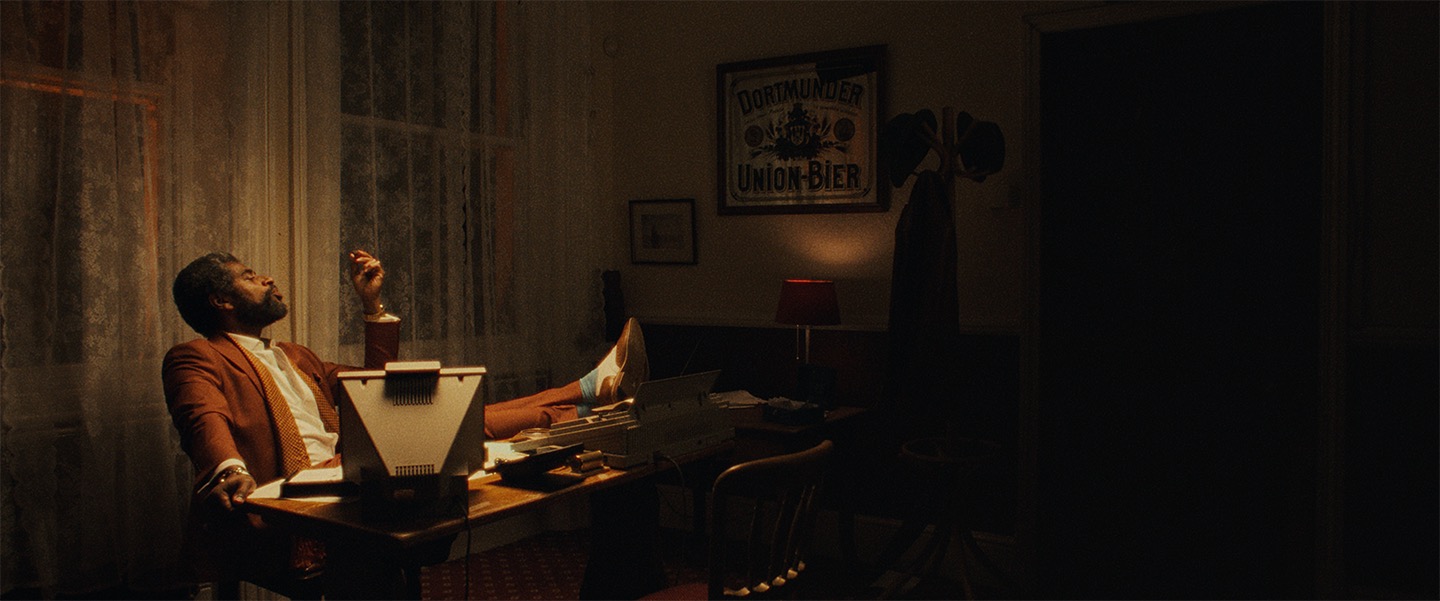
Indie Shorts Mag: The Last Dance is deeply rooted in the legacy of the Windrush generation and the vibrant Caribbean nightlife of London. Can you discuss the emotional journey of translating your grandfather’s real-life experiences into the cinematic world of Fox and the “LA Bar”?
Hayden Mclean: To be able to translate what is in essence, a story inspired by my family history and bring it to the wider world is the honour of a lifetime. To hear all the intimate stories I was told throughout my life of the windrush generation & the experiences of the first Caribbean’s in London and those spaces they managed to cultivate for themselves, albeit a space my Grandfather owned. To bring that to Audiences and extend the conversation is truly a blessing.
Indie Shorts Mag: Setting the film in 1990s East London allows you to explore the tension between community heritage and rapid gentrifying change. Why was it important for you to capture that specific era to tell a story about pride, memory, and the erosion of cultural spaces?
Hayden Mclean: The late ’90s was a really interesting period. Films about the British Caribbean experience like (Babylon or Lovers Rock) are usually rooted in the ’70s or ’80s, but the ’90s sits at a unique intersection. It carries the echoes of the previous two decades, but it’s on the eve of a new millennium, with all the cultural shifts and generational changes that comes with it.
For me, that period represents the literal closing chapter of venues my grandfather owned, it’s the year of my birth (1997), and it’s what many regard as the golden era of dancehall. A sound that the younger generation gravitated towards, compared to its reggae elder.
Layered onto all of that was the very early onset of gentrification in London the beginnings of the transformation we’re now seeing at full scale. Communities were tight-knit, the spaces were still ours, but you could sense the ground beginning to shift.
So the time period felt apt because it allowed me to explore pride, memory, and cultural inheritance at the exact moment things were starting to change. It’s a moment where legacy and loss are happening simultaneously, which felt true to the story I wanted to tell.
Indie Shorts Mag: You have described this project as an “act of faith” born from a moment of professional uncertainty. What was the catalyst that convinced you to self-fund this debut, and how did the freedom of working entirely on your own terms shape the creative voice of the film?
Hayden Mclean: “Act of faith” really does capture The Last Dance. The film was born in the fall of 2023, I was in Brooklyn at a point in my life where I felt completely lost. I was questioning everything my place in the industry as an actor, writer and the long, uncertain road of my debut feature stuck in development, wondering whether anything was going to shift.
Two exhibitions changed everything for me: Spike Lee’s Creative Sources and Jay-Z’s The Book of Hov. Both spoke so directly to that frustration the feeling of being a talented Black man in their mid 20s who were overlooked, undervalued, and felt slept on and both of them had a moment where they stopped waiting. They backed themselves, they made the work they wanted to make, on their own terms, with their community at the centre.
Walking through Brooklyn after those exhibitions, something shifted. I realised I needed to come back to London and make something of my own and not just write it, but invest in it. A week later I started writing The Last Dance. Three days after that, the script and deck were done. Aside from one or two dialogue tweaks, that ended up being the shooting script.
I sent it first to my producer Harold Salakinathan, who shared it with Lurleen “Patsy” Johnson, a veteran Black producer with a long established career in British television. We sat together and spoke for hours, both she and Harold agreed to support the film and fund the remaining 50% we needed to bring it to life.
That whole process taught me and my team the power of the first step. You don’t need to see the whole road. You just need to trust God and move. I had no idea where this film would lead; we only knew the story mattered, and that we needed to tell it. And everything that’s unfolded since has been a blessing that grew out of that one moment of faith.
Practically, it has also bought me creative freedom. I didn’t have anyone to answer to at an executive level our choices were lead by mine and the convictions of my creative team and our internal instincts were our guide.
Indie Shorts Mag: The Last Dance marking the first project under Soul Rebel Productions, you’ve set a precedent for telling soulful stories with global resonance. How do you envision this production company building bridges between the UK and the wider diaspora in your future slate?
Hayden Mclean: Soul Rebel Productions was born from the same impulse that created The Last Dance: a desire to tell soulful, redemptive stories from the Black diaspora in a way that feels global, not marginal. My vision for the company is to build a bridge between the UK and the wider diaspora by putting community, authenticity and excellence at the centre of every project we make.
A lot of the Windrush era history that shaped Britain was never formally archived it lives in memory, music, and community spaces. With Soul Rebel, I want to create work that acts as not just a black archive but a utopia that pushes us forward creatively. That means telling stories that move between Jamaica, Britain, and the wider black world stories that are deeply rooted but still universal and speak to us all as humans.
The Last Dance proved to us that when you honour culture boldly and truthfully, audiences everywhere respond. That’s the blueprint.
On our future slate – from my Deep South set debut feature, to the Jamaican follow-up, to our Cuba set TV series, and the international collaborations we’re building across the Caribbean, U.S and the UK the goal is to keep widening the lens. To show the nuances of our communities: the beauty, the struggle, the humour, the evolution, and everything in between.
Soul Rebel is about building a creative ecosystem where artists from London, New York, Kingston, Havana, Lagos or wherever else can collaborate, and where culture flows both ways. We want to champion the next generation, create space for underrepresented voices, and make cinema that feels both intimate and expansive. Ultimately, the ambition is for Soul Rebel to become a bridge: a place where the diaspora sees itself reflected with care, and where the world can experience the richness of our stories on a global stage.
Indie Shorts Mag: Given your extensive background as an actor—training at the BRIT School and performing at venues like the Royal Court—how did your experience on the other side of the lens influence your directorial style, particularly in how you worked with Karl Collins to build the character of Fox?
Hayden Mclean: My theatre background is fundamental to how I direct. Working under stalwarts like Sir Michael Boyd and debbie tucker green gave me an early understanding of the power of the ensemble and how much truth, and power emerges when actors are fully present with each other.
Theatre also made my pursuit of truth uncompromising. On stage, there are no takes, no edits, you can’t hide. You have to get it right in the moment. That pressure sharpens your instincts, and it taught me to recognise authenticity immediately. It’s also given me a very clear appreciation for craft. and the discipline, technique and honesty required to deliver time and time again.
All of that shaped how I worked with Karl Collins and all our incredible actors. Karl is an elite actor with decades of experience, so my job wasn’t to overly sculpt or teach him how to act, it was to create the conditions for him to do his best work. Theatre gave me the confidence to speak an actor’s language and the restraint to trust their instincts. And ultimately, this experience has reinforced something I now carry into every project: cast the best actors you can, build a true ensemble, and a good story will do the rest.
Indie Shorts Mag: The film has enjoyed a massive festival run, screening at over 40 international festivals and earning BAFTA and BIFA qualification. Were you surprised by how a story so specific to London’s Caribbean community resonated with audiences in places as diverse as Hawaii and Martha’s Vineyard?
Hayden Mclean: I was surprised, but also incredibly moved. The Last Dance is rooted in a very specific world: 90s East London, a Caribbean owned bar etc. But what this run has shown me is that in a time where everything feels uncertain and the sands are constantly shifting, people everywhere recognise the feeling of having something taken from you, something you’ve worked hard to build. That cuts deeper than race. It taps into something human.
After a while, audiences stop seeing just a Black Caribbean family, they see their own families, their own communities, their own losses. In Hawaii, Martha’s Vineyard, California or London etc, people spoke to me about gentrification, cultural erasure, the working-class struggle, and the fear of watching the places that raised them disappear. That universality is always what I strive for in my work.
I feel blessed that the film has been able to travel in this way. It’s shown me that when you tell a story truthfully and with love, even one rooted in London’s Caribbean history, people all over the world can find themselves in it.
Indie Shorts Mag: You are currently in post-production on your next short, FarEye, which was shot on location in Jamaica. How did the energy and logistics of filming on the island differ from your experience in East London, and how does this film further your exploration of identity and spiritual transformation?
Hayden Mclean: Filming FarEye in Jamaica was a completely different experience from shooting The Last Dance in London and a tougher one. Jamaica has its own rhythm, its own way of working, and you have to surrender to it. You can plan for months, but the island will always present something unexpected, whether it’s the heat, the terrain, or the reality of working on a lean budget with fewer comforts than in the UK. None of that is negative, it just means you have to be patient, and adaptable.
But the beauty was in the people. We pulled together an incredible Jamaican cast and crew talented, hungry, committed. And in many ways, FarEye is the fulfilment of a conversation I had with my cinematographer, Joel Honeywell. He told me that Jamaican crews are more than ready but they aren’t being given the opportunities and that if someone was bold enough to go out there independently, they could make something truly special. I think we did exactly that. We built something with love, skill and ambition, and the island gave us everything we needed.
Creatively, Jamaica expanded me. FarEye is a film about identity, rebirth and spiritual awakening about moving through trauma toward something more whole. Shooting on the island let us explore those themes in a way that felt elemental. Audiences often only see “concrete jungle” Jamaica or “Resort Postcard” but the version we’re presenting is vast, cinematic and soulful the Jamaica I know and the Jamaica I’m excited to share with the world.
It’s also a step up for me as a filmmaker. The scale is bigger, the world is wider, and the emotional depth required is deeper. But I feel ready for that growth, and I think FarEye reflects the next evolution of my voice and the kind of global, spiritually charged storytelling I want to continue making.
Indie Shorts Mag: Your journey is a testament to the power of self-determination. What advice would you give to emerging filmmakers, particularly those from underrepresented backgrounds, who feel stuck waiting for permission from traditional industry gatekeepers to tell their stories?
Hayden Mclean: As an artist, don’t wait for permission. If I had waited for the perfect conditions, The Last Dance wouldn’t exist. I was in New York questioning everything, my career, my place in the industry, whether anything was ever going to move and the moment everything shifted was the moment I realised no one was coming to hand me an opportunity. I had to create it.
For emerging filmmakers, especially those from underrepresented backgrounds, the industry often teaches us to wait: for funding, for validation, for someone to “open the door.” But those doors rarely open unless you push them yourself. The power is in the first step. It doesn’t matter if you can only afford to shoot for two days, or you’re pulling favours, start. Tell the story that’s in your heart with whatever resources you have.
And build community. The Last Dance and FarEye were both carried by people who believed before anyone else did. There is strength in collective vision. Find your collaborators, nurture your relationships, and surround yourself with people who recognise your potential even when you doubt it.
And trust your voice. The stories you want to tell, the ones rooted in your lived experience, your culture, your truth are not small. They are necessary. Audiences everywhere are hungry for authenticity. So don’t wait to be chosen. Choose yourself, and let the work lead you where it needs to go.
Indie Shorts Mag: You have spoken about the power of community and storytelling as acts of remembrance and rebellion. Ultimately, what do you hope the viewers take away from The Last Dance regarding the importance of preserving our cultural cornerstones in the face of “progress”?
Hayden Mclean: What I hope people take away is that progress means very little if we lose the places that made us who we are. Spaces like the LA Bar were more than venues, they were community anchors. They held our joy, our grief, our arguments, our music. When those places disappear, a part of our collective memory and cultural fabric disappears with them.
But The Last Dance is also a celebration a reminder of the power of community and what happens when people come together to protect what they love. I want audiences to feel that preserving our cultural cornerstones isn’t just nostalgia; it’s an act of honour. If watching this film makes someone look at their own neighbourhood, their own gathering spaces, and community and feel a renewed sense of responsibility and pride, then the story has done its job.
For filmmakers reading this, especially those from communities that have been sidelined or undercounted, Hayden Mclean’s journey with The Last Dance is a reminder that the first step rarely looks grand, but it is always decisive. A script written in a week, a self-funded shoot in East London, a small team that believed before anyone else did—these are the quiet, practical choices that turned a personal story into a globally resonant work. As Mclean moves through post-production on his Jamaica-shot short FarEye and continues to build Soul Rebel Productions into a bridge between the UK and the wider Black diaspora, his ethos remains disarmingly simple: don’t wait to be chosen, choose yourself, honour your community, and let the work lead you. If his “act of faith” has shown us anything, it’s that when you tell the truth of where you come from with care and conviction, the world will eventually recognise itself in your story.
About the Author

Related Posts
 Interviews
M&C Saatchi to Surrealism: How Sam Iwata Merges Commercial Rigor with the Psychological Abyss
 Interviews
Crafting A ‘Dark Visual Lullaby’ On 35mm: Anjini Taneja Azhar On The Magical Realism Of ‘Who Are You, Nanu?’
 Interviews
Framing The Future: Jada George On Visual Tension, Dystopian Narratives, And Reclaiming The Black Experience In Sci-Fi
No comments yet.
Got Something to add to this article?
Your email address will not be published. Required fields are marked *