Article too long to read?
The boundary between advertising and cinema isn’t merely eroding; it is being methodically deconstructed. Increasingly, independent filmmakers and documentarians are finding that the most compelling sources of funding are no longer the old-guard studios, but luxury brands keen to enshrine their own mythology in the language of narrative.
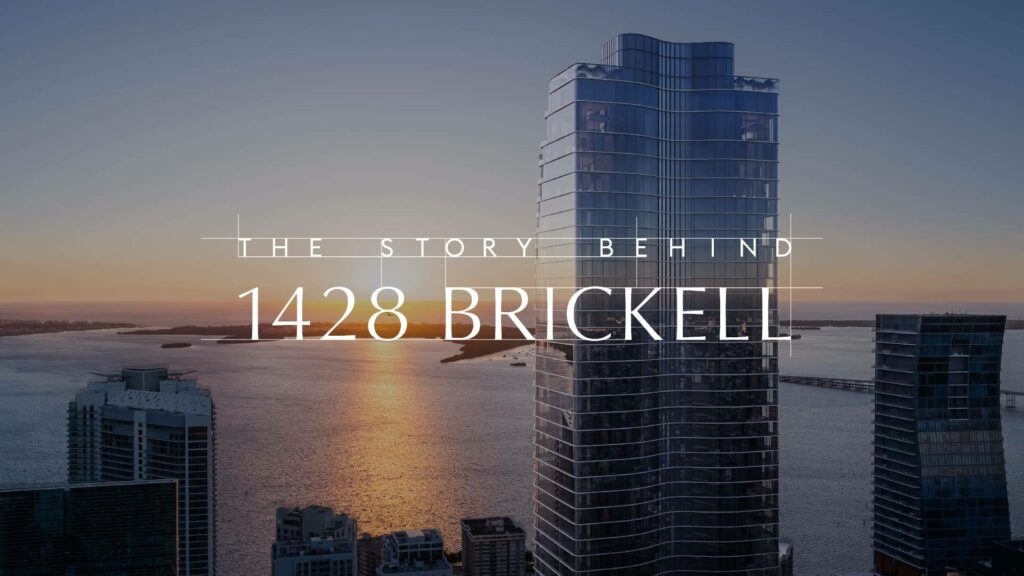
Enter “The Story Behind 1428 Brickell,” a 30-minute documentary courtesy of Miami developer Ytech. On paper, it is purely corporate to the core: a chronicle of a luxury tower’s genesis. In practice, it is a study in cinéma vérité, sidestepping the expected salesmanship in favor of a more textured approach. Its accolades—Telly Awards, Communicator Awards—are less a victory lap than a signpost: the market for branded content is maturing, and the line between commerce and art is no longer a line at all.
The Rise of the “Branded Documentary”
The so-called ‘branded documentary’ has quietly become the genre du jour, with brands commissioning filmmakers to craft pieces that masquerade as editorial rather than advertorial. Ytech’s latest effort is less a commercial and more a case study in how far this approach can be pushed.
Instead of the usual parade of glossy renderings, the film opts for an 11-chapter structure, tracing the hero’s journey of a building from blueprint to skyline. Ytech dispatched production teams across Miami and Italy, a logistical flex that signals where priorities—and budgets—now lie. The $565 million in construction financing from J.P. Morgan is not just underwriting concrete and glass; it is underwriting narrative, with a conspicuous slice reserved for cinematic documentation.
“Great residences are the sum of hundreds of carefully considered decisions,” said Yamal Yidios, CEO of Ytech. “Luxury is defined by details, and we share this film to make that method visible: how we think, how we choose, and how we hold every decision to the highest standard.”
Yidios’ remarks could just as easily belong to a director on set, parsing the difference between detail and distraction. The so-called ‘details’ are, in fact, the narrative pivots that lift a subject from a simple brochure toward something resembling art.
Developing a Narrative from Concrete
The film’s real sleight of hand is its focus on the human machinery behind the concrete. Interviews with Antonio Citterio and Patricia Viel, the minds behind Milan’s ACPV ARCHITECTS, anchor the narrative in personality rather than product.
For the uninitiated, ACPV are less architects than arbiters of the ‘art of living.’ By placing them at the film’s center, the documentary sidesteps the trap of becoming a glorified sales reel, instead offering a character study of creative ambition at its rarefied heights.
Nature, sustainability, material provenance—these are more than mere buzzwords here; they are narrative strands, rendered tactile by cinematography that dwells on the grain of Italian stone and the shifting light of Miami. What could have been a procedural on logistics becomes, instead, a meditation on artistic collaboration.
“The Residences at 1428 Brickell was developed via numerous hours of collaboration with Ytech… it was a meeting of minds and values,” noted Antonio Citterio. “Telling a story like this is rare in our industry, but for a project of this caliber, it was essential.”
Why Indie Filmmakers Should Pay Attention
The real significance of The Story Behind 1428 Brickell lies not in the building itself, but in the doors it quietly opens for filmmakers willing to operate in the liminal space between art and commerce.
Luxury developers are no longer content with blueprints and drone shots; they are seeking filmmakers who can transmute square footage into something that resembles emotion. The ask is not small: directors who can wrangle 30-minute runtimes, orchestrate shoots across countries, and stitch together disparate interviews into a plot that feels not quite like a sales pitch and more like cinema.
The Telly Awards nod is less a stamp of approval than a signal flare: this is not B-roll masquerading as documentary, but work that stands shoulder to shoulder with festival-circuit shorts. The production values are not afterthoughts, but the new baseline:
- Structured Storytelling: The use of chapters to navigate the viewer through a complex timeline.
- Global Scope: Shooting on location in Italy provides a cinematic richness that stock footage simply cannot reproduce.
- High-End Post-Production: Sound design and color grading that match the luxury aesthetic of the subject matter.
The Intersection of Design and Direction
For filmmakers with an eye for production design, the documentary doubles as a visual archive. The tower—billed as the world’s first residential high-rise to draw power from the sun—offers a preview of what sustainable luxury might look like. Interiors are rendered in the language of Arclinea and Rimadesio, a mood board for anyone stockpiling references for their next project.
As Patricia Viel puts it in the film, the goal is to create spaces that “separate the meaningful from the ordinary.” That is, coincidentally, the exact job description of a documentary filmmaker.
For independent filmmakers, this is less a press release and more a blueprint—a quiet invitation to reimagine where and how their work might find its next patron.
Watch The Story Behind 1428 Brickell Documentary
About the Author

Related Posts

No comments yet.
Got Something to add to this article?
Your email address will not be published. Required fields are marked *