Article too long to read?
CLERMONT-FERRAND, FRANCE — Every February, the short film faithful make their pilgrimage to Clermont-Ferrand, a festival that has quietly become the industry’s most reliable barometer of taste. This year, the so-called “Cannes of Shorts” is set to do more than just showcase new work; it will question the fundamental metrics by which we measure artistic value and curation.
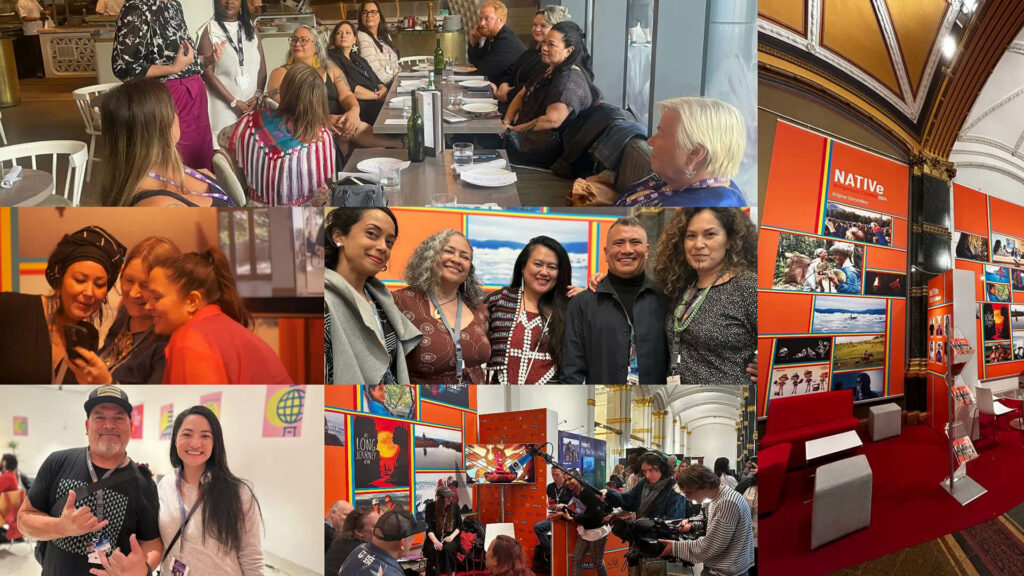
The Indigenous Cinema Alliance (ICA) is not content to simply occupy space at the 2026 market; it is rewriting the playbook. With a slate that includes nine short films, a panel engineered to provoke, and the unveiling of their ninth Fellowship cohort, the ICA is less interested in optics and more invested in building a durable architecture for niche storytelling.
For independent filmmakers, this is less an announcement and more a signal flare: the margins are organizing, and the industry would do well to pay attention.
A Showcase of Sovereignty: The 2026 Lineup
At the heart of the ICA’s incursion is the Indigenous Shorts Market Screening, set for Monday, February 2, at Theatre Georges Conchon. The selection is less a world tour than a statement of intent, stretching from the Arctic Sápmi to the Ecuadorian Amazon and anchored by filmmakers whose résumés are as impressive as their subject matter.
For those tracking the transforming nature of the short film market, this lineup reads like a syllabus in high-wire, short-form storytelling.
- POUĀKAI (Aotearoa New Zealand) by Libby Hakaraia. Hakaraia is a veteran of the Māori screen industry, and her 15-minute film (noted for graphic violence) suggests a courageous approach to genre and history.
- SHAAGHAN NEEKWAII (TWO OLD WOMEN) (USA) by Princess Daazhraii Johnson. Johnson, known for her work as a Creative Producer on the Peabody Award-winning Molly of Denali, brings a Gwich’in narration that likely bridges traditional storytelling with high-end production value.
- WASKA: THE FOREST IS MY FAMILY (Ecuador) by Nina Gualinga. Gualinga, best known as an environmental activist, pivots to directing, a move that feels less a career shift and more a natural escalation—her work blurs the line between advocacy and craft, echoing the panel’s central thesis.
Other notable entries include the Sápmi/Norwegian co-production Vieljážágaid Iežaška Jáhkku (Brothers of Faith) by Gákte Biera and the Greenlandic film Tamatta Ataqaptiigiipugut (We Are All Connected) by Arina Kleist.
Editor’s Note: For filmmakers looking for distribution, pay attention to the co-production credits listed in this slate (e.g., Sápmi/Finland, Canada/Inuktitut). It demonstrates that cross-border funding is currently one of the most viable pathways for making and seeing independent shorts.
The Intellectual Pivot: Impact vs. Aesthetics
Perhaps the most critical event for industry professionals attending the market is the panel “When Impact Is the Aesthetics,” taking place on Tuesday, February 3.
Co-hosted by Talking Shorts and moderated by Jason Ryle, the panel addresses a friction point that many independent filmmakers face when submitting to European festivals. The ICA press statement puts it bluntly: “European short film culture often treats impact as an added value; Indigenous filmmaking has long treated it as a core artistic principle.”
This conversation, featuring the likes of Don Josephus Raphael Eblahan (whose films routinely evade neat classification) and Tracy Rector, is less about box-ticking and more about reconfiguring the very notion of “quality.” For independent creators, the stakes are clear: if festivals start treating “social impact” as a structural necessity rather than a decorative flourish, the entire playbook for pitching, editing, and selling films is up for revision.
Building the Pipeline: The Fellowship Cohort
The screenings are only half the story. The ICA’s ninth Fellowship cohort arrives backed by some of the most influential funders in the field: the International Sámi Film Institute, imagineNATIVE, and the Arctic Indigenous Film Fund. This is less a networking exercise and more a planned implementation.
Names like Jacqueline Olivé, Katsitsionni Fox, and Sara Beate Eira are not just attending—they are being groomed for the next phase of market fluency. For those new to the circuit, Clermont-Ferrand’s Marché du Film Court is less a festival sideshow and more the engine room of the global short film economy. The ICA’s cohort is a clear signal: the objective is not merely exhibition, but the cultivation of a new producer class fluent in the unstated rules of the European market.
Why This Matters for Indie Filmmakers
The ICA’s growing presence at Clermont-Ferrand 2026 is less about visibility and more about leverage. In an industry that still rewards scale, collectives like the ICA are rewriting the rules. For filmmakers from New Zealand or Alaska, the banner is not just symbolic—it is the difference between a seat at the table and waiting in the hallway.
The lesson here is not subtle: find your cohort, or risk drifting alone. Via regional alliances or genre-driven collectives, finding your way through the sprawling ecosystem of Clermont-Ferrand is a team sport.
Are you attending Clermont-Ferrand this year?
- Attend the Screening: Monday, Feb 2, 16:00 CET at Theatre Georges Conchon.
- Stream the Panel: If you aren’t in France, the “When Impact Is the Aesthetics” panel will be streamed online on Feb 3 at 14:30 CET. Bookmark the Talking Shorts or ICA websites for the link.
- Network: Visit the ICA at Stand #E5 in the Gymnase Fleury on Wednesday, Feb 4, between 18:00–19:00 CET to meet the fellows and partners.


About the Author

No comments yet.
Got Something to add to this article?
Your email address will not be published. Required fields are marked *